
How CBD Works: Mechanisms and Evidence 2026
Cannabidiol (CBD) is attracting growing interest in Europe, especially among those suffering from chronic pain, anxiety, or insomnia. Unlike THC, CBD does not cause any psychoactive effects. This guide explains how CBD interacts with your body, the scientific evidence of its effectiveness, and how to choose the product suited to your needs. Discover an informed and balanced approach to cannabidiol.
Table of contents
- Introduction to CBD and usage context
- Biological mechanisms of CBD action
- Scientific evidence of CBD’s effectiveness for pain, anxiety, and sleep
- Common misconceptions and corrections about CBD’s effects
- Choosing and using CBD with full knowledge
- Conclusion: what CBD can really offer you
- Discover our selection of certified CBD for informed use
- Frequently Asked Questions
Key points to remember
| Point | Details |
|---|---|
| CBD acts through the endocannabinoid system and pain | It modulates pain, anxiety, and sleep without causing psychoactive effects. |
| Clinical evidence shows moderate improvement | Studies show significant but limited benefits for pain and anxiety. |
| Full-spectrum formulations are more effective | They offer better results than isolates thanks to the entourage effect. |
| Proper dosing is crucial | A gradual approach and medical supervision optimize effectiveness and safety. |
| CBD is not a miracle cure | It complements other treatments but does not replace them. |
Introduction to CBD and usage context
CBD is a non-psychoactive cannabinoid extracted from cannabis. Its popularity in Europe has significantly increased since 2024, especially among people seeking a natural alternative to relieve pain, improve sleep, or manage anxiety. Unlike THC, which causes the psychoactive effects of cannabis, CBD does not alter your state of consciousness.
By 2026, the European market offers a variety of formats tailored to individual needs. Consumers can choose from several forms based on their preferences and symptoms. Here are the main options available:
- CBD flowers and resins for inhalation or vaporization
- Sublingual oils for rapid absorption
- Capsules and edibles for discreet and measured use
- Creams and balms for targeted topical application
- Isolates and concentrates for precise dosing
The main motivations of European users include managing chronic neuropathic pain, reducing generalized anxiety, and improving sleep quality. Full-spectrum products are gaining popularity thanks to the entourage effect, which combines several cannabinoids and terpenes to enhance overall effectiveness.
European regulations strictly control the marketing of CBD. Products must contain less than 0.2% THC to be legal in most Union countries. This limit ensures the absence of psychoactive effects while allowing access to the therapeutic benefits of cannabidiol.
Biological mechanisms of CBD action
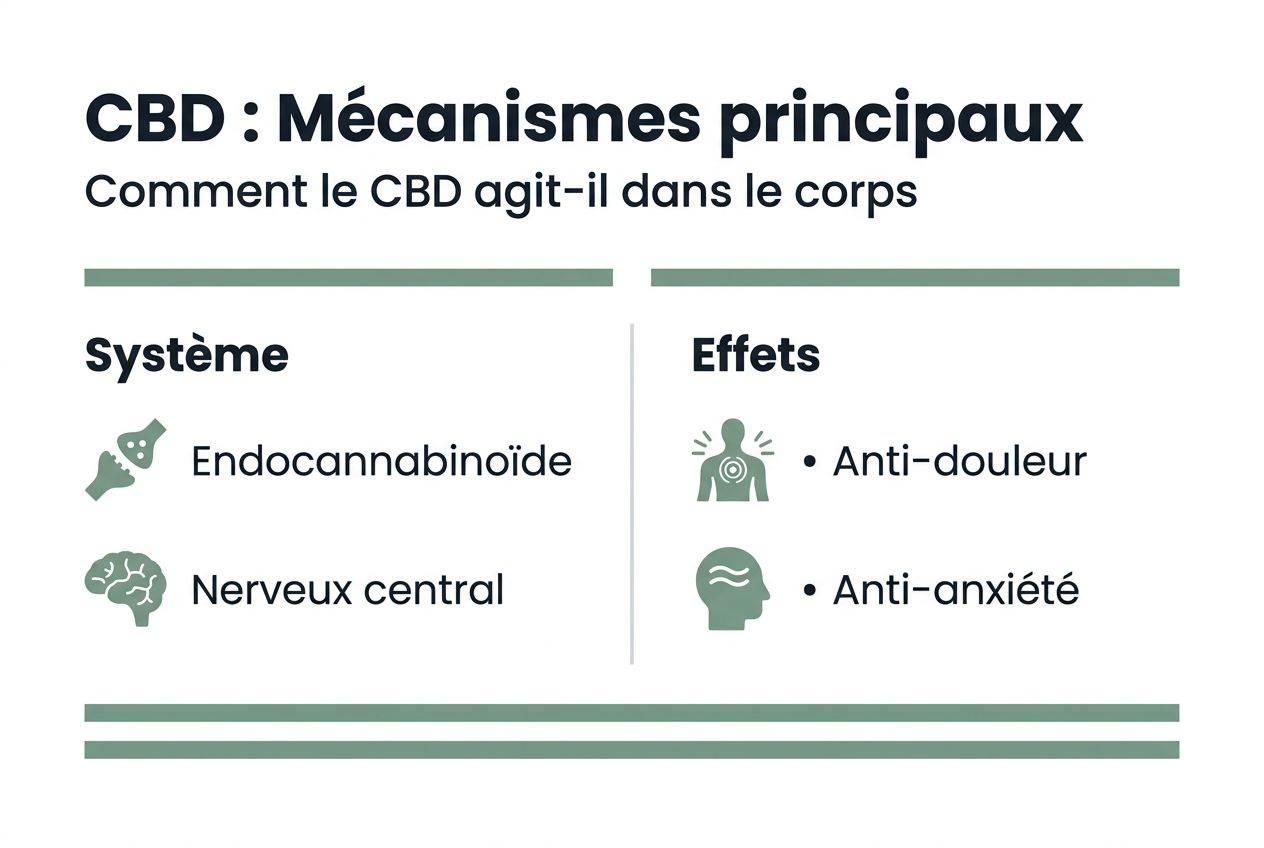
CBD mainly interacts with your endocannabinoid system, a complex network of receptors throughout your body. This system regulates many essential physiological functions. Understanding these mechanisms helps you better grasp why CBD produces its effects.
Your body has two main types of cannabinoid receptors. CB1 receptors are mainly found in the brain and central nervous system, while CB2 receptors are concentrated in the immune system and peripheral tissues. CBD interacts differently with these receptors compared to THC:
- CBD indirectly modulates CB1 receptors without strongly activating them
- It stimulates CB2 receptors to reduce inflammation
- It increases levels of anandamide, your natural cannabinoid
- It acts on serotonin receptors related to mood
CBD has demonstrated anti-inflammatory effects that help reduce pain and anxiety. These properties are explained by the modulation of inflammatory cytokines, messenger molecules of your immune system. This anti-inflammatory action is especially useful for neuropathic and arthritic pain.
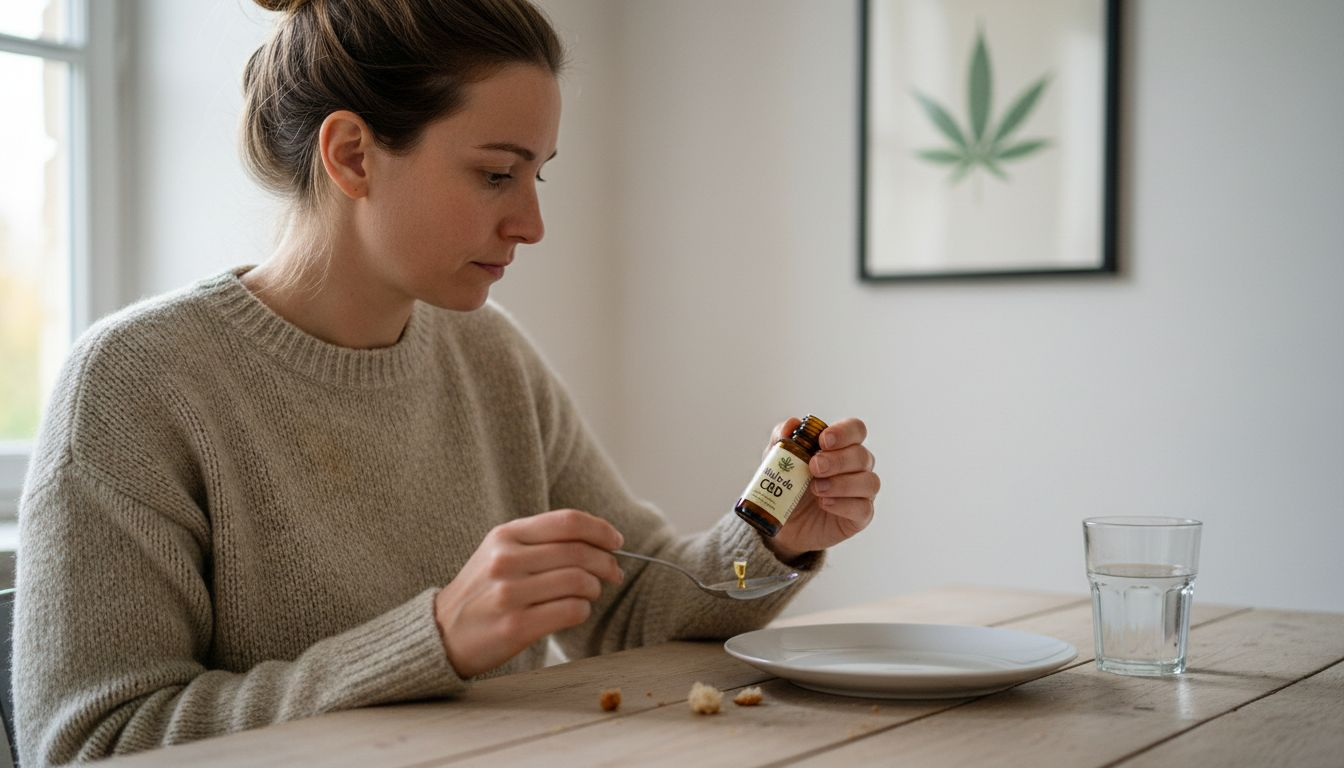
CBD bioavailability varies significantly depending on the administration method. Oral CBD bioavailability is limited by its poor solubility and the blood-brain barrier. This characteristic explains why some forms work better than others for specific symptoms.
| Mechanism | CBD | THC |
|---|---|---|
| Psychoactive effect | None | Yes, intense |
| CB1 affinity | Weak, indirect modulation | Strong, direct activation |
| Anti-inflammatory action | High | Moderate |
| Anxiolytic effect | Yes, without euphoria | Variable, may increase anxiety |
| Oral bioavailability | 6 to 15% | 10 to 20% |
| Neuroprotection | Demonstrated | Limited |
Pro tip: Consuming CBD with foods rich in healthy fats (olive oil, avocado) significantly increases its intestinal absorption. This simple trick can improve the effectiveness of your oils or capsules by 2 to 4 times.
Scientific evidence of CBD’s effectiveness for pain, anxiety, and sleep
Recent clinical studies provide concrete evidence of CBD’s effectiveness. The results show measurable but moderate improvements. CBD improves sleep quality by reducing anxiety and pain, which are the main disruptive factors.
For neuropathic pain, several randomized controlled trials show an average reduction of 30 to 40% in pain intensity. This improvement is mainly observed in patients who have exhausted conventional therapeutic options. The clinical evidence on anxiety and CBD reveals particularly marked benefits.
Regarding anxiety, CBD can reduce symptoms without the risks associated with THC. Study participants report a significant decrease in their generalized and social anxiety levels, without cognitive impairments or intoxication. This feature clearly distinguishes CBD from traditional pharmaceutical anxiolytics.
Effective formats and dosages according to clinical studies include:
- Sublingual oils: 20 to 40 mg per day for mild anxiety
- Capsules: 40 to 160 mg per day for chronic pain
- Vaporized flowers: fast effects in 10 to 15 minutes
- Concentrated resins: for severe symptoms requiring high doses
To optimize your CBD use according to your symptoms, follow this structured approach:
- Identify your main symptom and its daily severity
- Start with a low dose (10 to 15 mg) for one week
- Increase gradually in steps of 5 to 10 mg if necessary
- Record your feelings and adjustments in a tracking journal
- Consult a professional to validate your personal protocol
Studies on CBD mental health anxiety sleep confirm that sleep improvement mainly results from the simultaneous reduction of anxiety and pain. This triangular relationship explains why many users notice multiple benefits even when initially targeting only one symptom.
The therapeutic use of CBD in Europe has become professionalized with precise protocols. The CBD dosage for insomnia and anxiety requires personalization based on your weight, metabolism, and symptom severity.
Common beliefs and corrections about CBD’s action
Several myths persist around CBD despite scientific progress. Distinguishing truth from falsehood protects you from unrealistic expectations and inappropriate use. Precise knowledge of CBD’s limits ensures a responsible approach.
A common misconception is that CBD is a miracle cure for chronic pain. Scientific data rather reveal moderate improvement, comparable to some mild analgesics. Often excessive marketing creates disappointment among poorly informed consumers.
Here are the main corrections to common beliefs:
- CBD does not completely eliminate pain but significantly reduces it
- It does not replace existing medical treatments but complements them
- Not all CBD products are equal in terms of quality and effectiveness
- Very high doses do not necessarily bring more benefits
- The effect is not immediate for everyone; some require several weeks
Confusion between CBD and THC remains common. These two cannabinoids differ radically in their pharmacology. THC directly activates CB1 receptors in your brain, causing euphoria and cognitive impairment. CBD modulates these receptors without strongly activating them, preserving your full clarity.
CBD can pose hepatotoxic risks at high doses, highlighting the importance of appropriate dosing. This recent finding reminds us that natural does not mean risk-free. People taking other medications metabolized by the liver should especially consult before using CBD.
"CBD has real but limited therapeutic potential. Its effectiveness varies significantly depending on the individual, dosage, and product quality. It should be considered a supplement, never a substitute for conventional medical care." – Dr. Maria Sanchez, cannabinoid pharmacology specialist, University of Barcelona
The benefits and safety of CBD require a nuanced understanding. The types of pain relieved by CBD show variable effectiveness depending on the inflammatory or neuropathic nature of the condition. This variability explains why some users achieve excellent results while others notice little improvement.
Choosing and using CBD knowledgeably
The quality and form of your CBD largely determine its effectiveness. Understanding the differences between isolate, full spectrum, and resins helps you make an informed choice. Full spectrum formulations seem more effective than isolates because they combine several beneficial cannabinoids and terpenes.
| Characteristic | CBD isolate | Full Spectrum | CBD resins |
|---|---|---|---|
| Composition | 99% pure CBD | CBD + other cannabinoids + terpenes | Concentrated CBD + natural terpenes |
| Entourage effect | Absent | Maximum | High |
| Taste | Neutral | Pronounced, herbal | Intense, authentic |
| Bioavailability | Medium | High | Very high |
| THC risk | None | Legal traces (<0.2%) | Legal traces (<0.2%) |
| Price | Economical | Medium to high | Variable |
| Recommended for | Terpene sensitivity | General use, multi-symptoms | Intense symptoms |
Administration methods directly influence the speed and duration of effects. Vaporization acts within 10 to 15 minutes with effects lasting 2 to 3 hours. Sublingual oils take effect in 20 to 40 minutes for 4 to 6 hours. Capsules require 60 to 90 minutes but last 6 to 8 hours.
For a gradual and safe dosage, follow this methodical approach:
- Always start with the minimum recommended dose (10 mg)
- Maintain this dose stable for at least 7 days
- Increase by 5 mg if improvement remains insufficient
- Record your symptoms and adjustments daily
- Favor regular intake at fixed times
- Consult a healthcare professional before any major changes
The relationship between CBD vs medications satisfaction 2026 shows encouraging satisfaction rates. However, CBD should never abruptly replace a prescribed treatment without medical supervision.
Pro tip: The color and smell of your CBD oil reveal a lot about its quality. An authentic full spectrum oil has a golden to amber hue and a pronounced herbal scent. Products that are too light or odorless suggest excessive refining that removes beneficial compounds. Always request third-party laboratory analysis certificates.
Conclusion: what CBD can realistically bring you
CBD offers measurable but moderate benefits for chronic pain, anxiety, and insomnia. Studies from 2026 confirm its potential as a therapeutic supplement, though they do not justify the exaggerated marketing claims. Your personal experience will depend on many individual factors.
Key points to remember for optimal use:
- CBD works through the endocannabinoid system without psychoactive effects
- Its effectiveness varies depending on product quality and your metabolism
- Full spectrum formulations generally outperform isolates
- Gradual dosing and monitoring help optimize results
- Medical supervision is still recommended, especially with other treatments
Research continues to evolve rapidly. New nano-encapsulated formulations promise improved bioavailability. Long-term clinical studies currently underway will provide more precise answers on the effectiveness and prolonged safety of CBD. Meanwhile, adopt a balanced, informed, and responsible approach.
CBD represents an interesting natural option but not a miracle cure. Consider it as one tool among others in your overall wellness strategy. Ongoing education and personalized adjustment maximize your chances of success.
Discover our selection of certified CBD for informed use
Are you looking for pharmaceutical-quality CBD products to relieve your pain, reduce anxiety, or improve your sleep? Our catalog exclusively offers flowers, resins, and oils certified by independent laboratory analyses. Each product meets strict European standards and contains less than 0.2% THC.
Our experts help you choose the form and dosage suited to your specific needs. Check out our detailed guides on the best CBD shops in Europe and discover why we are among the best CBD shops Eindhoven. Our CBD pre-roll assortment offers a convenient solution for measured consumption.
Fast delivery throughout the European Union, the United Kingdom, and Switzerland. Satisfaction guaranteed with easy returns within 30 days.
Frequently Asked Questions
What is the main difference between CBD and THC?
CBD produces no psychoactive effects unlike THC. THC directly activates CB1 receptors in your brain, causing euphoria and cognitive impairment. CBD modulates these receptors without intense stimulation, fully preserving your clarity and cognitive abilities. This fundamental pharmacological distinction explains why CBD remains legal in most European countries.
How Does CBD Work to Relieve Chronic Pain?
CBD reduces pain through several simultaneous mechanisms. It decreases inflammation by modulating cytokines, stimulates CB2 receptors of the immune system, and increases levels of anandamide, your natural painkiller. These combined actions explain its particular effectiveness on neuropathic and inflammatory pain. The improvement remains moderate, generally between 30 and 40% reduction according to clinical studies.
Can CBD Cause Psychoactive Effects?
No, CBD does not cause any psychoactive effects at recommended therapeutic doses. Studies confirm the absence of euphoria, cognitive impairment, or dependence. You fully retain your mental faculties and ability to drive or work. This characteristic radically distinguishes it from THC and classic pharmaceutical anxiolytics. Only extremely high doses, well beyond recommendations, could theoretically cause slight drowsiness.
Which Form of CBD Is Best Suited for Anxiety?
Full spectrum sublingual oils generally represent the best choice for anxiety. They offer an optimal balance between fast action (20 to 40 minutes), duration of effects (4 to 6 hours), and ease of precise dosing. The entourage effect of full formulations enhances anxiolytic effectiveness. For intense occasional anxiety, vaporizing flowers acts faster but lasts less.
What Are the Risks of Misusing CBD?
The main risks include drug interactions with treatments metabolized by the liver, liver toxicity at very high doses, and mild side effects such as fatigue or diarrhea. Buying uncertified products exposes you to contamination or illegal THC concentrations. Excessive dosing without supervision can mask symptoms requiring medical attention. Always follow recommendations and consult a professional before use, especially if you are taking other medications.
Leave a comment