
CBD vs medications: 70% of users satisfied in 2026
Over 70% of European CBD users use it to manage chronic pain, anxiety, or sleep disorders in 2026. In light of this growing trend, many consumers wonder: can CBD really compete with conventional pharmaceutical products? This question deserves a thorough analysis that includes clinical data, mechanisms of action, and European regulations to enable an informed choice.
Table of Contents
- Introduction to CBD and pharmaceutical products
- Understanding the mechanisms of action of CBD compared to medications
- Comparison of clinical evidence for the effectiveness of CBD and pharmaceutical products
- Side effect profiles, risks, and interactions of CBD versus medications
- European regulatory context and quality criteria for CBD products
- Practical applications: integrating CBD into symptom management
- Common misconceptions about CBD and pharmaceutical treatments
- Conclusion: summary and keys for an informed choice
- Discover our certified CBD products for natural symptom management
- Frequently Asked Questions
Key points
| Dot | Details |
|---|---|
| Proven effectiveness | 70% of CBD users use it for pain, anxiety, or sleep with notable satisfaction |
| Natural mechanism | CBD modulates the endocannabinoid system, unlike the targeted mechanisms of pharmaceutical drugs |
| Safety profile | Fewer side effects and no risk of physical dependence compared to opioids or benzodiazepines |
| Caution required | Drug interactions via cytochrome P450 require medical monitoring |
| Quality guaranteed | Strict European regulations with a THC limit of 0.2% and mandatory testing |
Introduction to CBD and pharmaceutical products
Cannabidiol, or CBD, is a non-psychoactive molecule extracted from industrial hemp. Unlike THC, it does not cause euphoria or altered consciousness. Common pharmaceutical products include opioids for pain, benzodiazepines for anxiety, and hypnotics for insomnia.
Europe has a high prevalence of chronic disorders: about 20% of the population suffers from persistent pain, 30% experience recurring anxiety disorders, and nearly 40% report regular sleep difficulties. This situation drives many patients toward alternatives to conventional treatments.
The typical profile of European CBD users includes:
- Adults aged 30 to 60 seeking to reduce their dependence on medication
- Patients suffering from significant side effects with pharmaceutical treatments
- People favoring natural approaches for their health
- Individuals seeking complementary solutions to their existing treatment
This comparison becomes crucial because it directly affects your daily quality of life. Understanding the differences allows you to adopt a personalized, informed, and safe strategy. Studies on the beneficial effects of CBD show that most users experience a noticeable improvement in their symptoms.
Understanding the Mechanisms of Action of CBD Compared to Medications
CBD mainly interacts with your endocannabinoid system, a biological network regulating pain, mood, sleep, and inflammation. This interaction naturally modulates several receptors without blocking or excessively activating them. The functioning of the endocannabinoid system explains why this molecule produces balanced effects.
For pain, CBD activates TRPV1 receptors involved in pain perception and reduces inflammation through several biochemical pathways. Opioids bind directly to opioid receptors in the brain, blocking pain transmission but quickly creating tolerance and physical dependence.
Regarding anxiety, CBD increases serotonin availability and activates 5-HT1A receptors without disturbing overall neurochemical balance. Benzodiazepines enhance the effect of GABA, an inhibitory neurotransmitter, causing rapid sedation but a high risk of addiction and severe withdrawal symptoms.
For sleep, CBD promotes falling asleep by reducing anxiety and pain that disrupt rest. Hypnotics like zolpidem induce sleep by depressing the central nervous system, often causing morning drowsiness and psychological dependence.
These fundamental pharmacological differences explain why:
- CBD has a milder side effect profile
- No physical dependence develops with regular use
- Tolerance remains minimal even after several months of use
- Withdrawal symptoms are practically nonexistent
This mechanical distinction positions CBD as an interesting alternative for people seeking to avoid the pitfalls of conventional treatments while effectively managing their symptoms.
Comparison of Clinical Evidence for the Effectiveness of CBD and Pharmaceutical Products
Scientific data show that patients using CBD report reduced anxiety and better sleep management in most cases. Clinical studies reveal promising but variable results depending on the indicators and dosages used.
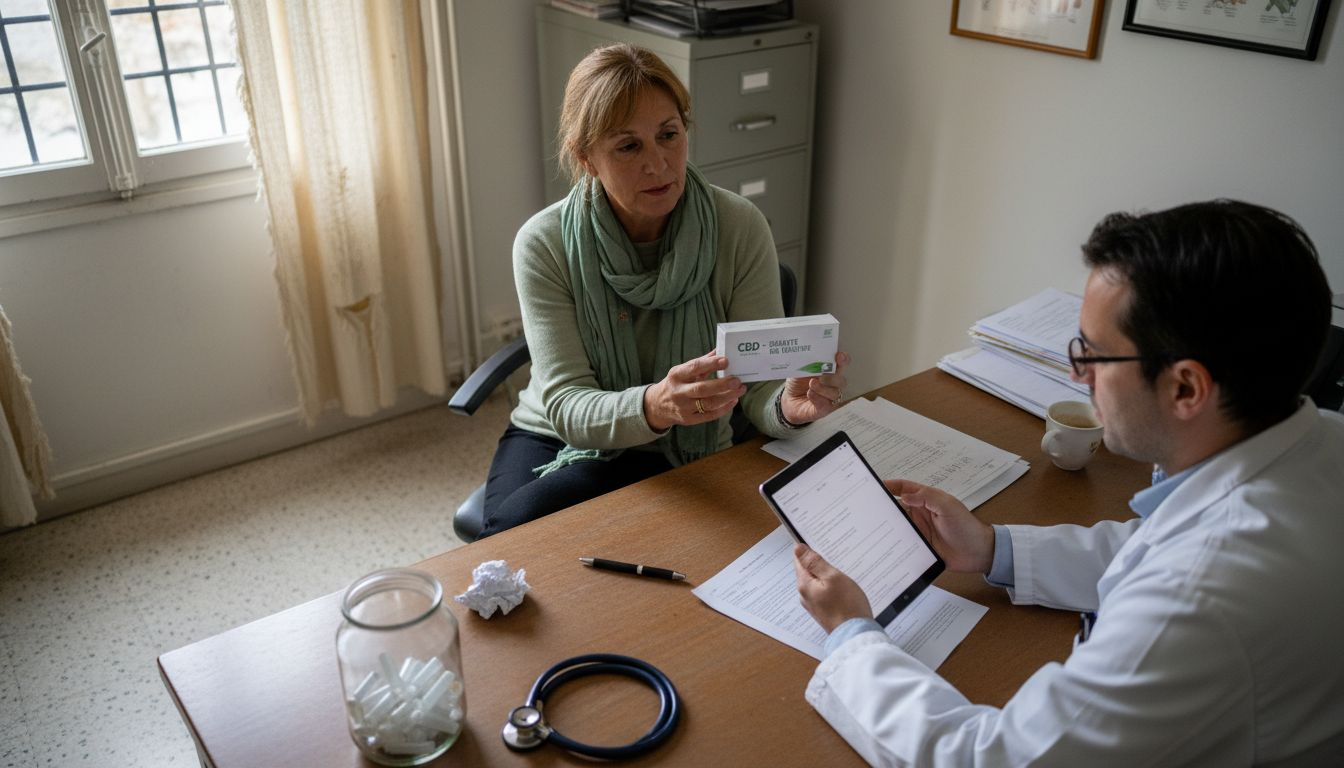
For chronic pain, several controlled trials demonstrate a 30 to 40% reduction in pain intensity with daily doses of 20 to 50 mg of CBD. Opioids provide faster initial relief but gradually lose effectiveness. The therapeutic effectiveness of CBD fits a medium-term approach rather than immediate relief.
Regarding anxiety, randomized studies show a significant decrease in generalized anxiety scores after 4 weeks of CBD treatment. Benzodiazepines act within 30 minutes but quickly cause tolerance. CBD requires regular use for 2 to 4 weeks to achieve optimal benefits.
| Condition | CBD (effectiveness) | Conventional medications | CBD onset time |
|---|---|---|---|
| Chronic pain | 30-40% reduction | 50-70% initial reduction | 2-3 weeks |
| Generalized anxiety | Moderate to strong reduction | Rapid and strong reduction | 3-4 weeks |
| Insomnia | Improvement in 60-70% of cases | Immediate effectiveness 80-90% | 1-2 weeks |
Methodological limitations include variability of tested formulations, lack of dosage standardization, and absence of very long-term studies on large populations. Academic research on CBD highlights the need for more robust clinical trials.
Pro tip: Consider CBD as a therapeutic supplement rather than a complete short-term substitute. To optimize results, combine regular use with medical supervision allowing gradual adjustment of your pharmaceutical treatment if improvement is confirmed.
Side effect profile, risks, and interactions of CBD versus medications
CBD side effects are generally mild: temporary fatigue, dry mouth, appetite changes, or mild diarrhea at high doses. These symptoms often disappear after dose adjustment. Opioids cause severe constipation, persistent nausea, excessive drowsiness, and potentially fatal respiratory depression.
Benzodiazepines cause mental confusion, memory problems, risk of falls in elderly people, and a dangerous withdrawal syndrome requiring supervised gradual reduction. CBD does not cause physical dependence or significant withdrawal symptoms even after abrupt cessation.
The critical point concerns drug interactions. CBD can interact with medications via cytochrome P450, a liver enzyme system that metabolizes about 60% of prescribed drugs. This interaction potentially alters the blood concentration of other treatments.
The medications particularly concerned include:
- Anticoagulants like warfarin, increasing bleeding risk
- SSRI antidepressants, enhancing sedative effects
- Antiepileptics requiring plasma level monitoring
- Immunosuppressants, altering their therapeutic effectiveness
For patients on multiple treatments, this consideration becomes crucial. Regular biological monitoring allows quick detection of any problematic changes. The study on CBD drug interactions recommends absolute caution with appropriate medical adjustments.
Pro tip: Before introducing CBD, always inform your primary care doctor and pharmacist of all your current medications. Always start with the minimum dose to observe your individual response, then gradually increase under professional supervision.
European regulatory context and quality criteria for CBD products
European legislation imposes a strict limit of 0.2% maximum THC in all marketed CBD products. This standard guarantees the absence of psychoactive effects while preserving cannabidiol’s therapeutic properties. Compliance with this threshold is regularly monitored by national health authorities.
European producers must demonstrate full traceability of their hemp crops, from seed to finished product. Authorized botanical varieties are listed in an official European catalog ensuring compliance. This requirement eliminates risks related to dubious or contaminated sources.
Quality standards require several mandatory checks:
- Independent laboratory analyses certifying cannabinoid content
- Screening for heavy metals, pesticides, and residual solvents
- Certification of absence of microbiological contaminants
- Transparent labeling stating exact concentration and origin
70% of European users prefer products that meet European standards according to recent data, showing growing awareness of the importance of quality. This preference drives the market toward greater transparency and professionalism.
To recognize a reliable certified product, always check for a recent certificate of analysis available online, clear indication of CBD and THC content, certified European hemp origin, and full manufacturer contact details. Reputable sellers provide this information proactively without being asked. Information on European CBD regulations outlines the entire applicable legal framework.
Practical applications: integrating CBD into symptom management
Different pharmaceutical forms offer specific advantages depending on your needs. Sublingual oils allow rapid absorption within 15 to 30 minutes, ideal for acute anxiety or sudden pain. Capsules ensure precise dosing and discretion, perfect for regular daily use. Topical creams target localized joint or muscle pain directly without systemic effects.
To start a CBD regimen safely and effectively, follow these steps:
- Consult your doctor to rule out contraindications and potential interactions with your current treatments
- Start with a low dose of 10 to 15 mg per day, preferably in the evening to observe effects on sleep
- Keep this dose stable for 7 to 10 days while recording your symptoms daily in a journal
- Increase gradually in 5 mg increments every 5 days if improvement is insufficient
- Identify your optimal dose when you achieve satisfactory relief without bothersome side effects
- Maintain this dosage for at least 4 weeks before making any changes
For chronic pain, doses of 20 to 50 mg split into 2 daily intakes generally show notable effectiveness. Anxiety often responds well to 15 to 30 mg in a single morning dose or divided doses. Sleep disorders require 20 to 40 mg taken 1 hour before bedtime.
The practical guide to choosing a CBD product details selection criteria based on your personal situation. Also check the recommendations on the recommended CBD dosage to refine your therapeutic approach.
Listen carefully to your body’s signals. If you experience excessive drowsiness, immediately reduce the dose by 30%. In case of digestive issues, take CBD with a light meal containing fats to improve absorption and tolerance.
Common misconceptions about CBD and pharmaceutical treatments
Confusion between CBD and THC still persists in 2026. CBD causes absolutely no psychoactive effects, euphoria, or impaired judgment. You can drive, work, and go about your activities normally after consumption. THC, a distinct cannabis molecule, alone produces the plant’s characteristic intoxicating effects.
Contrary to popular belief, CBD is not a miracle solution free of side effects. Although generally well tolerated, it can cause fatigue, appetite changes, or significant drug interactions. This important nuance prevents unrealistic expectations and encourages a cautious approach.
Self-medication without medical supervision poses a real danger, especially for people on multiple treatments. Informing your doctor remains essential even if CBD seems natural and harmless. Healthcare professionals can adjust your other medications and monitor for potential problematic interactions.
The main differences between CBD and pharmaceutical products include:
- Mechanism of action: natural modulation versus targeted blocking or activation
- Safety profile: zero risk of dependency versus high for some medications
- Onset of effectiveness: gradual over 2 to 4 weeks versus often immediate
- Therapeutic approach: holistic versus specific symptomatic
Some patients believe they can abruptly stop their prescribed medications as soon as they start CBD. This dangerous practice can cause severe withdrawal syndromes or worsening of the underlying condition. Any change in pharmaceutical treatment requires strict medical supervision with gradual reduction.
Conclusion: summary and keys for an informed choice
CBD offers a promising alternative with a favorable safety profile, no dependency, and proven effectiveness for anxiety, pain, and sleep disorders. Its limitations include a gradual onset of action, individual variability in response, and the need for regular use for optimal benefits. Pharmaceutical drugs provide rapid relief but carry risks of significant side effects and potential dependency.
Your decision should be based on several factors: severity of your symptoms, history of previous treatments, tolerance to conventional medications, and personal therapeutic goals. Use supervised by a qualified healthcare professional maximizes the chances of success while minimizing risks.
Vigilance regarding product quality remains absolutely essential. Exclusively choose certified products, tested by independent laboratories, and compliant with strict European regulations. Dosage requires gradual individualized adjustments based on your observed clinical response.
The outlook for therapeutic CBD in Europe looks promising. Research is intensifying, regulations are becoming clearer, and medical acceptance is steadily progressing. This positive development will directly benefit patients seeking effective natural alternatives.
Incorporate this knowledge now into your health approach. Consult your doctor, objectively evaluate your options, and make an informed decision aligned with your values and specific needs.
Discover our certified CBD products for natural symptom management
Are you looking for pharmaceutical-grade CBD products to support your health journey? Our rigorous selection guarantees full compliance with the strictest European standards. Each product comes with independent laboratory analyses that are transparently accessible.
Our best CBD shop in Europe offers a complete range tailored to your specific needs: full-spectrum sublingual oils for optimal absorption, precisely dosed capsules for simplified daily use, and topical creams for targeted relief. Fast and discreet delivery throughout the European Union, United Kingdom, and Switzerland.
Our experts personally assist you in choosing the ideal product for your situation. See our tips for buying CBD online to secure your purchase and maximize your results. The practical guide to choosing a CBD product details our rigorous selection methodology.
Frequently Asked Questions
Can CBD replace all medications for pain and anxiety?
CBD can be an effective alternative or complement in some cases, but it does not systematically replace all prescribed treatments. The decision depends on the severity of your symptoms, your response to previous treatments, and absolutely requires the advice of a qualified healthcare professional.
What are the specific risks of CBD interactions with my usual medications?
CBD affects liver cytochrome P450 enzymes that metabolize about 60% of prescribed medications. This interaction can alter blood levels of anticoagulants, antidepressants, antiepileptics, or immunosuppressants, requiring regular medical monitoring and appropriate dosage adjustments.
How to choose a quality and safe CBD product in Europe?
Choose only products with a recent certificate of analysis from an independent laboratory, THC content below 0.2%, certified European hemp origin, and transparent labeling showing the exact CBD concentration. Always verify the full contact details of the manufacturer and their established reputation.
What is the recommended dosage to start CBD?
Start with a low dose of 10 to 15 mg per day, preferably in the evening, carefully observing the effects for 7 to 10 days. Then gradually increase in 5 mg increments every 5 days until you achieve the desired relief, always under medical supervision for optimal safety.
Does CBD cause psychoactive effects similar to cannabis?
No, CBD does not produce any psychoactive effects, euphoria, or altered consciousness unlike THC. It is a neutral hemp component allowing normal daily use without affecting your cognitive abilities, judgment, or capacity to drive and work.