
Non-Addictive CBD: Complete Guide for Safe Use
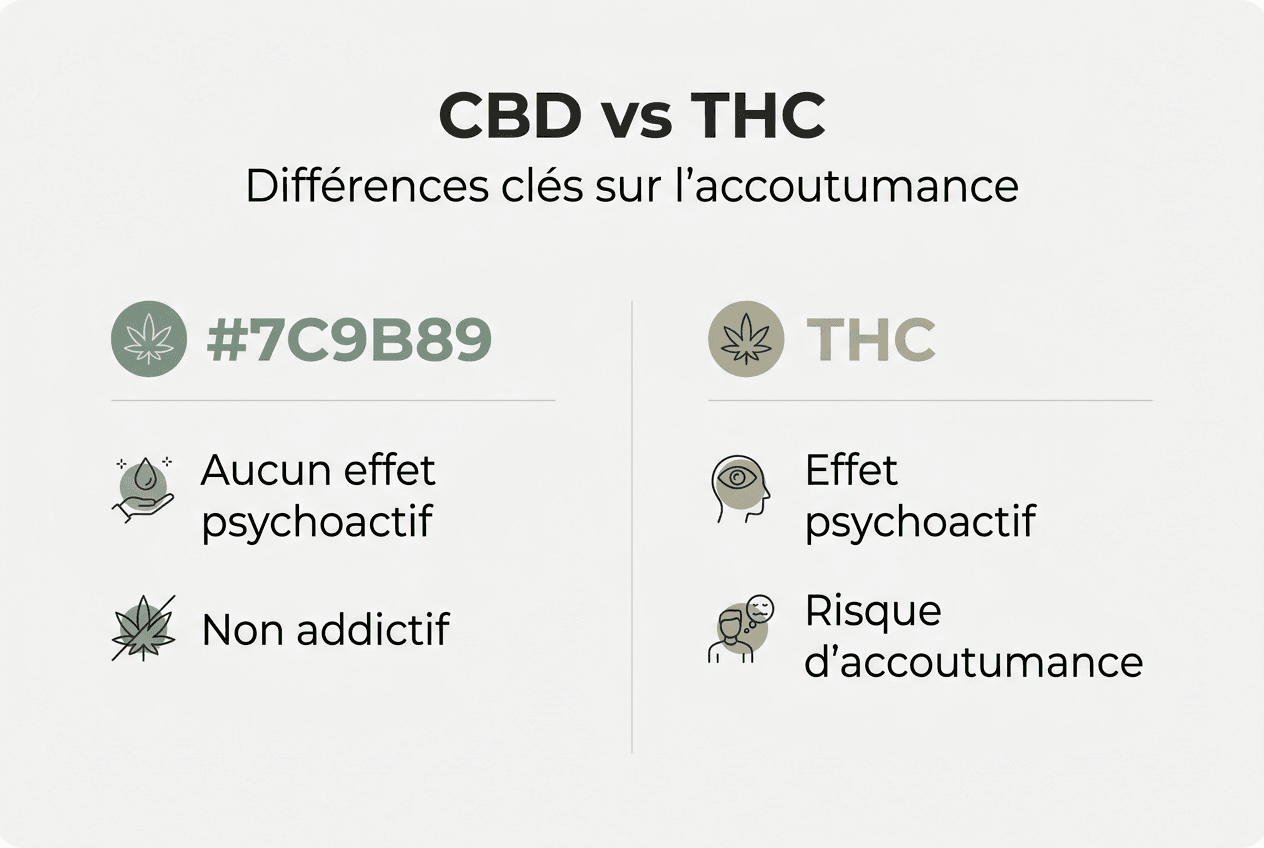
Contrary to a common belief, CBD does not produce the psychoactive effects associated with THC, making it non-addictive. This fundamental characteristic makes cannabidiol a promising alternative to conventional treatments for chronic pain, anxiety, and sleep disorders, which are often linked to addiction risks. This comprehensive guide will explain why CBD does not cause tolerance, how it works in your body, and how to use it effectively to manage your symptoms without fear of addiction. You will also discover the differences between available formulations and practical advice for responsible and safe use.
Table of Contents
- Why CBD does not cause tolerance
- The benefits of CBD for pain, insomnia, and anxiety
- Differences between isolated CBD and full-spectrum oils: impact on effectiveness and safety
- Practical tips for using CBD without tolerance or side effects
- Discover our certified CBD products without tolerance risk
- Does CBD cause dependence?
Key takeaways
| Dot | Details |
|---|---|
| Non-addictive | CBD does not act on the CB1 receptors responsible for addiction, unlike THC |
| Multiple benefits | It helps manage pain, anxiety, and insomnia without psychoactive effects or risk of tolerance |
| Proven effectiveness | 80.9% of users report an improvement in their symptoms according to recent studies |
| Mild side effects | Drowsiness affects about 29% of users, an effect generally well tolerated |
| Responsible use | Gradual dosing and medical supervision ensure the best therapeutic results |
Why CBD does not cause tolerance
The mechanism of action of CBD differs radically from that of THC, which explains its remarkable safety profile. While THC binds strongly to CB1 receptors in the endocannabinoid system in the brain, causing psychoactive effects and potential addiction, CBD does not bind strongly to these receptors responsible for feelings of euphoria and dependence. This fundamental molecular difference ensures that you can use CBD without fear of developing tolerance.
The endocannabinoid system regulates many essential bodily functions. CB1 receptors, concentrated in the brain, play a crucial role in pain perception, mood, and appetite. CB2 receptors, mainly found in the immune system, are involved in inflammatory processes. CBD interacts with these two types of receptors indirectly, modulating their activity without directly activating them as THC would.
This “promiscuous” nature of CBD, according to experts, allows it to act on multiple molecular targets simultaneously. It influences serotonin 5-HT1A receptors involved in anxiety, modulates ion channels responsible for pain transmission, and interacts with vanilloid receptors. This multiplicity of actions explains its varied therapeutic benefits without causing physical or psychological dependence.
The purity and quality of the product remain essential to guarantee this safety. Products contaminated with THC or cut with questionable substances may pose risks. Here are the criteria to check:
- Certification by an independent laboratory confirming the absence of THC beyond legal limits
- Complete traceability from hemp cultivation to the finished product
- Free from heavy metals, pesticides, and residual solvents
- CBD concentration clearly indicated on the label
Pro tip: Always choose products tested in laboratories with available certificates of analysis. This transparency protects you from risks associated with low-quality products and ensures the expected therapeutic effectiveness.
The benefits of CBD for pain, insomnia, and anxiety
CBD acts as a natural modulator of the endocannabinoid system, offering a therapeutic approach without the side effects of conventional treatments. Its interaction with serotonin 5-HT1A receptors explains its remarkable anxiolytic properties, while its anti-inflammatory action effectively relieves chronic pain. Clinical trials confirm its effectiveness in reducing pain, improving sleep, and decreasing anxiety.
CBD’s mechanisms of action are multiple and complementary. It acts as a neuroprotector by reducing nervous system inflammation, as an anti-inflammatory by modulating the immune response, and as an anxiolytic by regulating serotonin levels. Its antipsychotic properties also help stabilize mood without causing excessive sedation. This unique combination of therapeutic effects makes it a valuable alternative to traditional medications.

A recent 2025 study on chronic pelvic pain shows that 80.9% of women report significant pain improvement with CBD. These results are accompanied by benefits on associated symptoms such as sleep disorders, anxiety, and overall quality of life. This remarkable effectiveness contrasts sharply with the often disappointing success rates of conventional treatments.
| Criteria | CBD | Conventional medications |
|---|---|---|
| Risk of addiction | None | High for opioids and benzodiazepines |
| Side effects | Mild, mainly drowsiness | Numerous, sometimes severe |
| Tolerance | Rare | Common, requires dose increase |
| Withdrawal syndrome | Absent | Present in most cases |
CBD for pain management offers a gradual and customizable approach. Start with a low dose of 10 to 20 mg per day and increase gradually based on your individual response. This method helps identify your optimal dosage while minimizing potential side effects. Using CBD for anxiety and sleep follows the same principles of progressive adjustment.
Pro tip: Take your CBD at fixed times to maintain stable levels in your body. This consistency maximizes therapeutic effectiveness and helps you better evaluate the effects on your symptoms.
Medical supervision remains essential when using CBD therapeutically. Your doctor can adjust your existing treatments, monitor potential interactions, and objectively assess the improvement of your symptoms. This collaborative approach ensures the safe and optimal use of CBD as a complement or alternative to conventional treatments.
Differences between isolated CBD and full-spectrum oils: impact on effectiveness and safety
The choice between isolated CBD and full-spectrum formulation directly influences the effectiveness of your treatment. Isolated CBD contains only 99% pure cannabidiol, while full-spectrum oils contain all the cannabinoids, terpenes, and flavonoids naturally present in hemp. This difference in composition creates distinct therapeutic effects that need to be understood to optimize your results.
The entourage effect refers to the synergy between the different cannabis compounds that amplifies their individual benefits. Terpenes like myrcene enhance relaxing properties, while limonene boosts anxiolytic effects. Minor cannabinoids like CBG and CBN provide their own therapeutic benefits. This complex interaction explains why full-spectrum oils prove particularly effective for migraines with acceptable side effects.
| Feature | Isolated CBD | Full-spectrum |
|---|---|---|
| Composition | 99% pure CBD only | CBD plus other cannabinoids and terpenes |
| Entourage effect | Absent | Present and beneficial |
| THC traces | None | Legal, below 0.2% |
| Effectiveness | Good for targeted symptoms | Superior for complex disorders |
| Screening tests | No risk | Minimal theoretical risk |
Full-spectrum extracts offer multi-symptom benefits and allow for a reduction in medication use in chronic pain syndromes. Patients report significant improvements not only in pain but also in motor skills, mood, and energy levels. This holistic approach better matches the complexity of chronic conditions that simultaneously affect multiple body systems.
The endocannabinoid system responds differently depending on the formulation used. Full-spectrum products activate more receptors and metabolic pathways, creating a more comprehensive therapeutic response. This multiple activation explains their superior effectiveness for complex disorders combining pain, inflammation, anxiety, and sleep disturbances.
The specific benefits of full-spectrum formulations include:
- Improvement in motor skills and muscle coordination
- Mood stabilization and reduction of emotional fluctuations
- Increased energy levels without stimulant effects
- Better management of chronic inflammatory symptoms
- Gradual reduction of conventional medication needs
Pro tip: Consult a healthcare professional familiar with CBD to determine which formulation best suits your specific symptoms. Isolated CBD is ideal for sensitive individuals or those subject to strict drug testing, while full-spectrum offers maximum effectiveness for complex conditions.
Practical advice for using CBD without dependence or side effects
Before starting your CBD treatment, certain key precautions ensure safe and effective use. Medical consultation remains crucial, especially if you are already taking medications or have chronic conditions. Your doctor will assess potential interactions and adjust your existing treatments if necessary. This cautious approach prevents complications and maximizes therapeutic benefits.
The essential precautions to know include:
- Check the legality of CBD in your country and comply with authorized THC limits
- Avoid driving or operating machinery during the first hours after taking it
- Inform your doctor of all your current treatments before starting CBD
- Choose certified products with available laboratory analyses
- Always start with the lowest recommended doses
To find your optimal dosage, follow this methodical progression:
- Start with 10 mg of CBD per day, preferably in the evening to assess tolerance
- Maintain this dose for 3 to 5 days while carefully observing your reactions
- Increase by 5 mg every 3 days until you achieve the desired therapeutic effect
- Consistently record your symptoms, effects felt, and sleep quality
- Stabilize your effective dose for 2 weeks before making any further adjustments
- Reassess monthly with your doctor to optimize the treatment
CBD can interact with certain medications by altering their liver metabolism. It notably inhibits cytochrome P450 enzymes responsible for breaking down many drugs. This interaction can increase or decrease the effectiveness of your current treatments, which is why medical supervision is important. Anticoagulants, antiepileptics, and some antidepressants require special caution.
Drowsiness affects about 29% of CBD users, making it the most common side effect. This effect is usually mild and can even be beneficial for people suffering from insomnia. If drowsiness bothers you during the day, take your main dose in the evening and reduce morning doses. Other possible side effects include mild dry mouth, changes in appetite, or rare digestive issues.
Pro tip: Keep a detailed journal of your CBD use including dose, time taken, effects felt, and symptom changes. This traceability helps you identify your optimal dosage precisely and facilitates discussions with your doctor to adjust treatment.
CBD dosing for insomnia and anxiety requires a personalized approach considering your weight, metabolism, and symptom severity. Responsible use also means respecting your country’s legal recommendations regarding THC levels and authorized administration methods. Prefer purchases from certified distributors who guarantee product traceability and quality.
Discover our certified CBD products with no risk of dependence
Are you looking for pharmaceutical-grade CBD products to naturally manage your pain, anxiety, or sleep disorders? Our rigorously tested selection guarantees optimal effectiveness without the risk of dependence. Each product undergoes analysis in an independent laboratory certifying its purity and exact cannabinoid concentration.
Our super relax CBD & CBG oil combines the complementary benefits of these two cannabinoids for deep and lasting relaxation. This full-spectrum formulation maximizes the entourage effect while remaining fully legal with less than 0.2% THC. For a different experience, our CBD amnesia haze pre-roll offers a convenient and discreet alternative to oils.
European CBD Shop delivers throughout the European Union, the United Kingdom, and Switzerland, ensuring you quick access to products certified to meet the strictest regulations. Discover why we are among the best CBD shops in Europe thanks to our commitment to quality and expert customer service. Explore our full catalog to find the perfect CBD solution tailored to your specific needs.
Does CBD cause dependence?
Does CBD cause dependence?
No, CBD does not cause dependence because it does not strongly bind to the brain’s CB1 receptors responsible for addictive effects. Unlike opioids or benzodiazepines used to treat pain and anxiety, CBD does not activate the brain’s reward circuits. You can stop using it at any time without withdrawal symptoms or cravings.
What is the difference between CBD and THC regarding addiction?
THC binds directly to CB1 receptors in the endocannabinoid system, causing psychoactive effects and potential addiction. CBD works differently by indirectly modulating these receptors without creating euphoria or dependence. This fundamental difference explains why CBD is legal in many countries while THC remains regulated. Legal CBD products contain less than 0.2% THC, eliminating any risk of addiction.
What are the common side effects of CBD?
Drowsiness affects about 29% of CBD users, making it the most common side effect. This effect is generally mild and can even be beneficial for people suffering from insomnia. Other possible side effects include mild dry mouth, temporary changes in appetite, or rare digestive issues. These symptoms are much less problematic than those from conventional pain and anxiety treatments.
Can I combine CBD with other medications?
CBD can alter the effect of certain medications by inhibiting liver enzymes responsible for their metabolism. This interaction particularly concerns blood thinners, antiepileptics, and some antidepressants. Be sure to consult your doctor before combining CBD with your current treatments. Medical supervision allows dosage adjustments and helps avoid unwanted interactions while maximizing therapeutic benefits.
How do I find the right CBD dose for me?
Start with 10 mg of CBD per day and gradually increase by 5 mg every 3 days until you achieve the desired effect. Your optimal dosage depends on your weight, metabolism, and severity of symptoms. Keep a journal detailing your intake, effects felt, and symptom progression to precisely identify the effective dose. Our dosage guide for insomnia and anxiety supports you in this personalized approach for optimal results.