
Types of pain relieved by CBD: 50% reduction in neuropathy
Up to 50% of people suffering from neuropathic pain could benefit from relief through CBD. This statistic reveals the considerable potential of this natural molecule against chronic pain, a scourge affecting millions of Europeans. But what types of pain does CBD actually relieve? How does it work on your body, and how can you use it effectively? This guide explains everything you need to know to harness CBD’s potential in the natural management of your pain.
Table of Contents
- Introduction to CBD and chronic pain
- How does CBD work on pain?
- Specific types of pain relieved by CBD
- Common myths and misconceptions about CBD and pain
- Comparison of CBD with other natural and pharmaceutical treatments
- Practical use: recommendations for effective and safe CBD use
- Conclusion and outlook
- Discover our certified CBD solutions to relieve your pain
- Frequently Asked Questions
Key points to remember
| Dot | Details |
|---|---|
| Endocannabinoid modulation | CBD acts on the endocannabinoid system to reduce inflammation and pain perception. |
| Targeted effectiveness | Inflammatory and neuropathic pain respond particularly well to CBD. |
| Gradual onset of action | Effects generally appear after 2 to 4 weeks of regular use. |
| Drug complementarity | CBD often reduces opioid use but does not completely replace conventional treatments. |
| Optimal full spectrum | Full-spectrum extracts are up to 30% more effective than pure isolates. |
Introduction to CBD and chronic pain
CBD, or cannabidiol, is a non-psychoactive molecule extracted from cannabis. Unlike THC, it does not cause euphoria or altered consciousness. This fundamental distinction makes it a natural therapeutic option acceptable for daily use.
In Europe, about 20% of the adult population suffers from chronic pain that significantly impacts their quality of life. This pain lasts beyond three months and often resists conventional treatments. Faced with the side effects of anti-inflammatory drugs and the dependency risks of opioids, more and more people are seeking natural alternatives.
CBD draws attention for several reasons:
- Generally favorable side effect profile
- Acts on multiple pain mechanisms simultaneously
- No addictive potential unlike opioids
- Possible compatibility with other treatments
CBD mainly works by modulating the endocannabinoid system, which plays a key role in regulating pain and inflammation in the body. This biological system, present in all mammals, uses CB1 and CB2 receptors scattered throughout the body. Understanding this endocannabinoid system and pain is the first step to grasping why CBD can relieve certain types of pain.
CB1 receptors are mainly concentrated in the central nervous system, while CB2 receptors predominate in the immune system and peripheral tissues. This distribution explains CBD’s broad action on different types of pain. Studies on the endocannabinoid system show that modulating these receptors directly influences pain perception.
How does CBD act on pain?
The endocannabinoid system regulates the transmission of pain signals between neurons. CBD does not directly activate CB1 and CB2 receptors as THC does. It modulates their activity indirectly, thus influencing pain perception without causing psychoactive effects.
CBD’s mechanisms of action on pain include:
- Inhibition of anandamide reuptake, a natural pain-relieving cannabinoid produced by your body
- Activation of TRPV1 receptors involved in pain and inflammation perception
- Reduction of pro-inflammatory cytokine production responsible for persistent pain
- Modulation of serotonin receptors involved in pain management
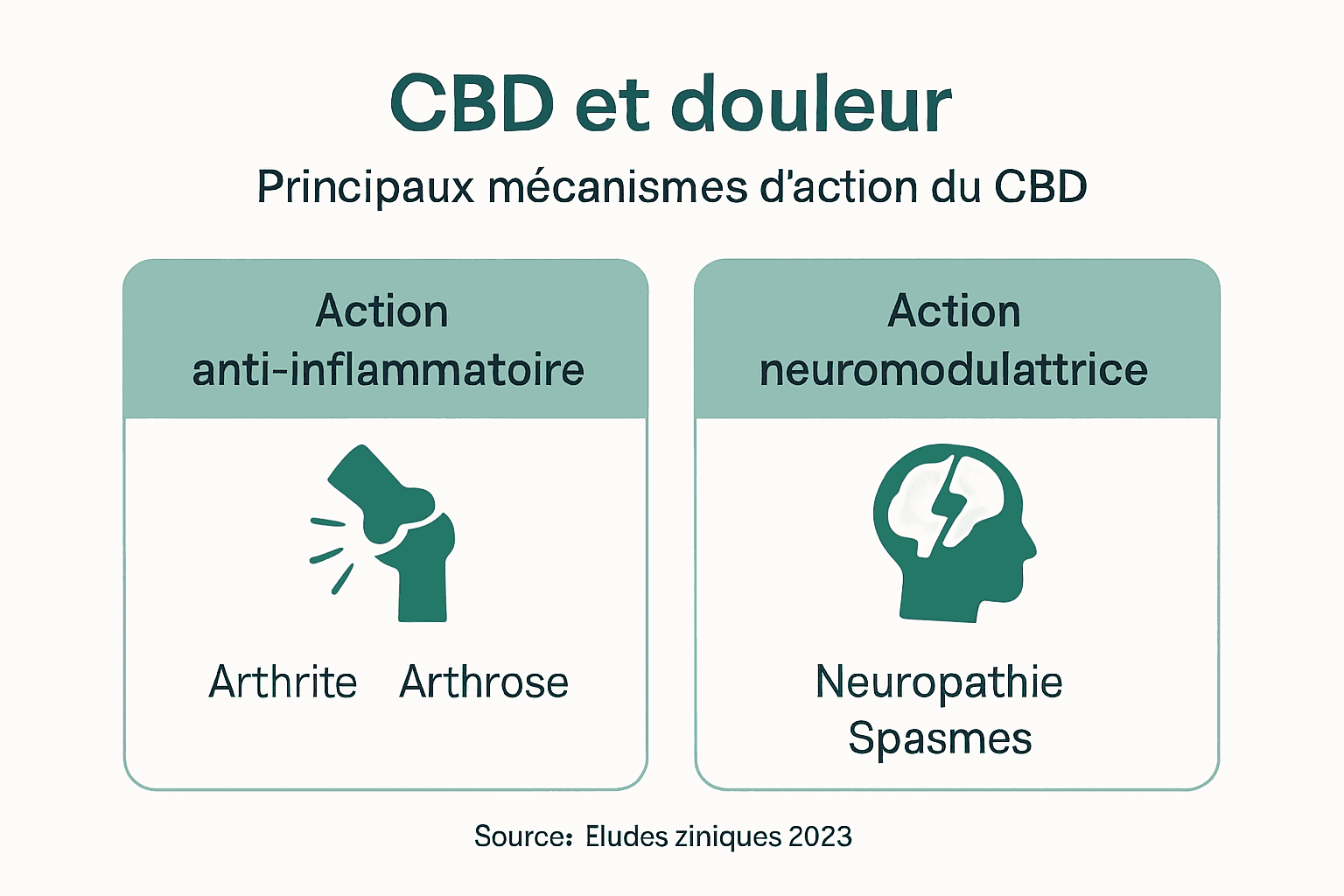
CBD’s impact on the endocannabinoid system results in a gradual reduction of chronic inflammation. This anti-inflammatory action is one of CBD’s main strengths against persistent pain. Unlike traditional anti-inflammatories that abruptly block certain enzymes, CBD gently rebalances inflammatory signals.
On the neuromodulatory level, CBD reduces neuronal hyperexcitability responsible for neuropathic pain. It decreases the excessive transmission of pain signals along damaged nerves. Research on CBD’s mechanisms of action confirms this ability to normalize nerve function without completely blocking transmission.
Pro tip: Patience remains essential with CBD. Its effects build gradually over several weeks. Maintaining regular use helps optimize the modulation of the endocannabinoid system and achieve lasting relief rather than just temporary masking of symptoms.
Specific types of pain relieved by CBD
Inflammatory pain responds particularly well to the anti-inflammatory properties of CBD. Arthritis and osteoarthritis, which affect millions of Europeans, cause chronic joint inflammation that leads to intense pain. CBD reduces this inflammation by acting on immune cells and decreasing the production of pro-inflammatory molecules.
Neuropathic pain, among the most difficult to treat, also shows a favorable response to CBD. CBD reduces the neuronal hyperexcitability characteristic of multiple sclerosis and diabetic neuropathy. These pains result from nerve damage that sends incorrect signals to the brain, creating sensations of burning, tingling, or electric shocks.

Here is a summary table of the pains relieved:
| Type of pain | CBD mechanism of action | Relative effectiveness |
|---|---|---|
| Arthritis and osteoarthritis | Reduction of joint inflammation through cytokine inhibition | High (60 to 70%) |
| Diabetic neuropathy | Modulation of nerve hyperexcitability and neuron protection | Medium to high (40 to 60%) |
| Multiple sclerosis | Reduction of spasms and neuropathic pain | High (50 to 65%) |
| Fibromyalgia | Action on multiple pain pathways simultaneously | Variable (30 to 50%) |
| Muscle spasms | Muscle-relaxing and antispasmodic effect | Medium to high (45 to 60%) |
Muscle spasms benefit from the muscle-relaxing properties of CBD. This relaxing effect especially helps people suffering from chronic tension or dystonia. CBD relaxes contracted muscles without causing the excessive drowsiness typical of traditional muscle relaxants.
Certain limits do exist, however. Severe cancer or post-operative pain often requires stronger painkillers. CBD can complement these treatments but rarely fully replace them. Similarly, migraines show variable responses to CBD depending on the individual and specific triggers. To optimize chronic pain relief, a personalized assessment remains essential.
Common myths and misconceptions about CBD and pain
- CBD acts instantly on all pain
CBD effects appear gradually after several days to weeks of regular use. Unlike conventional analgesics that quickly mask pain, CBD rebalances biological systems deeply. This foundational action takes time but offers longer-lasting relief.
- CBD replaces all pain medications
This dangerous belief can lead to abruptly stopping necessary treatments. CBD reduces opioid dependence in some patients by allowing doses to be gradually lowered. But it complements existing treatments rather than completely replacing them. Medical coordination remains essential.
- All CBD products offer the same effectiveness
Quality varies greatly between products. Pure CBD isolates lack the entourage effect provided by secondary cannabinoids and terpenes. Full-spectrum extracts retain these beneficial compounds that work synergistically. This difference directly impacts effectiveness on pain.
- CBD causes no side effects
Although generally well tolerated, CBD can cause fatigue, diarrhea, or changes in appetite in some people. These effects are usually mild and temporary. They often disappear with dosage adjustment. Transparency about these aspects builds trust rather than diminishing it.
"A realistic understanding of CBD as a complementary tool rather than a miracle cure allows its full potential to be harnessed within a comprehensive approach to pain management."
The relationship between CBD and medications shows that 70% of users notice improvement in 2026. This encouraging statistic reflects informed use and adjusted expectations. Information about CBD's onset time helps maintain the necessary consistency. Patience combined with regular use maximizes the chances of success.
Comparison of CBD with other natural and pharmaceutical treatments
CBD’s positioning compared to existing alternatives deserves an objective analysis. Each option has advantages and limitations depending on the type of pain and individual profile.
| Treatment | Effectiveness | Side effects | Dependence risk | Action |
|---|---|---|---|---|
| CBD | Moderate to high (variable) | Low (fatigue, diarrhea) | None | Anti-inflammatory, neuromodulator |
| NSAIDs (ibuprofen) | High short-term | Moderate (ulcers, kidney issues) | None | Anti-inflammatory |
| Opioids | Very high | Significant (constipation, drowsiness) | High | Pain receptor blockade |
| Herbal medicine (turmeric, ginger) | Low to moderate | Very low | None | Mild anti-inflammatory |
CBD’s side effects remain minor compared to nonsteroidal anti-inflammatory drugs and opioids. NSAIDs can cause gastric ulcers and kidney problems with prolonged use. Opioids lead to severe constipation, excessive drowsiness, and risk of physical dependence.
The benefits of CBD include:
- Simultaneous action on inflammation and neuromodulation
- Favorable safety profile for long-term use
- Possible reduction of doses of other medications
- No liver or kidney toxicity at recommended doses
CBD’s limitations include variable effectiveness depending on individuals and types of pain. Some people respond remarkably well, others modestly. This variability requires a trial period to assess personal response. Additionally, the cost of quality products can be a barrier for some budgets.
Traditional herbal medicine offers mild anti-inflammatory effects but is insufficient for moderate to severe pain. Turmeric or ginger complement CBD well but do not replace it. The CBD effectiveness comparison against natural alternatives shows its superiority for significant chronic pain.
Pro tip: A combined approach often optimizes results. Pairing CBD with physiotherapy, or CBD with stress management techniques, can enhance relief without increasing risks. Consult a professional to develop a personalized strategy that leverages the synergies between different methods.
Practical use: recommendations for effective and safe use of CBD
- Choose a certified quality product
Prefer full-spectrum extracts tested in laboratories. Full-spectrum extracts are up to 30% more effective than pure isolates thanks to the entourage effect. Check certificates of analysis confirming cannabinoid content and absence of contaminants. Certified products guarantee a stable and predictable composition.
- Start gradually with low doses
Start with 10 to 15 mg of CBD per day. Keep this dose for a full week before increasing. This approach helps identify your sensitivity threshold and avoid side effects. Some people respond to low doses while others need 40 to 60 mg daily.
- Maintain strict regularity
Take your CBD at the same times every day. Consistency allows the endocannabinoid system to stabilize and optimize its response. Irregular dosing prevents the gradual buildup needed for maximum effectiveness. Consider integrating the dose into an existing routine like breakfast or bedtime.
- Adjust according to the type of pain
Inflammatory pain responds well to moderate doses (20 to 40 mg). Neuropathic pain may require higher doses (40 to 60 mg). Adjust gradually based on your response. Keep a journal to track symptom changes and identify the optimal dose.
- Consult before making any therapeutic changes
CBD can interact with certain medications metabolized by the liver. Inform your doctor before adding CBD, especially if you take blood thinners or antiepileptics. Medical supervision allows safe adjustment of existing treatments.
- Combine with other complementary approaches
Combining CBD with other therapies significantly improves overall pain management. Physical therapy, meditation, or acupuncture can enhance CBD’s benefits. This integrative approach leverages multiple mechanisms simultaneously for optimal relief.
The effective CBD product choice requires attention to detail. Look for transparency about the hemp’s origin, extraction method, and third-party testing. Organic products grown without pesticides offer extra safety. The CBD entourage effect justifies investing in full-spectrum extracts rather than cheap isolates.
Pro tip: Photograph your painful areas and rate the intensity on a scale from 1 to 10 before starting CBD. Repeat weekly to objectively track improvement. This concrete documentation helps evaluate real effectiveness and adjust the protocol if needed. It also facilitates communication with your healthcare professional.
Conclusion and outlook
CBD offers a promising natural approach to relieve several types of chronic pain. Its action on the endocannabinoid system modulates both inflammation and painful nerve signaling. Inflammatory pains like arthritis and neuropathic pain respond particularly well to this molecule.
The gradual effects of CBD require patience and consistency. Allow at least two to four weeks of continuous use before fully assessing the benefits. This timeline differs from traditional painkillers but provides more lasting and physiological relief.
Current limitations include significant individual variability and the need for more large-scale clinical studies. Research in 2026 is rapidly advancing to better understand optimal dosages for each painful condition. The precise mechanisms of the entourage effect remain partially understood.
"CBD represents a valuable complementary tool in the therapeutic arsenal against chronic pain, especially for those seeking to reduce their dependence on conventional medications while maintaining their quality of life."
The future of CBD in pain management looks promising. Formulations are improving with optimized cannabinoid ratios for specific conditions. The integration of CBD into official medical protocols is advancing in several European countries. This growing recognition will ease access and strengthen user confidence.
Take an informed and safe approach to incorporating CBD into your pain management strategy. Choose certified products, consult healthcare professionals, and adjust gradually based on your personal response. This thoughtful approach maximizes your chances of lasting relief.
Discover our certified CBD solutions to relieve your pain
Are you looking for pharmaceutical-grade CBD products to manage your chronic pain? Our rigorous selection of certified full-spectrum products meets the highest European standards. Each product undergoes independent laboratory testing to guarantee purity, concentration, and absence of contaminants.

Our team of experts supports you in choosing the right product for your specific type of pain. We deliver discreetly and quickly throughout the European Union, the United Kingdom, and Switzerland. Explore our full range and benefit from personalized advice to optimize your natural relief.
Discover why we are recognized as the best CBD shop in Europe by thousands of satisfied users. Our comprehensive guide helps you choose your CBD product based on your specific needs and profile.
Frequently Asked Questions
What types of pain can CBD effectively relieve?
CBD mainly relieves inflammatory pain such as arthritis and osteoarthritis thanks to its anti-inflammatory properties. Neuropathic pain related to multiple sclerosis or diabetes also responds well. Its effectiveness varies depending on the severity and cause of the pain.
How long does it take to feel the effects of CBD on pain?
Effects usually appear after 2 to 4 weeks of regular, continuous use. Some people notice slight improvement in the first week, but optimal relief requires patience and consistency. Progress is gradual rather than immediate.
Can CBD completely replace pain medications?
CBD often helps reduce doses of opioids and anti-inflammatory drugs but rarely eliminates them completely. It complements existing treatments rather than fully replacing them. Always consult a healthcare professional before changing your treatment plan.
What criteria should you use to choose an effective CBD product for pain?
Choose certified full-spectrum extracts with independent lab testing. Check the CBD concentration, the origin of the organic hemp, and the CO2 extraction method. Adjust the form (oil, capsule) and dosage according to your type of pain and professional advice.
Does CBD cause significant side effects?
Side effects are generally mild and include fatigue, changes in appetite, or diarrhea in some people. These symptoms often disappear with dosage adjustment. Unlike THC, CBD does not cause dependence or cognitive impairment.