
Why is CBD legal in Europe? 0.2% THC explained
Do you think CBD is illegal because it comes from cannabis? Think again. In Europe, CBD is completely legal and its market doubled between 2019 and 2025. The key lies in one precise figure: a maximum of 0.2% THC. Thousands of Europeans already use CBD to relieve chronic pain, anxiety, and insomnia, all legally. This guide explains why this molecule is authorized and how to enjoy it with peace of mind.
Table of Contents
- Key points to remember
- Introduction to CBD and its popularity in Europe
- Understanding the difference between CBD and THC
- The European legal framework for CBD
- Myths and misconceptions about CBD legality
- Relationship between industrial hemp cultivation and CBD legality
- Practical consequences for European consumers
- Conclusion: why CBD legality is an asset for well-being
- Discover our compliant and safe CBD products
- Frequently asked questions about CBD legality in Europe
Key points to remember
| Dot | Details |
|---|---|
| Strict legal limit | CBD is allowed because it contains less than 0.2% THC according to European regulations. |
| No psychoactive effect | CBD causes no intoxication, unlike THC which alters consciousness. |
| Major legal validation | The European Court of Justice confirmed in 2020 that legal CBD is not a drug. |
| Persistent misconceptions | Many consumers still confuse legal CBD with recreational cannabis despite clear rules. |
| Harmonized European framework | Uniform legislation facilitates secure access to CBD products throughout the European Union. |
Introduction to CBD and its popularity in Europe
Cannabidiol, or CBD, is a natural molecule extracted from industrial hemp. Unlike THC, it does not cause any psychoactive effects and does not alter your state of consciousness. This fundamental characteristic explains why it attracts so many European consumers.
Thousands of people turn to CBD to manage their symptoms daily. The most common uses include:
- Relief from chronic joint and muscle pain
- Reduction of daily anxiety and stress
- Improvement of sleep quality and fight against insomnia
- Reduction of skin and body inflammations
The popularity of CBD in Europe is explained by impressive figures. The European CBD market doubled between 2019 and 2025, mainly thanks to the legal clarity provided by THC regulations. This spectacular growth reflects increasing consumer confidence.
This massive popularity naturally raises essential questions. How can this substance be legal when it comes from the same plant as recreational cannabis? What guarantees regulate its production and sale? Understanding these aspects becomes crucial for consuming with peace of mind.
Understanding the difference between CBD and THC
Cannabis contains more than one hundred different cannabinoids, but two dominate the debate: CBD and THC. Their chemical structures are similar, but their effects on your body differ radically.
CBD does not produce psychoactive effects unlike THC, because it does not directly interact with the brain’s CB1 receptors responsible for intoxication. THC binds to these receptors and causes the characteristic euphoria of recreational cannabis. This pharmacological difference justifies their distinct legal status.
European legislation sets a strict limit of 0.2% THC in products derived from industrial hemp. Below this threshold, the product is considered legal and non-psychoactive. Above it, it falls into the category of controlled substances.
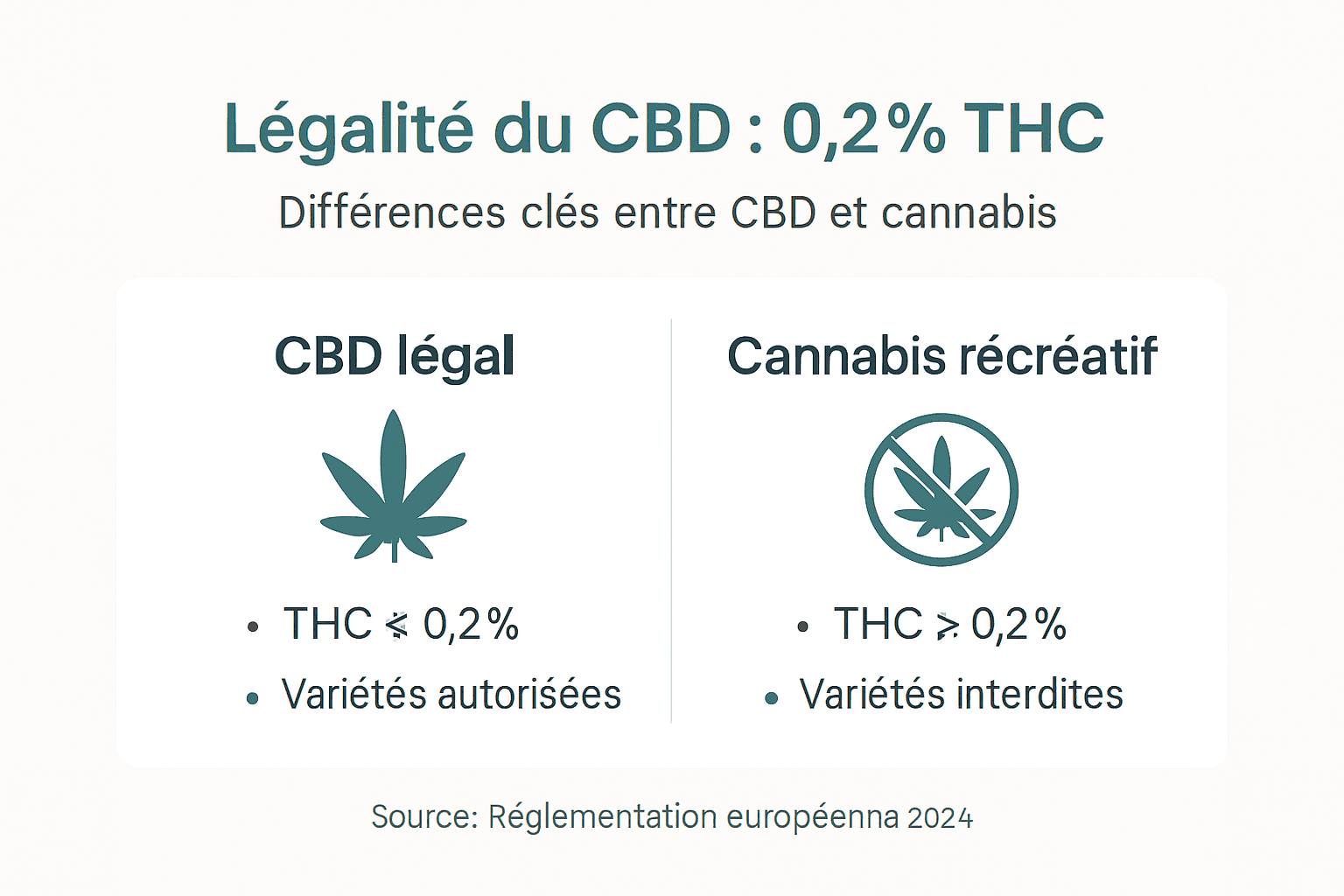
Here is a comparison chart to clarify these differences between CBD and THC:
| Criteria | Legal CBD | Recreational cannabis |
|---|---|---|
| THC content | ≤ 0.2% | > 0.2% (often 5-25%) |
| Psychoactive effect | None | Yes, intoxication |
| Legal status in Europe | Allowed | Prohibited (except national exceptions) |
| Typical use | Well-being, relief | Recreational, intoxication |
| Risk of dependence | Very low according to WHO | Moderate to high |
Pro tip: Always check the label on your CBD products. A reputable seller clearly displays the THC content and provides independent lab analyses. This transparency protects you and ensures legal compliance.
Pharmacological studies on CBD confirm its favorable safety profile. Unlike THC, CBD does not impair your cognitive abilities or coordination. You can use it during the day without fear of intoxicating side effects.
The European legal framework for CBD
European CBD regulations are based on precise and measurable criteria. European legislation, notably Regulation (EU) No 1307/2013, authorizes CBD extracted from hemp varieties with a THC level less than or equal to 0.2%. This clear limit avoids any legal ambiguity.
The industrial hemp used must come from strictly authorized varieties listed in the European catalog of plant species. These varieties are genetically selected for their low THC content. Farmers must follow strict cultivation protocols and undergo regular inspections.
A major legal turning point occurred in November 2020. The European Union Court of Justice ruling confirmed that legal CBD extracted from hemp plants is not a drug, strengthening its legality. This judgment eliminated the last gray areas and harmonized interpretation across the Union.
The gradual harmonization between member countries stabilizes the market. Each state can apply additional rules, but the European foundation remains the same. This consistency facilitates the free movement of CBD products and protects consumers.
The obligations governing European producers and sellers include:
- Use exclusively certified and authorized hemp varieties
- Guarantee a THC level less than or equal to 0.2% in the finished product
- Provide independent laboratory analyses certifying compliance
- Comply with labeling standards and full traceability
- Register their activity with the relevant national authorities
This protective framework ensures that only compliant products reach you. Regular inspections and deterrent penalties maintain a high level of quality throughout Europe.
Myths and misconceptions about the legality of CBD
Despite the legal clarity, many common misconceptions about CBD persist and create unnecessary confusion. Let’s debunk the five most widespread myths.
-
CBD is recreational cannabis. False. A common misconception is that CBD is recreational cannabis, whereas in reality CBD is a non-intoxicating molecule extracted from industrial hemp that contains very little THC. The confusion comes from the common origin, but the effects and legal status are completely different.
-
All CBD products contain a lot of THC. False. Legal products strictly comply with the 0.2% THC limit. This tiny amount causes no psychoactive effects. Mandatory testing guarantees this compliance.
-
CBD is an addictive drug. False. The World Health Organization confirms that CBD does not cause physical or psychological dependence. Unlike THC, it does not activate the brain’s reward circuits.
-
Buying CBD is illegal everywhere in Europe. False. The harmonized European framework allows the sale and purchase of compliant CBD in all member states. Some countries apply specific restrictions, but the general principle remains authorization.
-
CBD products are not regulated. False. Serious sellers submit their products to independent laboratory testing. These tests verify THC levels, absence of contaminants, and the declared CBD concentration.
Pro tip: Always favor sellers who publicly display their certificates of analysis. These documents, often called COAs (Certificate of Analysis), prove the product’s legal compliance and quality. Beware of sites that refuse to provide them.
National differences exist despite the common European framework. Some countries allow sales only in pharmacies, others in specialized shops. Check local rules before buying or traveling with CBD.
Relationship between industrial hemp cultivation and CBD legality
The legality of CBD is rooted in European agricultural regulations. European legislation, through Regulation (EU) No 1307/2013, sets strict agricultural standards for growing hemp containing less than 0.2% THC. This solid agricultural foundation ensures compliance throughout the entire production chain.
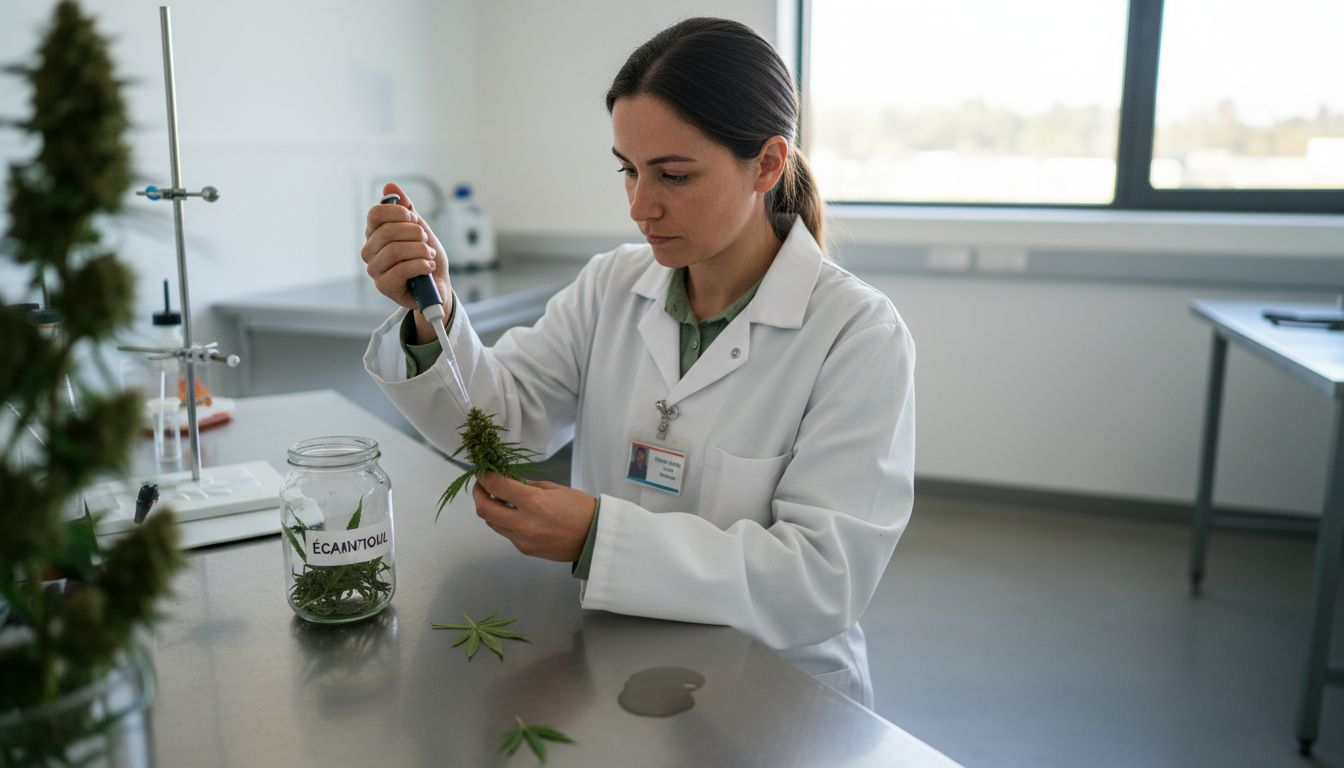
Industrial hemp is genetically different from recreational cannabis. Authorized varieties are selected to maximize fiber, seed, and CBD production while minimizing THC. This genetic selection takes decades and is the subject of extensive agronomic research.
Strict standards governing cultivation ensure that the final CBD never exceeds the legal limit. Farmers must follow a precise specification and undergo regular inspections by agricultural authorities. Any non-compliant plot is destroyed.
This regulation directly impacts the availability and quality of the products you buy. Well-cultivated hemp, compliant with standards, produces pure and safe CBD. Complete traceability allows tracking each product back to its original plot.
The control and certification steps in hemp cultivation and CBD use include:
- Selection of certified seeds from authorized European varieties
- Mandatory declaration of cultivated areas to agricultural authorities
- Regular analyses of THC levels during plant growth
- Random checks by independent bodies mandated by the State
- Harvest certification and documented traceability up to the final product
This agricultural rigor directly benefits consumers. You have the assurance that your CBD comes from a legal, controlled, and safe source. The transparency of this supply chain sets Europe apart from less regulated markets.
Practical consequences for European consumers
Understanding the theoretical legality is one thing; knowing how to buy in practice is another. Here’s how to secure your purchases and comply with regulations.
Always start by checking the THC content displayed on the label. A legal product clearly states a rate equal to or below 0.2%. The geographical origin of the hemp must also appear, ideally with the precise country of cultivation.
European certifications and laboratory analyses are your best allies. Serious sellers publish these documents on their website or provide them upon request. These independent analyses confirm not only compliance with the THC limit but also the absence of pesticides, heavy metals, or contaminants.
Compliant labeling includes several mandatory elements. You must find the CBD concentration, the full list of ingredients, the batch number for traceability, and the manufacturer's contact details. Incomplete or unclear labeling often indicates an unreliable seller.
CBD legality has revolutionized online purchasing possibilities. You can order from any European Union country and receive your package at home. Delivery times have shortened and payment options have multiplied.
Before each purchase, check these essential points:
- Detailed composition with clearly indicated CBD and THC levels
- Hemp origin and country of production explicitly stated
- Independent laboratory analysis certificate easily accessible
- Recent analyses dated less than 6 months old to guarantee freshness
- Compliance with European standards with cited regulatory references
Pro tip: Choose certified and specialized stores for secure CBD purchases. Beware of unusually low prices that often hide questionable quality or non-compliance. Quality legal CBD has an unavoidable production cost. CBD sales regulations protect your health above all.
If in doubt, contact the seller’s customer service directly. Ask specific questions about origin, testing, and certifications. A knowledgeable professional will respond transparently and provide the necessary documentary proof.
Conclusion: why CBD legality is an asset for well-being
The legal clarity around CBD is transforming access to natural wellness in Europe. This legality is no accident; it results from decades of scientific research, hemp genetic selection, and regulatory harmonization. Today, you benefit from a uniquely protective framework worldwide.
Legal guarantees ensure that every CBD product meets strict safety and quality standards. The 0.2% THC limit, rigorous agricultural controls, and mandatory laboratory analyses eliminate risks related to psychoactive substances. You can consume with complete peace of mind.
This regulatory framework encourages innovation and the development of tailored solutions. Whether you are looking to relieve chronic pain, reduce anxiety, or improve sleep, the European market now offers diverse and compliant products. The legal supply matches the quality of the best global standards.
Always consume responsibly and with full knowledge. Always check the certificates of analysis, choose transparent sellers, and follow the recommended dosages. Legality protects you, but your vigilance remains your best guarantee.
Discover our compliant and secure CBD products
You now know why CBD is legal in Europe and how to buy it with confidence. Take action with certified products that strictly comply with European regulations. Our full range meets all your wellness needs.
Discover the best CBD shop in Europe with fast delivery across the European Union, the United Kingdom, and Switzerland. Each product displays its analysis certificates and guarantees a compliant THC level. Also explore our CBD beauty products for a complete routine. Ready to buy CBD online safely? Benefit from our expertise and personalized advice to find the solution that fits your needs.
Frequently asked questions about CBD legality in Europe
Can CBD cause addiction like cannabis?
No, CBD does not cause physical or psychological dependence according to the World Health Organization. Unlike THC, it does not activate the brain's reward circuits responsible for addiction. You can stop using it at any time without withdrawal symptoms.
Can I travel with CBD in Europe?
Yes, you can travel with CBD containing up to 0.2% THC within the European Union. Always carry proof of purchase and the analysis certificate confirming compliance. Some countries have specific rules, so check the local legislation of your destination before traveling.
How to verify the quality and legality of a CBD product?
Check the independent laboratory analysis certificate that confirms the THC level and absence of contaminants. Verify that the label mentions the hemp origin, CBD concentration, and manufacturer contact details. Prefer sellers who publicly display their European certifications.
Is CBD reimbursed by social security in Europe?
No, CBD is generally not reimbursed because it is considered a dietary supplement or wellness product, not a medicine. Only a few cannabinoid-based medications prescribed by a doctor may be reimbursed in certain countries for specific conditions like severe epilepsy.