
CBD Side Effects Guide: Understanding and Managing
Finding the right balance with CBD can seem complex when anxiety sets in and safety becomes a priority. As a European consumer, it is essential to know the potential side effects to avoid drowsiness, digestive issues, or possible interactions with your medications. This guide walks you through step by step to adopt responsible use, discover common reactions, and adjust your consumption to protect your health and enjoy the benefits of CBD.
Table of contents
- Step 1: Prepare for responsible CBD use
- Step 2: Quickly identify common side effects
- Step 3: Effectively manage adverse reactions
- Step 4: Check and adjust usage for greater safety
Quick overview
| Key point | Explanation |
|---|---|
| 1. Check the THC level | Make sure the product does not exceed 0.3% THC to avoid unwanted psychoactive effects. |
| 2. Choose reliable sources | Buy CBD only from reputable suppliers with certificates of analysis to ensure safety. |
| 3. Document your symptoms | Keep a journal of your consumption and symptoms to identify your optimal dose. |
| 4. Be attentive to side effects | Watch for signs like drowsiness, digestive issues, or mood changes. |
| 5. Adjust your dose if necessary | If you experience adverse reactions, reduce the dose or take a break to assess the effects. |
Step 1: Prepare for responsible CBD use
Before consuming CBD, it is crucial to understand what you are putting into your body and how to use it healthily. This step will help you lay the right foundation for a safe and effective experience.
Start by checking the composition of your CBD product. The THC level must not exceed 0.3% according to current European regulations. This limit exists precisely to protect your health and avoid unwanted psychoactive effects. Always make sure the seller clearly displays this information on the label.
Also check the quality and traceability of the product. Look for CBD flowers from reputable suppliers who provide certificates of analysis. Unregulated products may contain contaminants or inaccurate composition. A reliable European store like this one offers you this safety guarantee.
Before starting, document your current health conditions and medications. Some medications, especially antiepileptics or anticoagulants, can interact with CBD. Talking to your doctor is never a bad idea, especially if you are taking other treatments.
Here are the key points to check before your first use:
Here is an overview of the different forms of CBD and their main advantages:
| CBD form | Speed of action | Dosage precision |
|---|---|---|
| Sublingual oil | Fast (20 minutes) | Very precise with dropper |
| Capsules | Slow (1-2 hours) | Fixed dose per unit |
| Flowers for vaporizing | Very fast (a few minutes) | Difficult to dose precisely |
| Creams/balms | Local, variable | Dosage difficult to estimate |
This table helps choose the form suited to your needs.
- Verify the THC level (maximum 0.3%)
- Check the product’s certificate of analysis
- Identify possible interactions with your medications
- Choose a reliable source to buy your CBD
- Note your current symptoms to track changes
Understanding cannabidiol and its psychoactive properties helps you adapt your consumption intelligently. CBD acts differently for each person, which is why this initial preparation is essential.
Also consult official recommendations on CBD safety to understand legal restrictions and health precautions specific to your region.
Preparing your CBD use from the start means avoiding problems later and maximizing your positive results.
Pro tip: Keep a simple journal before and during your first two weeks of CBD use, noting your anxiety, sleep, and any physical changes; this will help you find your optimal dose and quickly identify any adverse effects.
Step 2: Quickly identify common side effects
CBD affects everyone differently. Learning to recognize potential side effects allows you to act quickly if something seems off. This step helps you distinguish a normal reaction from a real concern.
The most common side effects of CBD usually appear within the first hours or days. Drowsiness is the most frequent effect, especially if you consume CBD in the evening. You might also feel some fatigue or a desire to rest more.

Digestively, pay attention to your stomach. Digestive issues like diarrhea or constipation may occur, especially during the first few days. Your eating habits might also change: some people experience reduced hunger while others notice an increase in appetite.
Here are the main signals to watch for during your consumption:
Here is a comparative overview of side effects according to CBD dosage:
| Dosage | Mild side effects | Possible side effects |
|---|---|---|
| Low (5-10 mg) | Subtle or absent | Occasional mild fatigue |
| Moderate (20-40 mg) | Drowsiness, appetite changes | Mild digestive issues |
| High (>50 mg) | Marked fatigue, dizziness | Nausea, digestive discomfort |
This allows for a more informed dose adjustment.
- Drowsiness or excessive fatigue
- Changes in appetite or weight
- Digestive issues or abdominal discomfort
- Mood changes or irritability
- Dry mouth or changes in taste
- Dizziness or mild headaches
The side effects of CBD can also include interactions with your current medications. If you take blood thinners or other chronic treatments, monitor your reaction closely. Consult your doctor immediately if you notice unusual changes in your health.
Some signs deserve special attention. Significant mood changes, extreme drowsiness, or persistent digestive problems after a few days justify a pause in your consumption. Do not continue as if nothing is wrong.
Most CBD side effects are mild and temporary, but recognizing them quickly gives you control over your experience.
Also note that pregnant or breastfeeding women should avoid CBD entirely due to insufficient safety data. Vulnerable populations require increased caution.
Pro tip: Photograph or note how you feel each day during your first week with CBD, mentioning your dose, time of consumption, and any symptoms observed; this creates a clear picture of your personal tolerance.
Step 3: Effectively manage adverse reactions
An adverse reaction to CBD does not mean you have to give up completely. Smart management means adjusting your approach and protecting your health. This step shows you how to respond calmly and effectively.
Your first action is to gradually reduce your dose. If you experience excessive drowsiness or digestive issues, decrease the amount you consume by 25 to 50 percent. Wait two to three days to see if the symptoms improve before adjusting again.
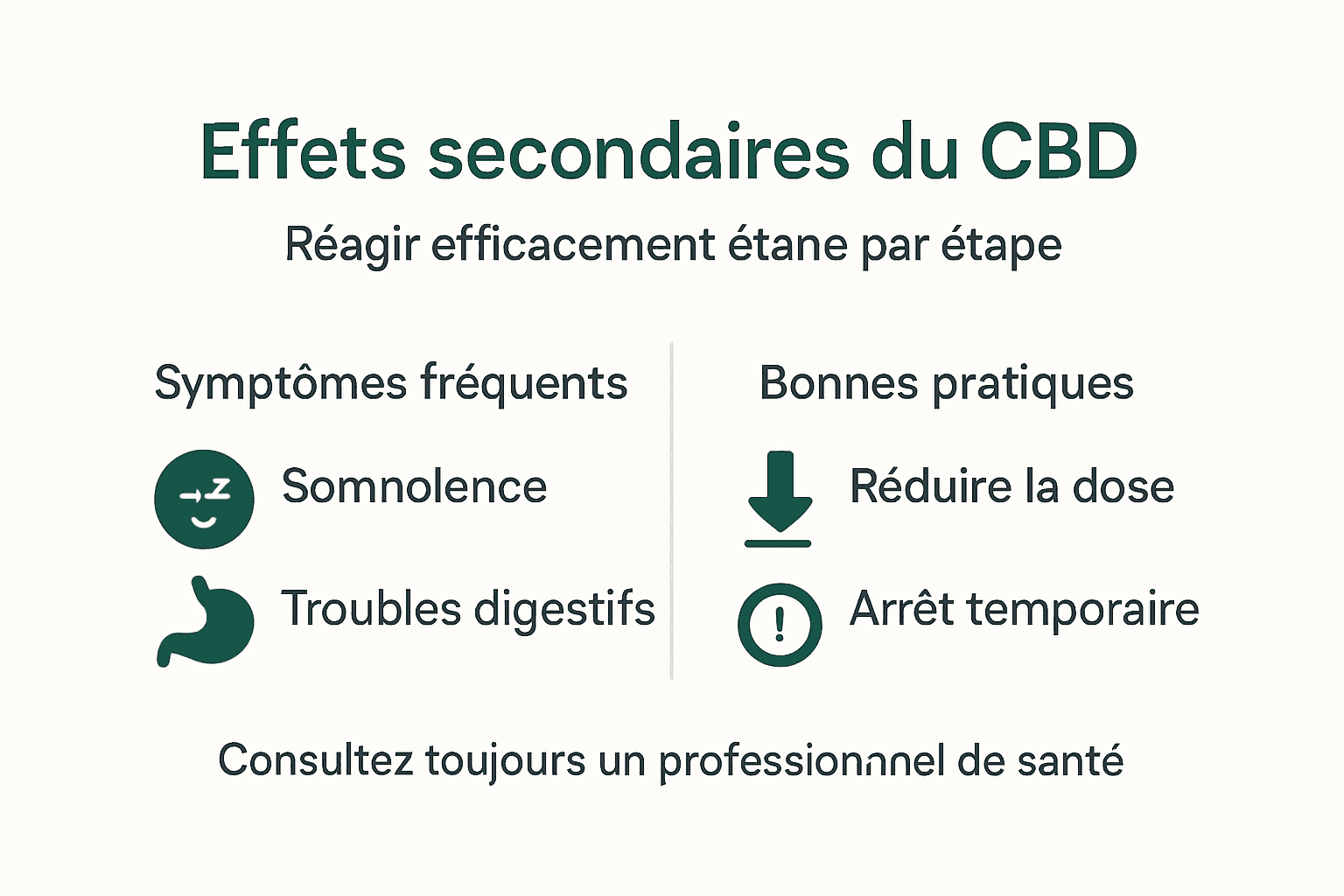
If a reaction persists or worsens, consider a temporary break of a few days. Your body needs time to fully eliminate CBD. During this pause, note how you feel to better understand if CBD was really the cause.
Medical consultation becomes essential in certain situations. Contact your doctor if you take medications that could interact with CBD. Regular monitoring, including liver function, may be necessary for your personal safety.
Here are the steps to follow in case of an adverse reaction:
- Stop or reduce your consumption immediately
- Note precisely when the reaction started
- Wait two to three days before resuming
- Consult a doctor if symptoms persist
- Consider a different product or an alternative source
- Check for possible interactions with your other medications
Responsible management also involves choosing standardized products. A lower-quality product may contain impurities that cause reactions. Always return to reliable suppliers like this one to avoid this complication.
Dosage adjustments should be gradual and documented. A cautious approach relies on early identification of symptoms and regular reassessment of your usage.
Managing an adverse reaction means taking control and finding the balance that works for your body.
Pro tip: If you have a reaction, try a dose half as strong for five to seven days and increase very gradually; this “reset” often helps your body better tolerate CBD.
Step 4: Check and adjust usage for greater safety
Your CBD use should be a living process, not fixed. Regularly reviewing your usage and adjusting it according to your needs ensures you stay safe and truly benefit from CBD. This step helps you maintain that optimal balance.
Start by reviewing your analysis certificates. Every CBD product must display a certificate verifying the CBD and THC content. Also check for the absence of contaminants like pesticides or mold. If your supplier cannot show you these documents, switch sources immediately.
Then, document your response to CBD. Note your current dose, time of consumption, and how you feel. After two weeks, review your notes to identify clear patterns. Does drowsiness decrease over time? Does your anxiety really improve?
If you take other medications, this check becomes even more important. Medical monitoring is especially recommended in cases of chronic illnesses or concurrent treatments. See your doctor every three months to discuss your CBD use.
Points to check regularly:
- Product quality and certificate of analysis
- Current dose and its effects on your health
- Possible interactions with new medications
- Changes in your anxiety symptoms
- Quality of your sleep and energy levels
- Digestive effects or other physical reactions
Healthy adjustment means gradually adapting your dose. If you have reached your optimal dose, keep it stable. If your anxiety symptoms return, increase slightly before consulting a doctor.
Be cautious with full-spectrum products containing THC. Even at low concentrations, THC accumulates in your system over time. Prefer isolate or broad-spectrum products for more precise control.
Responsible CBD use requires regular review and conscious adjustment, not static consumption.
Pro tip: Create a simple monthly chart with your dose, symptoms, and overall well-being; this record becomes invaluable if you consult a doctor and clearly shows whether CBD really works for you.
Learn how to confidently manage CBD side effects
The article “Guide to CBD Side Effects: Understanding and Managing” highlights the importance of recognizing and addressing adverse reactions to CBD to ensure a healthy experience. If you feel drowsy, have digestive issues, or other side effects, it is essential to choose reliable products suited to your tolerance. At European CBD Shop, we understand your concerns and offer certified quality solutions that meet strict European standards to minimize risks and maximize your well-being.
Don’t let side effects slow your journey toward better natural balance. Explore our carefully curated selection at https://cbd-certified.com and enjoy fast delivery in the EU, United Kingdom, and Switzerland. For comprehensive support, also discover our practical advice for responsible CBD use in our dedicated guide on understanding CBD effects. Act now to regain your peace of mind safely.
Frequently Asked Questions
What are the common side effects of CBD?
The most common side effects of CBD include drowsiness, digestive issues like diarrhea, and changes in appetite. Monitor your body during the first few days and note symptoms to adjust your consumption accordingly.
How to manage an adverse reaction to CBD?
If you experience adverse effects, start by reducing your dose by 25 to 50%. Wait two to three days to see if symptoms improve, then adjust again if necessary.
What should I do if side effects persist?
If your side effects persist or worsen, consider stopping CBD temporarily for a few days. Note your feelings during this break to assess if CBD is truly the cause.
How do I determine my optimal CBD dose?
Start with a low dose, for example 5 to 10 mg. Gradually increase while monitoring your symptoms each week to identify the dose that suits you best.
What is the importance of certificates of analysis for CBD products?
Certificates of analysis ensure the quality and safety of your CBD product by verifying the CBD and THC content, as well as the absence of contaminants. Request these documents before purchasing to guarantee your safety.
Why is it necessary to consult a doctor before taking CBD?
Consulting a doctor is essential, especially if you are already taking other medications, as CBD can interact with certain treatments. A healthcare professional can help you monitor your symptoms and safely adjust your treatment.