
Why use CBD to relieve pain naturally
Chronic pain affects millions of Europeans, and many are turning to CBD as a natural alternative. Yet confusion persists: does CBD really work against pain, or is it simply a placebo effect? Scientific studies reveal that cannabidiol interacts with several biological systems to modulate inflammation and pain perception. This article explores CBD’s mechanisms of action, the available clinical evidence, and how to integrate it effectively into your pain management routine. You will also discover why CBD represents a safer option than opioids and how to choose the right products in Europe.
Table of contents
- Key points to remember
- How does CBD work to relieve pain
- What clinical evidence supports the use of CBD for pain
- Benefits of CBD Compared with Traditional Pain Treatments
- How to use CBD effectively for pain in Europe
- Discover our best CBD products for relieving pain
- Frequently asked questions about CBD for pain
Key Points
| Point | Details |
|---|---|
| Action on multiple targets | CBD acts on several biological pathways, including the endocannabinoid system, TRPV1, and serotonin receptors, to modulate inflammation and pain. |
| Variable clinical evidence | Clinical results vary depending on the type of pain and the dosage used. |
| Advantages over opioids | CBD may offer advantages over opioids by reducing pain while improving anxiety and sleep. |
| Full-spectrum preference | Full-spectrum products are more appealing to European consumers. |
| Dosage and consultation | An appropriate dosage and medical consultation improve effectiveness and safety. |
Key points to remember
| Aspect | Essential information |
|---|---|
| Mechanism of action | CBD interacts with TRPV1, 5-HT1A, and endocannabinoid system receptors to reduce inflammation and pain |
| Clinical effectiveness | 57% of patients with fibromyalgia report a reduction of more than 30% in pain at 300 mg per day |
| Safety advantage | Unlike opioids, CBD does not cause respiratory depression or significant dependence |
| Recommended products | Full-spectrum formulas are preferred in Europe because of the entourage effect of cannabinoids |
| Initial dosage | Start with between 20 and 100 mg per day, then gradually adjust according to your tolerance and needs |
How does CBD work to relieve pain
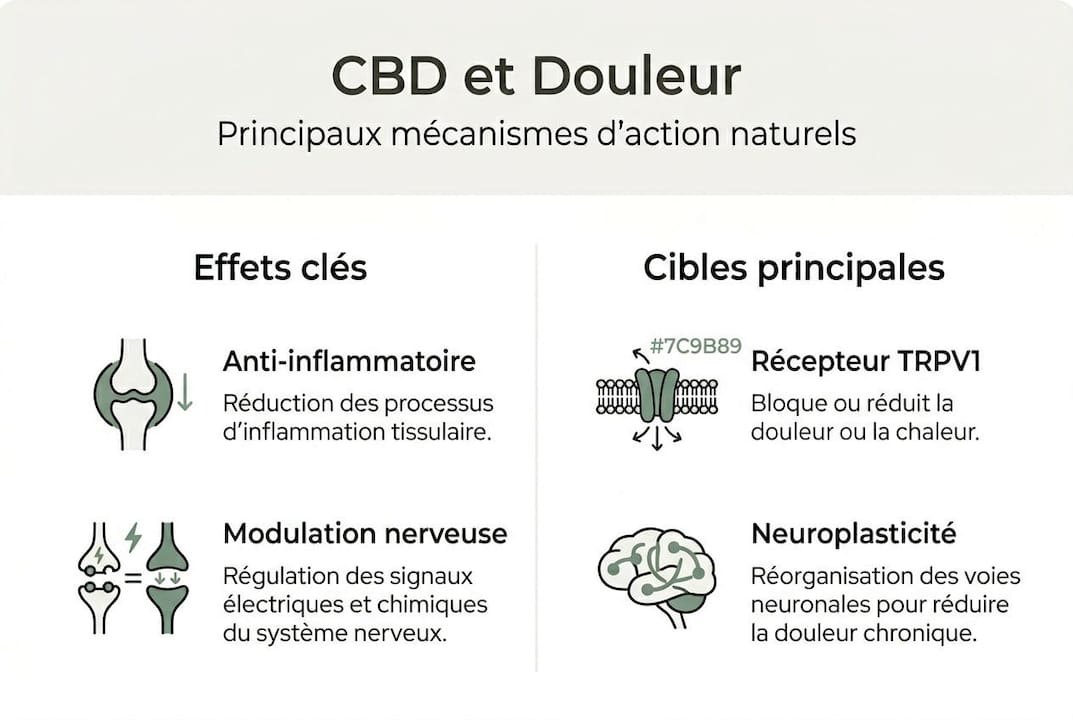
Cannabidiol does more than simply mask pain. It targets several biological pathways simultaneously. CBD interacts with the endocannabinoid system, a network of receptors found throughout your body that regulates pain, mood, and inflammation. Unlike THC, CBD does not directly activate CB1 and CB2 receptors, but it influences their activity indirectly.
The main mechanism involves TRPV1 receptors, which are responsible for perceiving heat and pain. When CBD activates these receptors, it triggers temporary desensitization that reduces the pain signals sent to the brain. At the same time, cannabidiol acts on serotonin 5-HT1A receptors, producing anti-anxiety effects that ease the emotional component of chronic pain. This dual action explains why many users report an overall improvement in their well-being.
CBD’s anti-inflammatory properties are another cornerstone of its effectiveness. Studies show that CBD reduces pro-inflammatory cytokines such as TNF-alpha and interleukin-6, molecules that amplify the inflammatory response in damaged tissues. By blocking these mediators, cannabidiol reduces inflammation at its source rather than simply masking the symptoms.
Oxidative stress also plays a crucial role in chronic pain. Free radicals damage nerve cells and amplify pain signals. CBD has powerful antioxidant properties that neutralize these harmful molecules. This protective action helps preserve nerve function and reduce the pain hypersensitivity characteristic of conditions such as fibromyalgia.
Pro tip: Understanding these mechanisms helps you choose the right type of CBD product. Inflammatory pain responds better to topical formulas applied directly to the affected area, while neuropathic pain benefits more from sublingual oils with systemic action.
“CBD modulates pain through simultaneous action on multiple molecular targets, offering a more comprehensive approach than conventional single-target analgesics.”
Research also reveals that CBD influences neuroplasticity, the brain’s ability to reorganize itself. In chronic pain, the nervous system develops a pain memory that persists even after the tissues have healed. Cannabidiol helps interrupt these pathological neural circuits, offering lasting relief rather than merely a temporary effect.
What clinical evidence supports the use of CBD for pain
Randomized controlled trials provide valuable data on the real-world effectiveness of CBD. Results vary considerably depending on the type of pain studied and the dosages used. A study on fibromyalgia shows that 57% of patients experienced a reduction of more than 30% in their pain with 300mg of CBD per day. These impressive results contrast with studies on osteoarthritis, where doses of 20 to 45mg per day did not produce a significant improvement compared with placebo.
This disparity can be explained by several factors. Fibromyalgia involves central sensitization of the nervous system, a mechanism that CBD effectively targets. Osteoarthritis, on the other hand, primarily results from mechanical cartilage damage, a process that is less responsive to cannabinoid interventions. The doses used in the osteoarthritis studies were also significantly lower, suggesting that a higher dosage might produce better results.
| Type of pain | Dosage studied | Response rate | Study duration |
|---|---|---|---|
| Fibromyalgia | 300mg/day | 57% (>30% reduction) | 12 weeks |
| Knee osteoarthritis | 45mg/day | Not significant vs placebo | 8 weeks |
| Hand osteoarthritis | 20-30mg/day | Not significant vs placebo | 6 weeks |
| Neuropathic pain | 150-250mg/day | 42% (moderate improvement) | 10 weeks |
Neuropathic pain, caused by nerve damage, shows an intermediate response. Approximately 42% of patients report moderate improvement with doses of 150 to 250mg per day. These positive results align with CBD’s mechanism of action on TRPV1 receptors and its protective effect on damaged nerves.
Pro tip: The dose, type of pain, and CBD spectrum (full-spectrum vs isolate) strongly influence clinical outcomes. Full-spectrum products containing other cannabinoids and terpenes often produce better results thanks to the entourage effect.
A recent meta-analysis of 18 studies reveals that CBD reduces pain by an average of 30% compared with placebo in chronic inflammatory conditions. However, the methodological quality of the studies varies considerably. Some research lacks adequate control groups or uses samples that are too small to draw definitive conclusions.
Researchers emphasize the importance of an individualized approach. Two patients with the same diagnosis may respond very differently to CBD because of genetic variations in their endocannabinoid system. This variability explains why some users report spectacular relief while others notice no effect. Medical monitoring helps adjust the dosage and formulation to maximize the benefits.
Long-term studies remain limited, but the available data suggest that CBD maintains its effectiveness without the development of significant tolerance. Unlike opioids, which require increasing doses, most CBD users can maintain the same dosage for months while retaining the pain-relieving benefits.
Benefits of CBD Compared with Traditional Pain Treatments
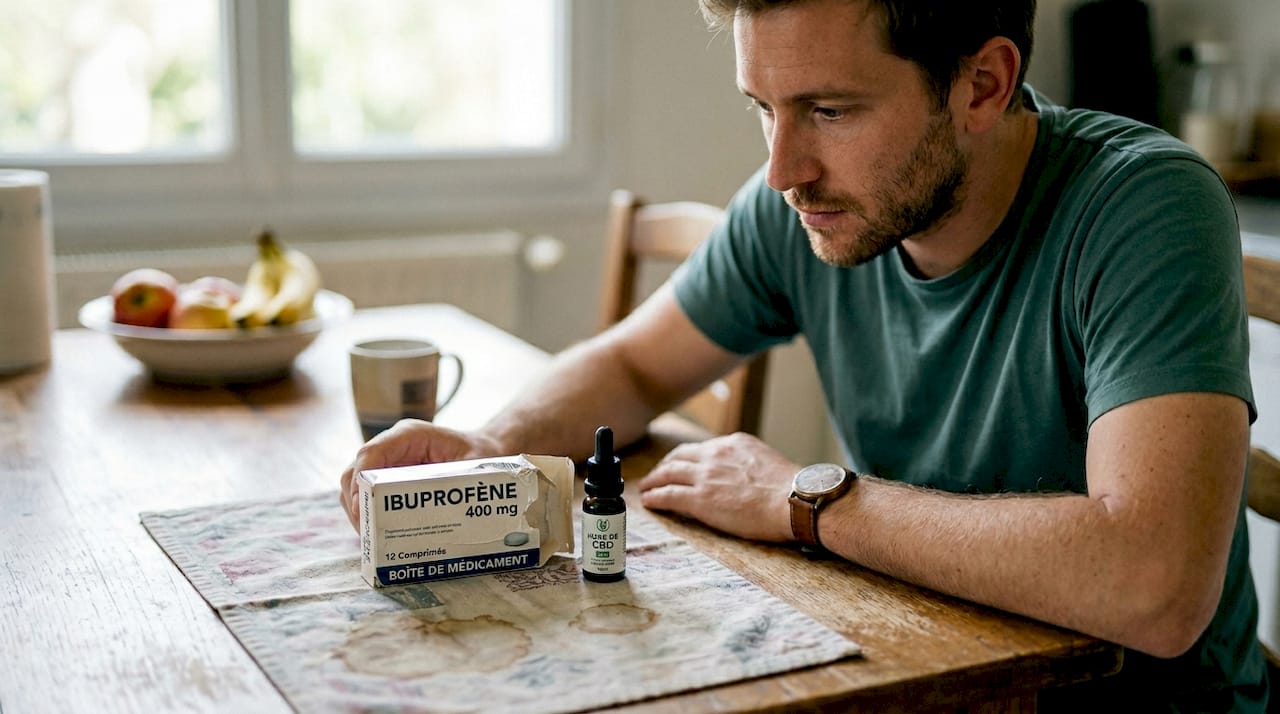
Opioids kill more than 100,000 people worldwide each year because of overdoses and respiratory depression. CBD poses none of these fatal risks. This fundamental safety difference makes cannabidiol an alternative to conventional medicines for many patients suffering from chronic pain.
The potential for dependence is another major distinction. Opioids intensely activate the brain’s reward circuits, creating severe physical and psychological dependence. CBD does not activate these same neural pathways. The World Health Organization confirms that cannabidiol has no significant potential for abuse or risk of dependence comparable to controlled substances.
The side effects of conventional treatments often limit their long-term use. Nonsteroidal anti-inflammatory drugs cause stomach ulcers, digestive bleeding, and kidney problems with prolonged use. Opioids cause severe constipation, nausea, mental confusion, and respiratory depression. CBD generally produces mild side effects such as fatigue, diarrhea, or changes in appetite, and these symptoms often disappear after a few days of use.
CBD offers additional benefits that improve the overall quality of life of patients suffering from chronic pain. Anxiety and sleep disorders frequently accompany persistent pain, creating a vicious cycle that amplifies suffering. Cannabidiol improves all three dimensions simultaneously, offering a holistic approach rather than simply masking symptoms.
“CBD represents a paradigm shift in chronic pain management, moving from a risky symptomatic approach to a natural strategy that addresses multiple dimensions of suffering simultaneously.”
Pro tip: Integrating CBD into a comprehensive chronic pain management plan that includes physiotherapy, stress management, and lifestyle changes promotes lasting well-being. Cannabidiol works best as part of a multimodal strategy rather than as a standalone treatment.
An important nuance deserves attention. Some studies show that CBD may be ineffective in cases of opioid-induced hyperalgesia, a paradoxical condition in which prolonged opioid use increases sensitivity to pain. This limitation highlights the importance of a comprehensive medical evaluation before starting CBD, particularly for patients with a history of opioid use.
Drug interactions are an important consideration. CBD inhibits certain liver enzymes in the cytochrome P450 system, affecting the metabolism of many medications. This interaction may increase or decrease the blood levels of other treatments. A medical consultation can identify these potential risks and adjust dosages accordingly.
How to use CBD effectively for pain in Europe
The choice between full-spectrum and isolate considerably influences CBD’s effectiveness against pain. European consumers generally prefer full-spectrum products, which contain all the cannabinoids, terpenes, and flavonoids found in the hemp plant. These compounds work synergistically to produce an entourage effect that amplifies the therapeutic benefits.
| Characteristic | Full-spectrum | CBD isolate |
|---|---|---|
| Composition | All cannabinoids + terpenes | 99% pure CBD |
| Entourage effect | Yes, compound synergy | No, single action |
| Trace THC | <0.3% (EU legal) | 0% |
| Pain relief effectiveness | Higher for most | Moderate, predictable |
| Taste | Pronounced, herbal | Neutral |
| Price | Generally higher | More affordable |
To start using CBD safely and effectively, follow these gradual steps:
-
Consult your doctor to discuss potential interactions with your current medications, particularly if you take blood thinners, immunosuppressants, or medications metabolized by the liver.
-
Start with a low dose of 20mg per day, taken twice daily (morning and evening). This approach allows your body to adapt gradually and reduces the risk of side effects.
-
Maintain this initial dosage for 5 to 7 days while keeping a journal of your symptoms, pain level, and any side effects. This documentation helps identify patterns and optimize your treatment.
-
Increase gradually in increments of 10 to 20mg every 5 days until you achieve satisfactory relief, without exceeding 100mg per day without medical supervision. Most users find their optimal dose between 40 and 80mg daily.
-
Combine administration methods according to the type of pain. Sublingual oil provides systemic action within 30 to 60 minutes and lasts 4 to 6 hours. Topical applications target localized pain, with effects in 15 to 30 minutes.
Pro tip: Gradually adjust your dosage according to the effect and tolerance for optimal relief. Some days require higher doses depending on pain intensity, while others allow you to reduce the amount used.
Drug interactions require particular caution. CBD may increase blood levels of medications such as warfarin, certain antidepressants, and benzodiazepines. Always inform your doctor about your CBD use to allow for appropriate dosage adjustments.
European legislation permits CBD products containing less than 0.3% THC. Always check third-party laboratory certificates of analysis confirming cannabinoid content and the absence of contaminants such as pesticides, heavy metals, or mold. These documents guarantee the quality and safety of the product you consume.
Bioavailability varies depending on the administration method. Sublingual oil offers approximately 20 to 30% bioavailability, while ingested capsules deliver only 6 to 15% of the CBD into your bloodstream. To maximize effectiveness, hold the oil under your tongue for 60 to 90 seconds before swallowing, allowing direct absorption through the oral mucous membranes.
Consistent use produces better results than occasional use. CBD gradually builds up in your system, and its therapeutic effects become stronger with regular use over several weeks. Patience remains essential, as some users do not notice the full benefits until after 3 to 4 weeks of daily use.
Discover our best CBD products for relieving pain
Looking for pharmaceutical-grade CBD products to manage your chronic pain? Our selection of the best CBD shops in Europe offers laboratory-tested formulas that comply with strict European standards. Each product contains less than 0.3% THC and undergoes comprehensive testing to guarantee purity and effectiveness.
The full-spectrum Super Relax CBD oil combines premium cannabidiol with natural terpenes to maximize the entourage effect. This concentrated formula allows for precise dosing and rapid action against pain. Users report a significant improvement in their sleep quality and a reduction in anxiety associated with chronic pain. Enjoy our fast shipping throughout the European Union, the United Kingdom, and Switzerland, with flexible return options for your peace of mind.
Frequently asked questions about CBD for pain
What is the ideal CBD dosage for relieving chronic pain?
Start with 20mg per day divided into two doses, then gradually increase by increments of 10 to 20mg every 5 days. Most users find their optimal dose between 40 and 100mg daily, depending on the type and intensity of their pain. Severe inflammatory pain often requires higher doses than mild to moderate pain.
What Is the Difference Between Full-Spectrum and Isolate for Pain Relief?
Full-spectrum contains all cannabinoids and terpenes, which work synergistically to produce an enhanced entourage effect. This formula generally produces better results against pain than pure CBD isolate. Isolate is suitable for people sensitive to THC or seeking a predictable effect without other plant compounds, but its effectiveness remains lower for most types of pain.
Is CBD Safe, and Which Drug Interactions Should You Watch For?
CBD has an excellent safety profile, with no risk of dependence or respiratory depression. However, it inhibits certain liver enzymes and can alter blood levels of medications such as anticoagulants, immunosuppressants, and benzodiazepines. Always consult your doctor before starting CBD if you take prescription medications, particularly those metabolized by the liver.
How Long Before Feeling the Effects of CBD on Pain?
Sublingual oil takes effect within 30 to 60 minutes, peaks in effectiveness after 2 hours, and lasts for 4 to 6 hours. Topical applications relieve localized pain within 15 to 30 minutes. Full benefits develop gradually over 3 to 4 weeks of regular use, as CBD accumulates in your system and modulates inflammatory processes over the long term. Patience remains essential for optimal results.
What Complementary Natural Alternatives to CBD Are Available for Pain?
Turmeric with piperine offers powerful anti-inflammatory properties that complement CBD’s action. Omega-3 fatty acids reduce systemic inflammation and improve nerve function. Physiotherapy, gentle yoga, and mindfulness meditation enhance the effects of cannabidiol by reducing stress and improving mobility. A multimodal approach combining CBD with lifestyle changes generally produces the best long-term results.