
Cannabis sativa vs. indica: key points in 2026
TL;DR:
- The botanical differences between sativa and indica mainly concern their morphology, but their actual effects depend primarily on their cannabinoid and terpene profiles. These profiles, particularly THC, CBD, myrcene, and limonene, predict effects better than the traditional classification. European regulations impose strict thresholds for CBD, making it essential to verify the certificate of analysis to make an informed choice.
Cannabis sativa and Cannabis indica differ in their morphology, chemical profile, and perceived effects, but these differences are often misunderstood without an analysis of cannabinoids and terpenes. The traditional sativa/indica classification remains culturally entrenched, but recent research shows that it is a poor indicator of actual effects compared with detailed chemical profiles. For European consumers, understanding these nuances is essential to making an informed choice, whether for recreational or medical use. This guide presents the key points of cannabis sativa vs indica according to botanical, chemical, and regulatory data from 2026.
1. Botanical characteristics: the morphology of sativa and indica
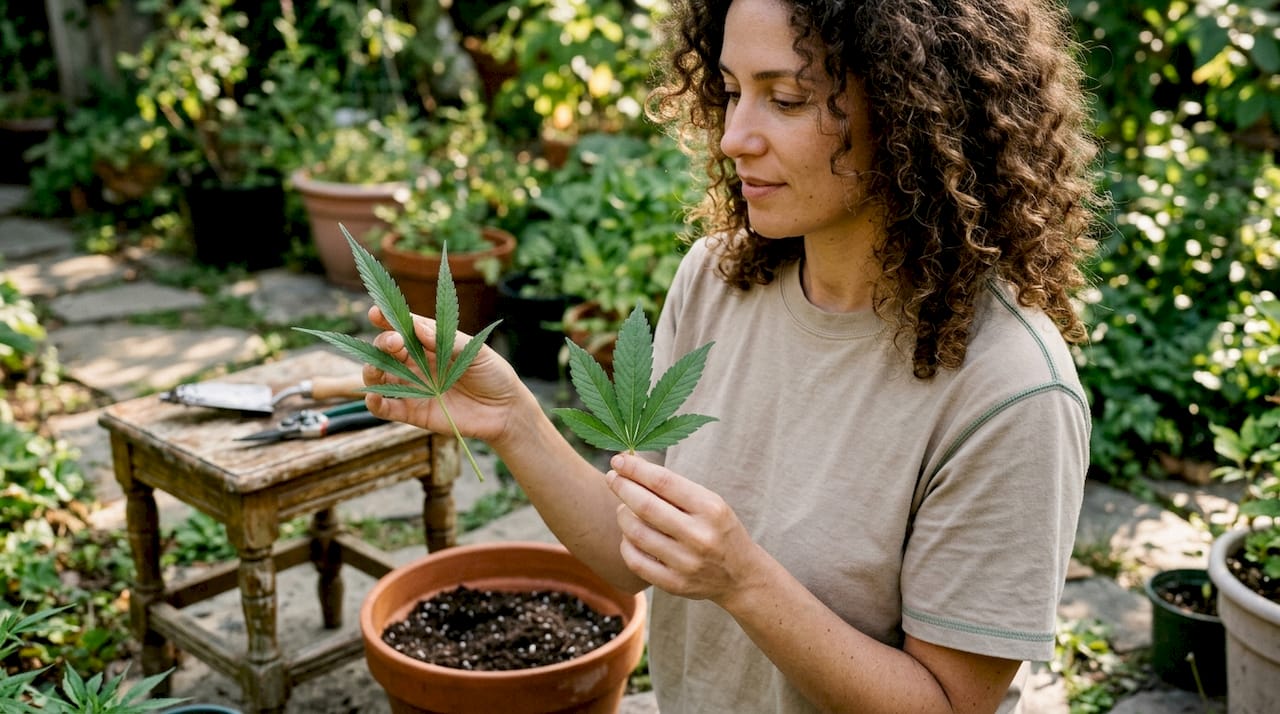
The morphology is the first visible difference between these two cannabis varieties. According to classical botanical descriptions, Cannabis sativa is a tall, slender plant that can exceed two meters, with long, narrow leaves. Cannabis indica, by contrast, is compact and stocky, with broad, short leaves, adapted to colder, mountainous environments.
The characteristics of Cannabis sativa include a long flowering period, often between 10 and 16 weeks, making it more demanding to cultivate. Indica flowers in 6 to 9 weeks, which explains its popularity among growers. These growth differences have practical implications for producers, but they do not predict the effects on consumers.
Known sativa strains include Durban Poison and Amnesia Haze. On the indica side, strains such as Northern Lights and Granddaddy Purple are well-known examples. These names are common in discussions about cannabis strains, but their actual effects depend more on their chemical composition than on their botanical classification.
Pro tip: When evaluating a CBD product, do not rely solely on the sativa or indica label. Always request the certificate of analysis (COA) to find out the actual cannabinoid and terpene levels.
2. Cannabinoids and terpenes: the true determinants of effects
Cannabinoids and terpenes are the true predictors of cannabis effects, not morphological labels. THC (tetrahydrocannabinol) is the main psychoactive compound, while CBD (cannabidiol) is non-psychoactive and associated with soothing properties. These two molecules interact differently depending on their ratio and the presence of other compounds.
Terpenes often play an underestimated role. Here are the main ones and their influence:
- Myrcene: The most widespread terpene in cannabis, associated with sedative and relaxing effects. A 2021 genomic and chemical assessment shows that the difference between indica and sativa is explained primarily by myrcene concentration, not genetics.
- Limonene: A citrus-scented terpene associated with stimulating effects and improved mood.
- Caryophyllene: A spicy terpene that interacts with CB2 receptors in the endocannabinoid system and may have anti-inflammatory effects.
- Linalool: A floral terpene often associated with calming and anxiolytic effects.
- Pinene: A pine-scented terpene associated with improved concentration and bronchodilator effects.
“Terpene profiles explain classification better than indica/sativa. A 2026 review highlights that cannabinoids and terpenes are the true predictors of effects, not morphological labels.” — Cannigma, cannabis classification expert
To better understand how these compounds interact, reading about terpenes in CBD provides a solid foundation. The formulation and route of administration also significantly alter the therapeutic effects, regardless of whether it is indica or sativa.
3. Reported effects and uses in Europe: sativa or indica?
The stimulating effects attributed to sativa and the relaxing effects associated with indica are useful but scientifically imprecise generalizations. The sativa and indica labels remain culturally rooted but scientifically outdated for predicting effects on consumers. What matters is the product’s complete chemical profile.
In practice, here is what European consumers most often report:
- Sativa: a feeling of mental lightness, increased creativity, and energy. Often chosen for daytime or social use.
- Indica: deep physical relaxation, help with falling asleep, reduction of muscle tension. Generally used in the evening.
- Hybrids: most varieties available today are hybrids, combining characteristics of both types.
Medically, a 2026 meta-analysis shows that combined cannabinoids, CBD and delta-9-THC, reduce cannabis withdrawal symptoms, but increase the risk of minor adverse events. This means that the medical use of cannabis requires professional supervision, regardless of the variety chosen.
In Europe, the regulatory framework for CBD remains strict. In 2026, EFSA set a provisional safe level for CBD of 0.0275 mg/kg per day, with particular precautions for people under 25, pregnant or breastfeeding women, and people taking medication. This threshold illustrates that even non-psychoactive CBD is subject to serious regulatory oversight.
4. Concise comparison: sativa vs. indica at a glance
The following table summarizes the differences between cannabis sativa and indica according to three criteria: morphology, chemistry, and typical effects.
| Criterion | Cannabis sativa | Cannabis indica |
|---|---|---|
| Size and shape | Tall, slender, narrow leaves | Compact, stocky, broad leaves |
| Flowering time | 10 to 16 weeks | 6 to 9 weeks |
| Typical dominant terpene | Limonene, pinene | Myrcene, linalool |
| Reported effects | Stimulating, creative, energizing | Relaxing, sedative, soothing |
| General use | Daytime, social, creative | Evening, sleep, pain |
| Limitations of the classification | Effects vary according to actual chemistry | Effects vary according to actual chemistry |
This table illustrates general trends, but it does not replace the chemical analysis of a specific product. Two varieties bearing the same label can produce very different effects depending on their cannabinoid and terpene composition. For consumers who wish to explore the issue of CBD regulations in Europe further, the available resources can help navigate this complex framework.
5. How to choose between sativa and indica according to your needs in 2026
Choosing between sativa and indica comes down to three concrete criteria: your goal, your personal tolerance, and the product’s verified chemical composition. Marketing labels are not enough. Here is a structured approach to guide your decision:
- Define your goal: are you looking for relaxation, sleep support, creative stimulation, or a specific medical use? Each goal points toward a different chemical profile.
- Check the COA: the certificate of analysis (COA) is the most reliable way to determine the actual levels of THC, CBD, and terpenes. It is the only way to anticipate effects accurately.
- Consider your tolerance: beginners should start with products low in THC and with a high CBD/THC ratio, regardless of the variety.
- Beware of vague labels: a product labeled “sativa” without an available COA does not guarantee any particular effect.
- Comply with European regulations: unauthorized CBD-containing foods are prohibited from being sold in Europe. Choose transparent sellers who comply with current standards.
- Explore hybrids: most modern varieties are hybrids. A hybrid with a well-documented terpene profile may offer more predictable effects than a poorly characterized sativa or indica.
Pro tip: Before any purchase, always ask the seller for the COA. A reputable supplier will provide it without hesitation. If this document is unavailable, it is a warning sign.
For people interested in therapeutic use, the data on the therapeutic use of CBD for anxiety and insomnia offer useful insight based on 2026 systematic reviews.
Key points
The distinction between cannabis sativa and indica is based on genuine botanical criteria, but the effects experienced depend above all on the complete chemical profile—cannabinoids and terpenes—and not simply on the morphological label.
| Point | Details |
|---|---|
| Distinct morphology | Sativa is tall and slender, while indica is compact. These differences do not imply predictable effects. |
| Terpenes as predictors | Myrcene, limonene, and caryophyllene determine effects better than botanical classification. |
| Strict European regulations | EFSA sets a safety threshold for CBD and bans unauthorized CBD foods in 2026. |
| COA essential | Consulting the certificate of analysis is the only reliable method for choosing a product suited to your needs. |
| Predominantly hybrids | Most available strains are hybrids; the chemical profile takes precedence over the label. |
My perspective on the evolution of cannabis understanding
For several years, I have observed a profound change in the way European consumers approach cannabis. For a long time, the question “sativa or indica?” was enough to guide a choice. Today, this approach is showing its limitations, and that is good news.
What strikes me is how quickly informed consumers have adopted the language of terpenes and COAs. Terms such as myrcene and caryophyllene, once reserved for laboratories, are now appearing in everyday conversations. This paradigm shift reflects the growing maturity of the European market.
What I also observe is that sellers who resist this transparency quickly lose their customers’ trust. In 2026, a supplier that does not provide a COA is perceived as unreliable, and rightly so. European regulations are pushing in this direction, and consumers are following suit.
My advice: stop looking for “the best sativa” or “the best indica” and start looking for “the best chemical profile for my goal.” It’s a simple shift in perspective, but it radically improves the quality of your choices.
— Rod
Find Certified and Transparent CBD Products in Europe
Cbd-certified selects CBD products with comprehensive laboratory analyses available for each item. Whether you are looking for a CBD-rich profile for relaxation or a product with specific terpenes for targeted use, the store offers a controlled range that complies with European standards. Deliveries are available throughout the EU, the United Kingdom, and Switzerland. Browse the selection at the best CBD shop in Europe to access products with verified COAs and clear information about the composition of each item.
FAQ
What is the main difference between sativa and indica?
The main difference is morphological: sativa is tall with narrow leaves, while indica is compact with broad leaves. However, the effects experienced depend primarily on the cannabinoid and terpene profile, not on botanical classification.
Do sativa and indica CBD have different effects?
Not necessarily. The effects of CBD depend on its concentration, CBD/THC ratio, and the terpenes present, not on the sativa or indica label. A COA makes it possible to compare products reliably.
Is CBD legal in Europe in 2026?
CBD is legal in many European countries under certain conditions, but unauthorized CBD-containing foods are prohibited from sale according to European authorities. EFSA has set a provisional safety threshold and recommends caution for certain groups.
How do you choose between sativa and indica for medical use?
Consult a healthcare professional and ask for the product’s COA to learn the precise levels of THC, CBD, and terpenes. The formulation and route of administration also influence therapeutic effects, regardless of botanical type.
What Is a Cannabis Hybrid?
A hybrid is a variety resulting from a cross between sativa and indica. Most varieties available today are hybrids, with varied chemical profiles. The hybrid label does not predict effects: only the COA can assess the actual composition.