
CBD Safety for People with Chronic Illnesses: A Complete Guide
Many people with chronic conditions are unaware that CBD can interact dangerously with their daily medications. Despite its reputation as a natural and safe product, cannabidiol poses real risks of drug interactions, particularly for people taking multiple medications. This comprehensive guide demystifies CBD safety for chronic pain, anxiety, and insomnia. You will discover the latest scientific evidence, usage limits, at-risk populations, and practical advice for incorporating CBD into your care plan in an informed and safe manner.
Table of contents
- Key points
- Understanding CBD safety for people with chronic conditions
- Clinical efficacy of CBD in chronic patients and associated benefits
- Specific risks and limitations: drug interactions and at-risk populations
- Practical advice for safe CBD use in chronic patients
- Discover the best CBD offers for people with chronic conditions
- Frequently asked questions
Key Points
| Point | Details |
|---|---|
| EFSA pure CBD threshold | The EFSA has set a provisional safe intake level for pure CBD at 0.0275 mg/kg/day, or approximately 2 mg/day for a 70 kg adult. |
| Frequent drug interactions | CBD inhibits CYP450 enzymes, which can alter the metabolism of many medications and increase risks for patients taking multiple medications. |
| Liver monitoring required | With prolonged use, regular liver tests are recommended and should be increased for patients taking multiple medications. |
| Prior medical consultation | Before starting CBD, consult a doctor and check potential interactions with a pharmacist. |
| At-risk population excluded | People under 25, pregnant or breastfeeding women, and patients with liver failure should not consume CBD without medical advice. |
Understanding CBD safety for people with chronic conditions
CBD safety relies on precise scientific data defining acceptable usage limits. The EFSA has established a provisional safe intake level for pure CBD of 0.0275 mg/kg/day, or approximately 2 mg per day for a 70 kg adult. This very low threshold reflects persistent uncertainties about long-term effects and sensitive populations.
Certain groups should avoid CBD completely due to insufficient data. People under 25, pregnant or breastfeeding women, and patients with liver failure should not consume CBD without specialized medical advice. These restrictions aim to protect vulnerable populations whose metabolism or development could be affected.
The main mechanism of CBD interactions with medications involves cytochrome P450 enzymes. CBD inhibits CYP450 enzymes, causing interactions and liver risks, particularly CYP3A4, CYP2C9, and CYP2C19. These enzymes metabolize more than 70% of commonly prescribed medications.
The risks of interactions are particularly relevant to opioid analgesics, anticoagulants such as warfarin, cholesterol-lowering statins, and antiepileptic drugs. An interaction may either reduce the medication’s effectiveness or increase its blood concentration to toxic levels. These effects can occur even with low doses of CBD.
Pro tip: Always start with a minimum dose of 2 to 5 mg per day and increase it very gradually under medical supervision. Wait at least one week between each adjustment to observe the effects and detect any potential interactions.
Monitoring liver function becomes essential with prolonged use. Regular blood tests can detect potential liver toxicity early, a rare but documented side effect of high doses of CBD. This precaution is particularly important for patients taking multiple medications.
“Inhibition of CYP450 enzymes by CBD can profoundly alter drug metabolism, creating unpredictable risks for patients taking multiple medications.”
- Always check for potential interactions with your pharmacist before starting CBD
- Maintain regular medical follow-up, including liver function tests every 3 to 6 months
- Carefully monitor any change in the effectiveness of your usual medications
- Immediately report any unusual side effect to your doctor
Clinical efficacy of CBD in chronic patients and associated benefits
Recent scientific evidence confirms the real therapeutic value of CBD for several chronic conditions. European phase 3 studies show the efficacy and tolerability of full-spectrum cannabis for chronic lower back pain, with a significant reduction in pain intensity and generally mild side effects. These results validate the use of CBD combined with THC in a medically supervised setting.
For chronic insomnia, CBD-terpene formulations improve deep and REM sleep in people with insomnia, with measurable effects on sleep architecture. Patients report falling asleep more quickly, fewer nighttime awakenings, and better-quality rest. These improvements generally occur after 2 to 4 weeks of regular use.
Full-spectrum oils also demonstrate effectiveness comparable to conventional treatments for chronic migraine. Studies observe a reduction in the frequency and intensity of attacks, along with improved functional impairment. Patients also report reduced associated anxiety, an appreciable secondary benefit.
| Condition | Main effect | Time to effect | Level of evidence |
|---|---|---|---|
| Chronic lower back pain | 30 to 40% reduction in intensity | 4 to 8 weeks | Validated phase 3 |
| Generalized anxiety | Reduced anxiety symptoms | 2 to 4 weeks | Clinical studies |
| Chronic insomnia | Improved deep and REM sleep | 2 to 4 weeks | Polysomnographic studies |
| Chronic migraine | Reduced frequency and intensity | 8 to 12 weeks | Observational studies |
The benefits of CBD for these conditions are based on multiple mechanisms. CBD modulates serotonin receptors involved in anxiety, interacts with vanilloid receptors involved in pain, and influences the systems that regulate the sleep–wake cycle. This multi-target action explains its effectiveness against several symptoms simultaneously.
Pro tip: Prefer full-spectrum formulations over CBD isolate to maximize the entourage effect. Terpenes and minor cannabinoids enhance CBD's action, providing greater efficacy at equivalent doses.
Reported side effects generally remain mild and temporary. Fatigue, appetite changes, mild diarrhea, and dry mouth are the most frequent complaints. These symptoms often subside after a few weeks of adjustment or with dosage modification.
For chronic pain and CBD, neuropathic pain responds particularly well. Patients suffering from diabetic neuropathy, postherpetic pain, or fibromyalgia report substantial improvements. The analgesic effect appears gradually and is maintained with regular use.
- Sublingual formulations offer greater bioavailability than oral capsules
- Optimal therapeutic effects often require 4 to 8 weeks of continuous use
- Combining CBD with non-drug approaches enhances the benefits
- People who respond to CBD often show increased sensitivity to the endocannabinoid system
Specific risks and limitations: drug interactions and at-risk populations
Drug interactions are the major CBD risk for chronically ill patients taking multiple medications. The ANSM warns of 58 cases of CBD–medication interactions affecting efficacy and side effects, with consequences ranging from therapeutic failure to acute toxicity. These documented cases likely represent only a fraction of the actual interactions.

Opioid painkillers such as morphine, oxycodone, or tramadol have their metabolism disrupted by CBD. This interaction may either reduce their pain-relieving effect, leaving the patient in pain, or increase their blood concentration, with a risk of respiratory depression. The therapeutic window becomes unpredictable.
Oral anticoagulants, particularly warfarin, pose an increased bleeding risk in the presence of CBD. Enzyme inhibition slows the elimination of the anticoagulant, dangerously increasing its effect. Spontaneous or prolonged bleeding may occur even with doses that have remained stable for years.
Statins for cholesterol, benzodiazepines for anxiety, and certain antidepressants also undergo significant interactions. CBD can double or triple the plasma concentration of these medications, causing intolerable side effects or toxicity. Therapeutic monitoring becomes essential.
“CBD-drug interactions are not theoretical. They occur frequently in clinical practice and can have serious consequences if they are not anticipated and monitored.”
Certain populations must strictly avoid CBD without close medical supervision. Pregnant women risk effects on fetal development, particularly neurological development. Animal data suggest possible disruptions, although human evidence remains limited. The precautionary principle should apply.
People under 25 whose brains are still maturing should avoid recreational CBD use. Cannabinoids may influence the development of neural circuits, particularly in the prefrontal regions involved in decision-making. Supervised therapeutic use remains possible under specialist guidance.
Patients with liver impairment metabolize CBD poorly, increasing the risk of liver toxicity. This population requires reduced doses and close laboratory monitoring. Liver function tests should be performed before starting treatment and then monthly for the first three months.
- You must consult your doctor before starting CBD if you take regular medications
- Make a complete list of all your treatments, including over-the-counter medications and dietary supplements
- Start with the lowest effective dose and increase it very gradually over several weeks
- Have liver function tests before starting treatment and then every 3 to 6 months during prolonged use
- Carefully monitor the effectiveness of your usual medications and report any changes
- Never change your medication dosages without medical advice, even if you feel improvements
- Prioritize certified products with laboratory analyses guaranteeing composition and purity
The safe use of CBD for people with chronic conditions requires a cautious and individualized approach. Each patient has a unique pharmacological profile influenced by genetics, liver function, concomitant treatments, and comorbidities. A comprehensive medical evaluation should precede any recommendation.
Practical advice for safe CBD use in chronic patients
Starting CBD requires a methodical and gradual approach. Always begin with 2 to 5 mg per day, ideally in the evening to minimize daytime drowsiness. Maintain this dose for at least 7 to 10 days to assess tolerance and initial effects. Increases should be gradual, in increments of no more than 2 to 5 mg.
The CBD isolate associated with pain reduction even at <100mg, with mild side effects, according to patient surveys demonstrates that therapeutic efficacy is possible with moderate doses. Many patients overestimate the doses required, unnecessarily exposing themselves to increased risks. The optimal dose often remains below 50 mg per day.
| Criterion | CBD isolate | Full-spectrum |
|---|---|---|
| Purity | 99% pure CBD | CBD + other cannabinoids and terpenes |
| Entourage effect | Absent | Present and enhancing |
| Effectiveness | Good at moderate doses | Higher at equivalent doses |
| THC risk | None | Possible traces (<0.3%) |
| Price | Generally lower | Generally higher |
| Recommendation | Sensitive or beginner patients | Optimized therapeutic use |
The recommended CBD dosage for insomnia and anxiety varies depending on the condition being targeted. For insomnia, a single dose of 10 to 40 mg 1 to 2 hours before bedtime is often sufficient. For anxiety, divided doses of 5 to 15 mg two to three times a day offer more stable coverage.
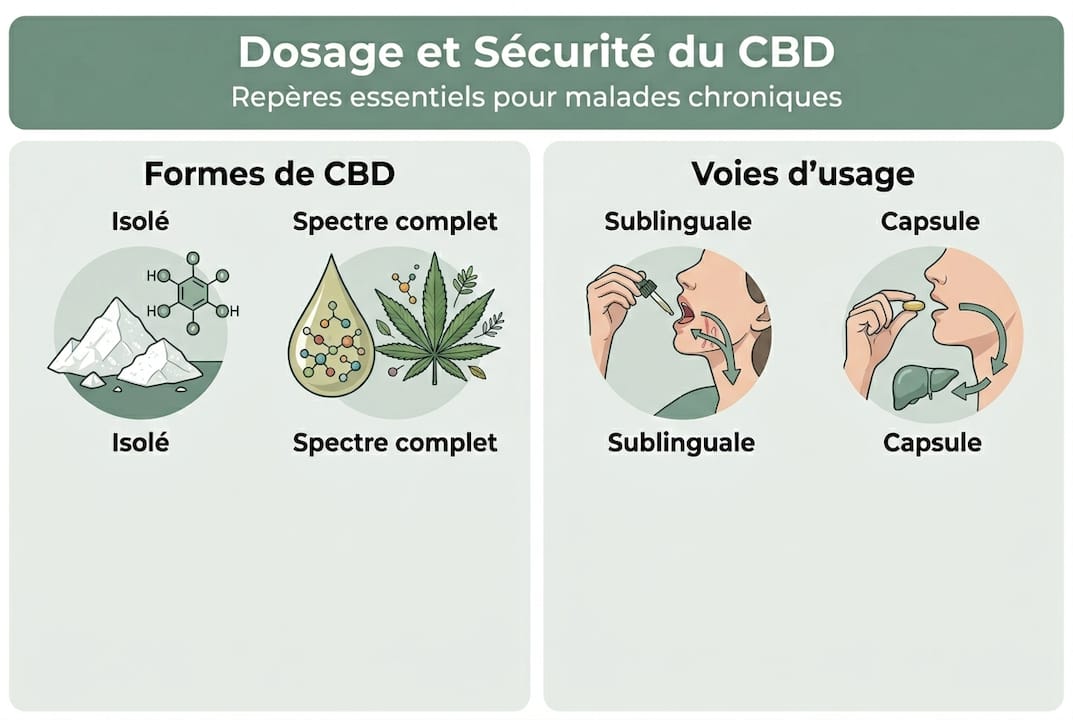
The route of administration strongly influences bioavailability and speed of action. Sublingual oils allow direct absorption through the oral mucosa, avoiding first-pass hepatic metabolism. Hold the oil under your tongue for 60 to 90 seconds before swallowing to optimize absorption.
Professional tip: Keep a daily journal detailing the dose, time of administration, symptoms before and after, any side effects, and sleep quality. This objective documentation facilitates dosage adjustments and helps your doctor optimize your protocol.
Regular medical follow-up remains essential, particularly during the first six months. Monthly consultations initially, followed by quarterly visits once the dosage has stabilized. These appointments make it possible to assess therapeutic effectiveness, detect potential interactions, and adjust treatment according to the clinical progression.
Biological monitoring should include, at a minimum, a complete liver function test before starting treatment, followed by tests at 1 month, 3 months, and 6 months. For patients taking anticoagulants, an INR check is required 2 to 4 weeks after starting CBD. Patients taking antiepileptic drugs require plasma level monitoring of their medications.
- Choose certified products with accessible independent laboratory analyses
- Check for the absence of pesticides, heavy metals, and residual solvents
- Make sure the CBD concentration matches the labeling
- Avoid products without clear traceability or with excessive therapeutic claims
The therapeutic use of CBD in Europe is evolving rapidly as clinical data accumulates. Several countries are developing specific regulatory frameworks to govern the medical use of CBD. This professionalization improves the safety and quality of available products.
Never abruptly stop your usual treatments to replace them with CBD. This unsupervised substitution can lead to serious decompensation, particularly in cardiovascular, psychiatric, or neurological conditions. CBD may be used as a supplement, never as a replacement without medical advice.
Discover the best CBD offers for people with chronic conditions
Now that you understand the principles of safe CBD use, finding reliable, certified products becomes essential. The best CBD shops in Europe offer ranges specifically adapted to the therapeutic needs of patients with chronic conditions, with systematic laboratory testing and personalized advice. These certified shops guarantee full traceability and regulatory compliance.
Whether you live in the Netherlands or Belgium, specialized retail outlets offer guidance and expertise. The best CBD shops in Eindhoven and the best CBD shops in Brussels have trained advisors who can guide you toward the formulations best suited to your situation. These professionals understand the specific challenges faced by patients taking multiple medications and can coordinate with your medical team.
Frequently asked questions
What are the main risks of CBD interactions with my medications?
CBD inhibits the CYP450 liver enzymes that metabolize more than 70% of common medications. This interaction can dangerously increase the blood concentrations of anticoagulants, opioid analgesics, statins, or anti-seizure medications. Consequences range from therapeutic ineffectiveness to acute toxicity, with risks of bleeding or overdose.
How can I tell whether CBD is compatible with my treatment?
You must consult your doctor or pharmacist before starting CBD. Bring a complete list of your medications, supplements, and self-medication. Your healthcare professional will check potential interactions in pharmacological databases and decide whether supervised use is feasible with appropriate monitoring.
Can I use CBD if I am pregnant or young?
No, CBD is strongly discouraged during pregnancy and breastfeeding due to insufficient data on fetal and neonatal safety. People under 25 should also avoid recreational CBD because their brains are still maturing. Therapeutic use may be possible under strict medical supervision in exceptional situations.
What initial dosage is recommended for a chronic patient?
Always start with 2 to 5 mg of CBD per day, ideally in the evening. Maintain this dose for 7 to 10 days to assess tolerance. Then gradually increase by increments of 2 to 5 mg each week based on the effects and under medical supervision. Most patients find their optimal dose between 20 and 50 mg per day.
Does CBD cause addiction or dependence?
No, CBD does not cause physical dependence or withdrawal symptoms when stopped. Unlike THC, it does not activate the brain’s reward circuits responsible for addiction. The World Health Organization confirms that pure CBD has no addictive potential. You can stop using it without withdrawal risks, although gradual reduction is still preferable to avoid a sudden return of symptoms.