
Master CBD terminology to manage pain
You have probably already heard of CBD as a natural solution for pain, anxiety, or insomnia, but the terminology surrounding it may seem obscure. Between the endocannabinoid system, CB1 receptors, full spectrum, and isolate, technical terms are multiplying and creating confusion. This article clarifies the essential concepts to help you understand how CBD works, interpret scientific studies, and choose your products with full knowledge of the facts. You will discover the biological mechanisms, clinical evidence, and selection criteria that turn buying CBD from a gamble into an informed decision.
Table of contents
- Key points to remember
- What is CBD and where does it come from?
- Understanding the endocannabinoid system and related terms
- The therapeutic effects of CBD and their scientific evidence
- How to navigate the terminology and choose your CBD product
- Discover our best CBD shops in Europe
- Frequently asked questions
Key Points
| Point | Details |
|---|---|
| Non-psychoactive CBD | CBD does not cause a high and may help reduce anxiety, pain, and insomnia. |
| Hemp origin | CBD is extracted from industrial hemp and contains little THC, which limits psychotropic effects. |
| Endocannabinoid system | CBD acts by indirectly modulating this system through the CB1 and CB2 receptors and the FAAH and MAGL enzymes. |
| FAAH inhibition | CBD inhibits FAAH, slowing the breakdown of anandamide and prolonging its presence in synapses. |
| 5HT1A receptor | CBD also acts on the 5HT1A serotonin receptor to influence anxiety and mood. |
Key points to remember
| Concept | Explanation |
|---|---|
| Non-psychoactive CBD | Cannabidiol does not cause euphoria unlike THC; it acts on relaxation and inflammation |
| Endocannabinoid system | Biological network with CB1 receptors (brain) and CB2 receptors (immune system) that regulates pain, mood, and sleep |
| Scientific evidence | Moderate efficacy for chronic pain, subjective sleep improvement, and reduced anxiety at high doses |
| Gradual dosing | Start with 15 to 30 mg per day and adjust according to the symptoms observed |
| Variable quality | Certificates of analysis and batch testing are essential to guarantee purity and concentration |
What is CBD and where does it come from?
The CBD (Cannabidiol) is a non-psychoactive cannabinoid extracted from hemp, used for its relaxing and anti-inflammatory effects. Unlike recreational cannabis, which is rich in THC, industrial hemp contains less than 0.3% THC and has high levels of CBD. This botanical distinction explains why CBD does not cause a high while retaining interesting therapeutic properties.
The benefits of CBD hemp include reducing inflammation, easing anxiety, and relieving certain chronic pain conditions. The supercritical CO2 or ethanol extraction process isolates CBD from the plant’s other compounds. Consumers primarily seek three applications: managing muscle or joint pain, reducing anxiety symptoms, and improving sleep quality.
Here are the main characteristics of CBD:
- No psychotropic effect despite its cannabinoid origin
- Acts on several biological systems through indirect modulation
- Favorable safety profile, with few serious side effects reported
- Available in multiple forms suited to individual preferences
- Legality varies by European country but is generally permitted
Confusion between CBD and THC remains common among new users. THC directly activates CB1 receptors in the brain, creating euphoria and cognitive impairment. CBD works differently by modulating enzymatic activity and indirectly influencing these same receptors. This distinction explains why you can use CBD during the day without compromising your professional abilities or alertness while driving.
Understanding the endocannabinoid system and related terms
The endocannabinoid system (ECS) includes CB1 and CB2 receptors, endocannabinoids such as anandamide and 2-AG, as well as FAAH and MAGL enzymes. This network regulates bodily homeostasis by influencing pain, mood, appetite, and sleep. CB1 receptors are concentrated in the central nervous system, particularly in the hippocampus and prefrontal cortex. CB2 receptors predominate in immune cells and peripheral tissues.

Anandamide, nicknamed the happiness molecule, binds to CB1 receptors to produce relaxation and well-being. 2-arachidonoylglycerol (2-AG) acts as a major lipid second messenger. These endocannabinoids are synthesized on demand and then rapidly broken down by the enzymes FAAH (fatty acid amide hydrolase) and MAGL (monoacylglycerol lipase). CBD primarily inhibits FAAH, slowing the breakdown of anandamide and prolonging its presence in synapses.
This indirect modulation explains CBD’s therapeutic effects without direct receptor activation. Unlike THC, which binds firmly to CB1, CBD acts as a negative allosteric modulator, reducing the receptor’s affinity for other ligands. It also influences 5-HT1A serotonin receptors, which are involved in regulating anxiety and mood. Understanding CBD and the endocannabinoid system makes it possible to anticipate effects based on an individual’s biochemical profile.
Essential terms to know:
- CB1: type 1 cannabinoid receptor, located primarily in the brain and nervous system
- CB2: type 2 cannabinoid receptor, present in the immune system and peripheral organs
- Anandamide: endogenous endocannabinoid associated with well-being and pain regulation
- FAAH: enzyme that breaks down anandamide, the primary target of CBD’s mechanism of action
- Allosteric modulation: modification of a receptor’s activity without binding to its primary active site
Pro tip: When reading product descriptions that mention interaction with the ECS, check whether they explain CBD’s indirect mechanism rather than promising direct activation like THC. This distinction often reveals the manufacturer’s scientific rigor.
Individual variability in the ECS explains why two people respond differently to the same dose. Receptor density, enzymatic activity, and endogenous endocannabinoid levels vary genetically. This biological reality justifies a gradual dosing approach and careful observation of personal effects rather than blindly following generic recommendations.
The therapeutic effects of CBD and their scientific evidence
Studies show that CBD reduces anxiety via 5-HT1A receptors, improves subjective sleep at doses of 15 to 30 mg per day, and relieves chronic pain with low to moderate levels of evidence. Randomized controlled trials reveal reduced craving and anxiety at high doses of 400 to 800 mg, while effects on sleep remain primarily subjective, without objective polysomnographic confirmation.
| Condition | Effective dosage | Level of evidence | Primary mechanism |
|---|---|---|---|
| Generalized anxiety | 400–800 mg/day | Moderate | 5-HT1A agonism, GABA modulation |
| Insomnia | 15–30 mg/day | Low | Indirect anxiety reduction |
| Chronic pain | 20–40 mg/day | Moderate | Anti-inflammatory effects, nociception modulation |
| Neuropathic pain | 50–150 mg/day | Low to moderate | TRP channel interaction, glycine receptors |
The benchmarks from RCT studies indicate a subjective improvement in sleep without a measurable impact on sleep architecture in polysomnography. This discrepancy suggests that CBD improves the perceived quality of sleep rather than objective physiological parameters. The anxiolytic effect probably contributes to this perceived improvement by reducing nighttime rumination and facilitating sleep onset.
For chronic pain, mechanisms include reducing inflammation by inhibiting pro-inflammatory cytokines and modulating nociceptive transmission. CBD also potentiates the activity of glycine receptors involved in suppressing inflammatory pain. These multiple actions explain why some patients report benefits while others notice no effect.
Factors influencing effectiveness:
- Bioavailability according to the route of administration (oral 6–15%, sublingual 12–35%, inhaled 30–40%)
- Product quality and purity, presence of contaminants or inaccurate concentration
- Timing of intake in relation to symptoms and meals
- Potential drug interactions with CYP450 inhibitors
- Treatment duration: effects sometimes build up after several weeks
“Current evidence suggests moderate efficacy of CBD for certain conditions, but variability in products and dosages complicates the interpretation of clinical results.” INSQ Report 2025
The explanation of CBD dosage for insomnia and anxiety recommends starting with a low dose and increasing it gradually. Placebo-controlled comparative studies show modest effect sizes, suggesting that CBD works better as a complement to other interventions than as a monotherapy. Caution is warranted regarding exaggerated marketing claims that promise miraculous results without a solid scientific basis.
How to navigate the terminology and choose your CBD product
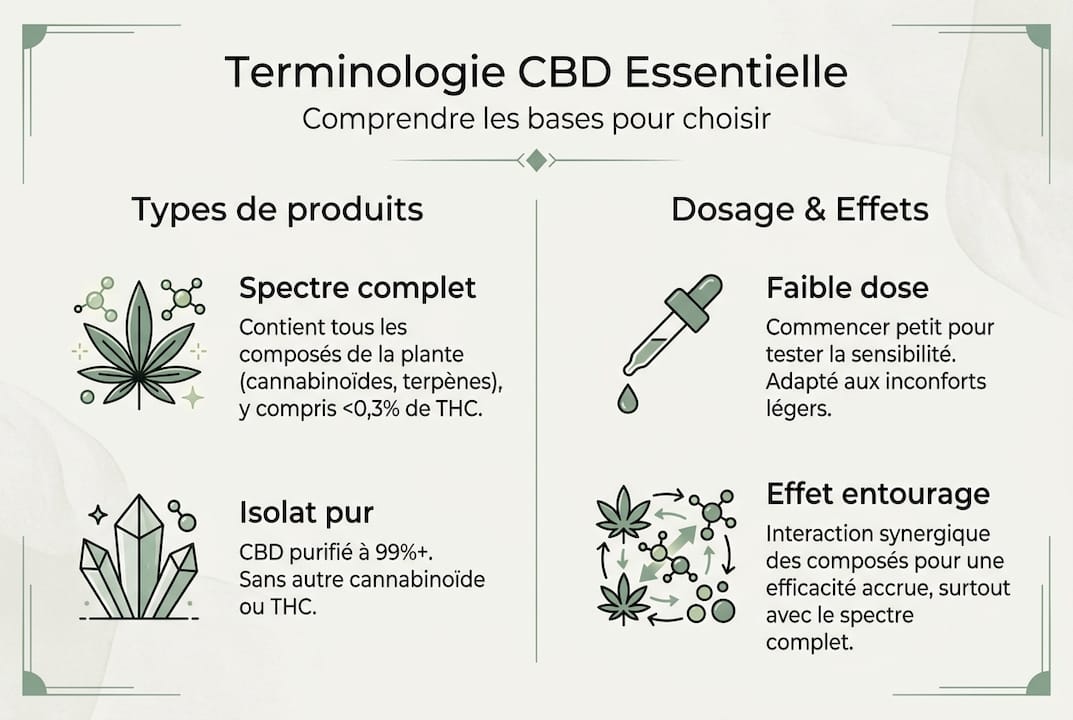
CBD product labels use specific terms that determine their composition and potential effects. Full spectrum contains all the natural cannabinoids in hemp, including trace amounts of THC below the legal threshold. Broad spectrum eliminates THC while retaining the other cannabinoids and terpenes. Isolate consists of 99% pure CBD, with no other plant compounds.
| Product type | Composition | Advantages | Disadvantages |
|---|---|---|---|
| Full-spectrum | CBD + THC + terpenes + minor cannabinoids | Maximum entourage effect | Trace amounts of THC, drug tests |
| Broad-spectrum | CBD + terpenes + cannabinoids (without THC) | Entourage effect without THC | Less scientifically studied |
| Isolate | 99% pure CBD | Precise dosage, no THC | No entourage effect |
| MCT oil | CBD diluted in triglycerides | Better absorption | Additional calories |
The concentration in mg per ml or per unit determines the product’s actual potency. A 10% oil contains 1,000 mg of CBD in 10 ml, or approximately 5 mg per drop depending on the dropper. Bioavailability varies considerably by form: sublingual oils offer greater absorption than capsules that pass through the digestive system. Topicals act locally without significant systemic penetration.
The certificate of analysis (COA) verifies the actual cannabinoid concentration and the absence of contaminants such as pesticides, heavy metals, or residual solvents. Independent third-party laboratories ensure the objectivity of the results. Look for recent COAs matching the batch number of your specific product, not an old generic certificate.
Essential selection criteria:
- Hemp grown in Europe with complete traceability
- Supercritical CO2 extraction method rather than chemical solvents
- Transparency about the exact concentration and spectrum type
- Publicly accessible COAs for each batch
- Detailed customer reviews mentioning specific observed effects
Pro tip: Beware of products that display concentrations as percentages without specifying the total volume or the absolute number of mg. This omission often conceals a low actual concentration despite a percentage that appears high.
L’Self-treatment requires caution and an understanding of the terminology to make an informed choice given the market’s variable quality. The CBD product selection workflow begins by identifying your target symptoms, determining your preferred form based on your lifestyle, and then systematically checking COAs before any purchase. Consistency between batches from the same manufacturer reveals the reliability of the production processes.
Terpenes such as myrcene, limonene, and linalool contribute to the entourage effect by enhancing CBD's action. Their presence in full-spectrum or broad-spectrum products explains why some users find them more effective than isolate products despite sometimes having a lower CBD concentration. This biochemical synergy remains an active area of research with practical implications for product selection.
Discover our best CBD shops in Europe
After mastering the terminology and selection criteria, the next step is to find reliable retailers offering certified products. Our selection of the best CBD shops in Europe brings together verified stores that consistently provide certificates of analysis and comply with European quality standards.
Whether you are looking for CBD shops in Eindhoven for reputable Dutch products or CBD shops in London with delivery in the United Kingdom, our platform makes it easy to access trusted retailers. These establishments offer a complete range of oils, capsules, and topicals, with trained staff able to answer your questions about dosage and potential interactions. Delivery covers the entire EU, the United Kingdom, and Switzerland, allowing you to order from home with the assurance of receiving authentic, compliant products.
Frequently asked questions
What is the difference between CBD and THC?
CBD is non-psychoactive and does not cause euphoria, whereas THC directly activates CB1 receptors in the brain, creating a high. CBD indirectly modulates the endocannabinoid system by inhibiting degradation enzymes, while THC binds firmly to the receptors. Both come from hemp, but their effects and legality differ radically in most European countries.
How do you choose the right CBD dose for anxiety or pain?
Start with 15 to 30 mg per day and observe the effects for a week before gradually increasing the dose. Severe anxiety may require 400 to 800 mg according to clinical studies, while chronic pain often responds to 20 to 40 mg daily. Consult the explanation of CBD dosing for insomnia and anxiety to refine your approach based on your specific symptoms. Caution is advised with uncertified products, whose actual concentration may differ from the label.
Can CBD help improve sleep?
Users report a subjective improvement in sleep at moderate doses of 15 to 30 mg before bedtime. However, polysomnographic studies do not confirm any objective impact on sleep architecture or the duration of REM phases. CBD's anxiolytic effect probably helps facilitate falling asleep by reducing nighttime rumination. Its effectiveness remains stronger for anxiety than for primary sleep disorders, as detailed in our article on CBD, mental health, anxiety, and sleep.
What does the entourage effect mean in CBD products?
The entourage effect describes the synergy between CBD, other minor cannabinoids, and terpenes present in full-spectrum or broad-spectrum extracts. This interaction enhances therapeutic effects beyond what CBD isolate would produce. Terpenes such as myrcene enhance relaxation, while limonene improves mood, creating a more complete effects profile. This theory explains why some users prefer full-spectrum products despite their sometimes lower CBD concentration than pure isolates.
Can CBD products interact with my medications?
CBD inhibits liver CYP450 enzymes responsible for metabolizing many medications, including anticoagulants, antiepileptics, and certain antidepressants. This interaction can increase blood concentrations of these medications and cause side effects. Always consult a healthcare professional before combining CBD with prescribed treatments, particularly if you take medications with a narrow therapeutic window. High doses of CBD (over 300 mg per day) pose a greater risk of interaction than low to moderate doses.
How can you check the quality of a CBD product before purchasing?
Always look for a recent certificate of analysis (COA) issued by an independent third-party laboratory and matching the product's batch number. The COA should confirm the CBD concentration, the absence of THC above legal limits, and the absence of contaminants such as pesticides or heavy metals. Check that the manufacturer uses supercritical CO2 extraction and grows traceable hemp in Europe. Detailed customer reviews mentioning specific effects rather than generic praise also indicate reliable quality and consistent results between batches.