
How to Choose the Right CBD Product: A Step-by-Step Guide
TL;DR:
- Always check the legality, organic origin, and ISO 17025 certificate of analysis before purchasing.
- Choose the form and concentration according to your needs: oil, cream, or capsules.
- Start with a low dose, then increase gradually while keeping a tracking journal.
You are faced with dozens of CBD bottles, creams, and capsules, without knowing which one truly suits your chronic pain, anxiety, or sleepless nights. The labels are complex, the claims sometimes exaggerated, and the risk of wasting money is very real. Yet choosing the right CBD product is not a matter of chance: it is a structured process based on precise criteria. This guide takes you step by step, from legal verification to dosing suited to your profile.
Table of contents
- Understanding the essential criteria for choosing a CBD product
- Matching the right type of CBD to your specific needs
- Identifying the right concentration and determining the dosage
- Avoid the pitfalls: checks to carry out before purchase
- Our expert perspective on the CBD selection process
- Take the next step with certified CBD products.
- Frequently asked questions about choosing a CBD product
Key Points
| Point | Details |
|---|---|
| Mandatory legal verification | A CBD product must comply with the 0,3% THC limit and provide an independent certificate of analysis to ensure safety and legality. |
| Adapt the form to your needs | Choose a balm, oil, or capsule according to the type of pain, anxiety, or insomnia being targeted. |
| Start low and adjust | Always start with a low dose and increase gradually to observe the effects safely. |
| Prioritize full spectrum | The entourage effect of full spectrum is often more effective, but it requires monitoring the THC content and quality labels. |
Understanding the essential criteria for choosing a CBD product
Even before looking at a product’s concentration or form, you must make sure it is legal and safe. In Europe, the basic rule is simple: THC ≤ 0,3% under current regulations. Any product exceeding this threshold is non-compliant and may pose legal or health risks.
The origin of the hemp is a second essential filter. Hemp grown in the European Union, ideally certified organic, guarantees traceability and the absence of pesticides or heavy metals. The supercritical CO2 extraction method is now the benchmark: it preserves cannabinoids without leaving chemical residues, unlike solvent-based extractions.
The extraction spectrum also deserves your attention. Here are the three main options:
- Full spectrum: contains all the hemp plant’s natural cannabinoids, including trace amounts of THC. Promotes the entourage effect.
- Broad spectrum: similar to full spectrum but with no detectable THC. A good compromise for people who are sensitive.
- Isolate: 99% pure CBD, with no other cannabinoids. Precise dosing but no entourage effect.
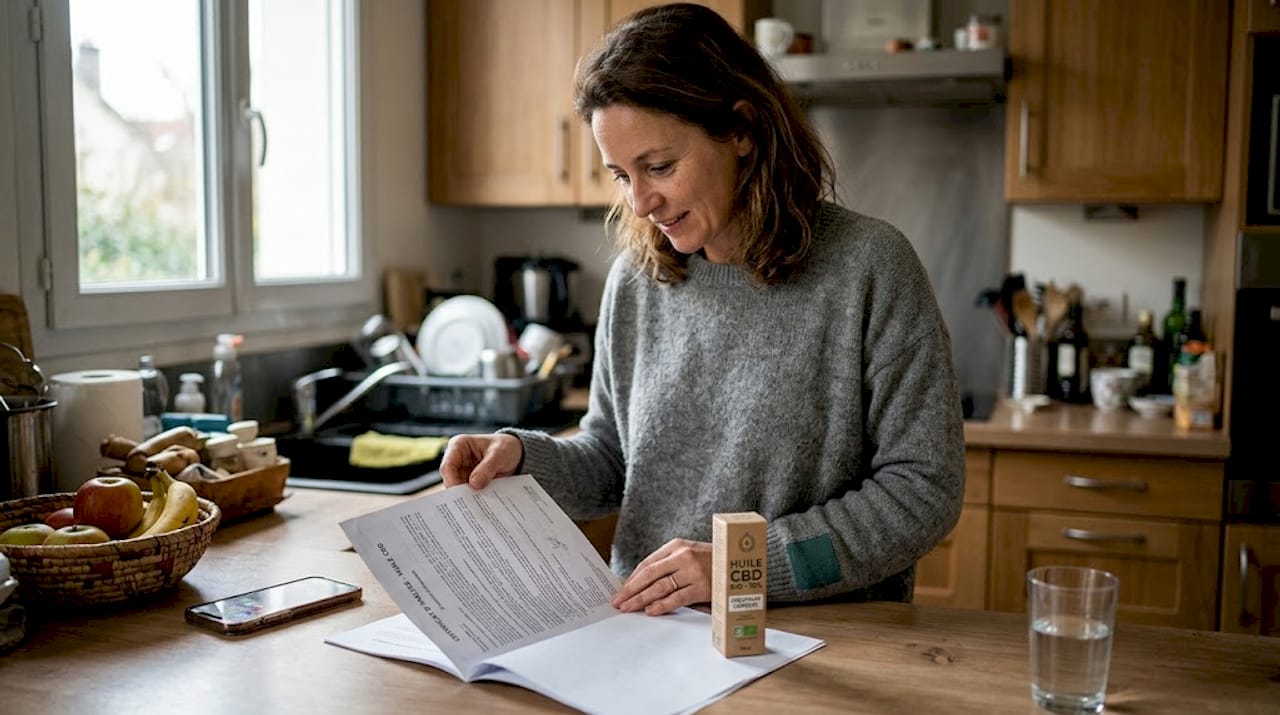
To verify a product’s quality, always require an ISO 17025 certificate of analysis (COA). This document, issued by an independent accredited laboratory, proves the absence of contaminants such as pesticides, heavy metals, and residual solvents. Without this document, no product deserves your trust.
| Criterion | What to check |
|---|---|
| THC content | ≤ 0.3% |
| Hemp origin | EU or certified organic |
| Extraction method | Supercritical CO2 |
| Certificate of analysis | ISO 17025, accredited laboratory |
| Spectrum | Full, broad, or isolate depending on your needs |
Also consult the European CBD legal standards to ensure that the product you are considering meets the 2026 requirements. To learn more about the legal CBD purchasing process, practical resources are available to help secure every step.
Pro tip: Download the COA directly from the manufacturer’s website before buying. If the document is unavailable or more than a year old, move on.
After understanding the importance of choosing compliant, traceable CBD, let’s examine how to match your personal needs with the best product form.
Matching the right type of CBD to your specific needs
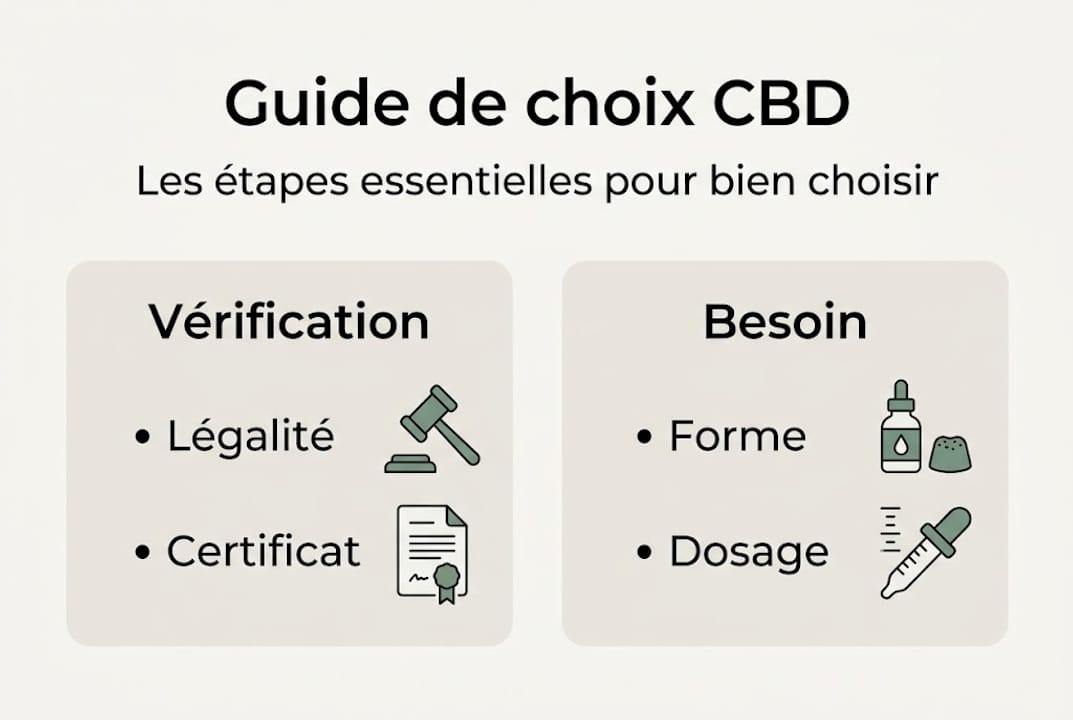
Each symptom calls for a different form of CBD. It is not a matter of personal preference: it is a matter of effectiveness and bioavailability, meaning the amount of CBD that actually reaches your bloodstream.
Here is how to guide your choice according to your main need:
- Localized pain (joint, back, muscle): a topical balm or cream applied directly to the area is often the fastest solution. Balms for localized pain work without entering the general bloodstream.
- Diffuse or chronic pain: sublingual full-spectrum oil (under the tongue) offers rapid absorption and a beneficial entourage effect for CBD-relieved pain such as neuropathic or inflammatory pain.
- Anxiety and stress: sublingual full-spectrum oil or infusions to benefit from the entourage effect. Absorption is gradual and the effect lasts several hours.
- Insomnia: softgels or capsules are convenient in the evening because their effect is delayed (30 to 90 minutes) but prolonged, which aligns with the sleep cycle.
- Versatile use: combining an oil in the morning with a topical balm during a pain flare-up is a common and effective strategy.
| Need | Recommended form | Recommended spectrum |
|---|---|---|
| Localized pain | Balm, cream | Full or broad spectrum |
| Diffuse chronic pain | Sublingual oil | Full spectrum |
| Anxiety, stress | Oil, infusion | Full spectrum |
| Insomnia | Softgels, capsules | Broad spectrum or full spectrum |
| Beginner | Low-concentration oil | Broad spectrum or isolate |
For people suffering from anxiety, the best CBD oils for chronic pain and information on CBD and anxiety can help refine your choice. Also check the reliable CBD labels to ensure the traceability of the selected product.
Once the product form has been identified, you must also choose its concentration and adjust the dosage.
Identifying the right concentration and determining the dosage
The concentration of a CBD product is expressed as a percentage or in milligrams. A 5% oil contains 500 mg of CBD per 10 ml, or approximately 16.6 mg per milliliter. This is a useful reference for calculating your daily dose.
Here are the common levels by profile:
- 5% : ideal for beginners, sensitive individuals, or those trying CBD for the first time.
- 10 to 20%: standard concentration for managing chronic pain or moderate anxiety.
- 20 to 30%: intended for intensive use or people who have developed a tolerance.
For chronic pain: start at 10–20 mg/day, then gradually increase by 5 to 10 mg every 3 to 4 days depending on tolerance. For anxiety: 15–30 mg/day, with an entourage effect recommended to maximize results.
The EFSA (European Food Safety Authority) has established a provisional safe dose of 0.0275 mg/kg/day for an adult taking pure CBD. For a 70 kg person, this represents approximately 1.9 mg/day under strict use. In practice, doses used for well-being are often higher, but should always be increased gradually.
Professional tip: Keep a tracking journal for the first 4 weeks. Note the dose, time of intake, and how you feel. This will allow you to adjust precisely rather than guess.
Effects may take between 2 and 6 weeks to stabilize. Patience is an integral part of the protocol. To refine your CBD dosage for anxiety or learn how to integrate CBD into your daily routine, practical guides can support you. If you take medication, particularly blood thinners, you must consult a healthcare professional before starting.
Now that you know how to determine concentration and dosage, let’s look at common mistakes to avoid and checks to carry out before purchase.
Avoid the pitfalls: checks to carry out before purchase
The CBD market also attracts low-quality products. A few simple checks are enough to identify them before buying.
Safety checklist before purchase:
- Recent ISO 17025 analysis certificate available (less than one year old)
- THC level clearly indicated and ≤ 0.3%
- Hemp origin specified (EU or preferably certified organic)
- Extraction method indicated (ideally supercritical CO2)
- Absence of residual solvents confirmed by the COA
- No direct medical or therapeutic claims on the packaging
- Accessible manufacturer or distributor contact details
Recognized CBD labels and certifications in Europe are a good additional indicator of reliability.
A product that promises to “cure” a disease or “eliminate” pain within 24 hours does not comply with European regulations. CBD is a wellness supplement, not a medicine.
Special cases to consider:
- Beginners or sensitive people: prefer less than 5% CBD and start with a single dose per day.
- People taking anticoagulants or other medications: CBD may interact with certain treatments. A medical consultation is essential.
- Allergies: check the excipients (hemp oil, MCT oil, natural flavorings) listed in the ingredients.
EFSA has set a provisional safe dose of 0.0275 mg/kg/day for pure CBD in adults, reminding us that even a natural product must be used with caution. For an overview of CBD uses in 2026, updated resources are available to guide you.
Now, what approach should you favor for a lasting and effective choice?
Our expert perspective on the CBD selection process
Many people arrive with very high expectations: they hope CBD will resolve in a few days what other solutions have not fixed in months. This expectation is understandable, but it often leads to prematurely abandoning a protocol that was nevertheless well designed.
What experience shows is that the superior effectiveness of full-spectrum CBD due to the entourage effect is real, but it does not manifest in the same way for everyone. Some people feel effects from the first week. Others need 4 to 6 weeks of gradual adjustments.
The uncomfortable truth is that CBD works best as one tool among others: combined with good sleep hygiene, active stress management, and, if necessary, medical monitoring. The available studies confirm genuine potential, but no universal guarantee. Choosing recommended CBD oils with an appropriate spectrum remains the foundation of a serious, personalized approach.
Take the next step with certified CBD products.
You now have everything you need to evaluate a CBD product methodically. The next step is to find products that genuinely meet these criteria: traceability, an available COA, a suitable spectrum, and clear concentration.
At European CBD Shop, we select only products that comply with European standards and provide accessible certificates of analysis. You can explore the best CBD shops in Europe to compare available options, discover our 10% broad-spectrum oil for balanced daily use, or choose high-concentration CBD capsules if you are looking for precise, convenient dosing. Delivery is available throughout the EU, the United Kingdom, and Switzerland.
Frequently asked questions about choosing a CBD product
What THC level is legal in CBD products in Europe?
The legal THC level must not exceed 0.3% under the European regulations applicable in 2026. Any product exceeding this threshold is considered non-compliant.
How can you check the quality and safety of a CBD product?
Require an ISO 17025 COA confirming the absence of contaminants, and check that the hemp used is sourced from the EU or certified organic.
Which form of CBD should you choose for chronic pain?
Full-spectrum sublingual oil between 10% and 30% is recommended for diffuse pain, while a topical balm is better suited to localized pain.
Is there a safe dosage for getting started?
Start with 10–20 mg per day and increase slowly. The provisional EFSA dose is 0.0275 mg/kg/day for pure CBD in adults, as a safety reference.
What are the signs of a poor-quality CBD product?
The absence of a certificate of analysis, an unspecified hemp origin, no extraction method mentioned, and direct medical claims are all warning signs to take seriously.