
How to relieve pain naturally: practical guide
In brief:
- Natural approaches to pain relief target inflammation and pain perception without medication. Curcumin, white willow, and other plant-based compounds are supported by clinical studies and require regular use. Body-based techniques such as neurostimulation and meditation effectively complement these treatments, promoting sustainable pain management.
Naturally relieving pain refers to all non-drug approaches, such as herbal medicine, curcumin, or salicin, which act on inflammatory and nervous mechanisms without relying on conventional painkillers. These methods do not replace a medical diagnosis, but they are natural alternatives for pain relief validated by clinical trials. Understanding the cause of your pain, whether acute, inflammatory, or chronic, is the first step in choosing the right remedy. This guide presents the best-documented solutions to help you soothe pain safely and gradually without medication.
Which plants and natural supplements should you use to soothe pain?

Herbal medicine offers several compounds whose effectiveness has been confirmed by clinical studies. Each plant acts through a specific mechanism, making their selection crucial.
The best-documented anti-inflammatory compounds
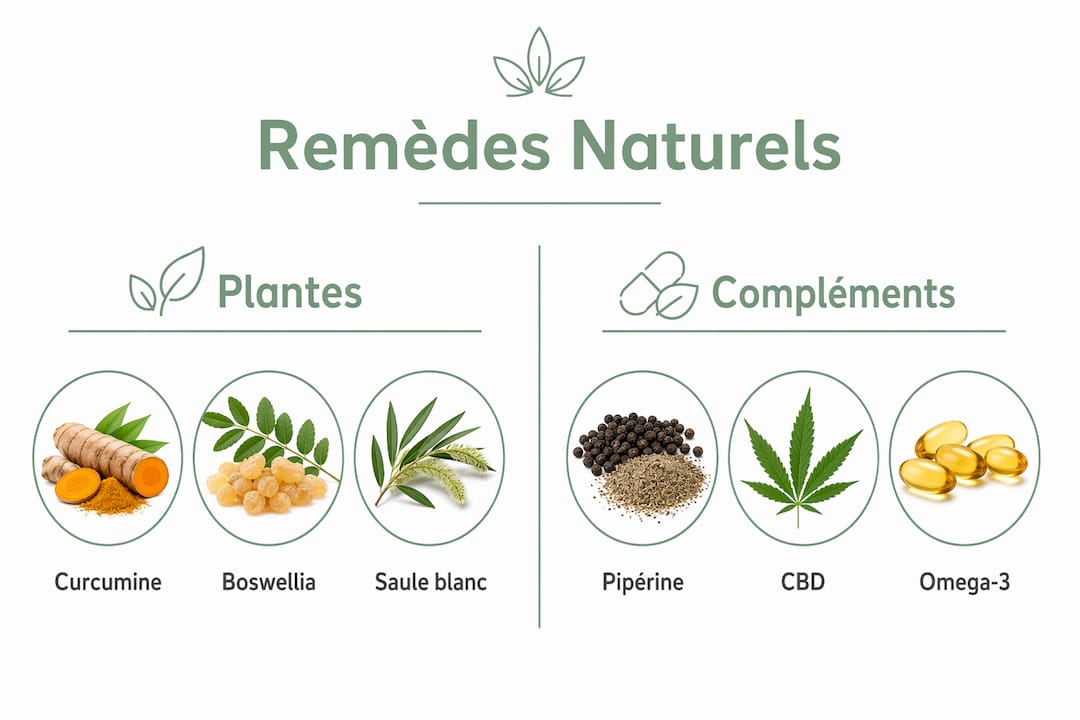
- Curcumin: at 1,000–1,500 mg per day, it matches the effectiveness of 1,200 mg of ibuprofen in relieving knee osteoarthritis, with fewer gastrointestinal side effects. Its maximum effect is reached after 12–16 weeks of daily use because it works by blocking the NF-κB inflammatory pathway. It must be combined with piperine to be effective.
- White willow bark: the recommended dose is 120–240 mg of salicin per day. It acts like a natural aspirin, helping relieve muscle and joint pain.
- Meadowsweet: an infusion of 2–3 g of dried flowers, three times a day, provides salicylate properties comparable to those of white willow.
- Ginger: a recognized anti-inflammatory, effective for chronic pain and post-exercise muscle soreness.
- Boswellia: an extract of Indian resin that reduces joint inflammation, particularly useful for chronic pain.
- Bromelain and quercetin: these two compounds accelerate recovery after an injury or minor surgery.
- Omega-3: reduce inflammatory markers over the long term, especially in people suffering from joint pain.
- Magnesium: promotes muscle relaxation and reduces contractures, particularly nighttime cramps.
Pro tip: Curcumin alone is very poorly absorbed by the body. Combined with piperine (extracted from black pepper), its absorption is increased by up to 2,000 times. Always check that your supplement contains both.
Comparison table of the main natural remedies
| Plant or supplement | Targeted type of pain | Recommended form |
|---|---|---|
| Curcumin + piperine | Osteoarthritis, chronic inflammation | Standardized capsule |
| White willow bark | Joint pain, fever | Extract standardized for salicin content |
| Meadowsweet | Muscle pain, headaches | Infusion or extract |
| Ginger | Muscle soreness, digestive pain | Capsule or decoction |
| Boswellia | Osteoarthritis, chronic pain | Standardized extract |
| Magnesium | Cramps, contractures | Oral supplement |
The Mediterranean diet is an effective dietary supplement to these active ingredients. It reduces inflammation markers such as CRP by 20–30%, thereby enhancing the effect of supplements taken alongside them.
How do body-based techniques help relieve pain?
Non-drug methods act through pathways different from those of plants. They target the nervous system, muscle tension, and the brain's perception of pain.
-
Neurostimulation and physical therapy: these two approaches are among the most effective methods for reducing chronic pain without medication. Transcutaneous electrical nerve stimulation (TENS) delivers mild electrical impulses that interrupt pain signals. Physical therapy strengthens muscle and joint structures to prevent recurrences.
-
Hypnosis and meditation: medical hypnosis modifies the conscious perception of pain. Mindfulness meditation reduces the stress associated with chronic pain, thereby decreasing its perceived intensity. Both techniques are recognized by pain specialists in 2026.
-
Thermotherapy and cryotherapy: heat relaxes contracted muscles and improves local circulation. Cold, applied within the first 48 hours after an injury, reduces edema and acute inflammation. Alternating the two may be possible for certain chronic pains, depending on a professional's advice.
-
Massage and stretching: targeted massage releases myofascial tension and stimulates the production of endorphins. Daily stretching improves joint mobility and reduces postural pain.
-
Cardiac coherence: this breathing technique regulates the autonomic nervous system. Practicing for 5 minutes, three times a day, is enough to lower stress levels and reduce pain sensitivity.
Pro tip: Combine cardiac coherence with a gentle back stretch in the morning. This two- to three-minute combination is enough to reduce neck tension pain within the first few weeks.
These techniques are more effective when integrated with conventional medical treatments rather than used as a replacement. A doctor or physiotherapist can help you develop a protocol suited to your situation.
What criteria should you use to choose and combine your natural remedies?
Choosing a natural remedy without knowing the nature of your pain is like taking a medication without reading the leaflet. The type and cause of the pain entirely determine which solution should be prioritized.
Identify your pain before choosing
- Acute pain (less than three months, identified cause): prioritize cryotherapy, bromelain, and active rest. Curcumin is not well suited to the short term because its effect is gradual.
- Chronic pain (more than three months): curcumin, boswellia, omega-3s, and mind-body techniques are the most relevant.
- Inflammatory pain (hot, swollen joints): white willow, meadowsweet, and ginger act directly on inflammation.
- Muscle strain: magnesium, local heat, and stretching are the first-line measures.
Route of administration and essential precautions
Oral administration (capsules, infusions) provides systemic action. Topical applications (ginger gels, essential oils) act locally and present fewer risks of drug interactions. The choice depends on the location and extent of the pain.
Contraindications exist and deserve serious attention. White willow and meadowsweet are contraindicated for children, pregnant women, and people taking anticoagulants because of their blood-thinning properties. Likewise, natural anti-inflammatory supplements should be stopped two weeks before surgery to limit the risk of bleeding.
Consulting a doctor remains essential when pain is accompanied by fever, unexplained weight loss, neurological disorders, or persists despite two weeks of natural care. These warning signs require a formal diagnosis, which natural remedies cannot replace.
To optimize curcumin absorption, always combine it with piperine and take it with a meal containing fats. This simple combination maximizes its anti-inflammatory action without changing the dose.
Practical instructions: incorporating natural remedies into your daily routine
Adopting these solutions requires simple but regular organization. Here is how to structure your routine.
-
Prepare your supplements in the morning: take curcumin with piperine and omega-3s at breakfast, with fats to maximize absorption. For meadowsweet or ginger infusions, prepare them in advance and keep them in a thermos.
-
Apply heat or cold depending on the timing: cold should be applied during the first 48 hours after an impact or acute inflammation (15–20 minutes, protected by a cloth). Heat is suitable for chronic muscle contractures, in the evening after a day of sedentary work.
-
Include simple exercises: ten minutes of targeted stretching in the morning and five minutes of cardiac coherence exercises before bed are enough to maintain mobility and reduce nervous tension. These simple actions fit into your schedule without disruption.
-
Track your results: record your pain intensity on a scale from 0 to 10 each week. If no improvement appears after four weeks, adjust the remedy or consult a professional. Curcumin, it should be noted, requires 12–16 weeks to reach its full effect.
-
Consult a professional if in doubt: a doctor or pharmacist can check for interactions with your current medications. Do not combine several salicylate-containing plants without medical advice.
Sample weekly routine table
| Time | Recommended action | Goal |
|---|---|---|
| Morning | Curcumin + piperine with a meal | Reduce systemic inflammation |
| Morning | 10 minutes of targeted stretching | Improve joint mobility |
| Daytime | Ginger or meadowsweet infusion | Continuous anti-inflammatory support |
| Evening | Local heat applied to the painful area | Relax muscle tension |
| Evening | 5 min of heart coherence | Regulate the nervous system |
To learn more about the role of plants in pain management, natural alternatives to CBD offer well-documented complementary options.
Key points
The most effective natural remedies for pain combine targeted plant compounds, regular body-based techniques, and medical follow-up tailored to the nature of the pain.
| Point | Details |
|---|---|
| Curcumin and piperine | Always combine them for genuine anti-inflammatory effectiveness after 12–16 weeks. |
| Salicylate-containing plants | White willow and meadowsweet are contraindicated when taking anticoagulants and before surgery. |
| Body-based techniques | Neurostimulation, physiotherapy, and heart coherence reduce chronic pain without medication. |
| Heat and cold | Apply cold to acute inflammation and heat to chronic muscle tension. |
| Medical follow-up | Consult a healthcare professional if the pain persists for more than two weeks despite natural treatments. |
What I learned from observing years of natural remedy use
Most people who turn to natural remedies make the same mistake: they look for a plant-based equivalent of ibuprofen, meaning a fast and powerful effect from a single dose. This expectation is the main reason for premature discontinuation.
The reality is different. Active compounds such as curcumin or boswellia act on underlying mechanisms, not on the immediate symptom. Their strength lies in their lasting effects, not their speed. Those who use them correctly, with an appropriate dose and consistently over several weeks, achieve results that conventional medicines do not maintain over the long term.
What I also observe is that body-based techniques are consistently underestimated. Heart coherence or meditation may not seem “medical” to many people. Yet their effect on pain perception is documented and recognized by specialists. People who incorporate them into their routine measurably reduce their use of painkillers.
My most concrete advice: don’t choose between natural and medical approaches. An integrated approach is the only one that works sustainably. Natural remedies are valuable allies, not substitutes. And if you have any doubt about an interaction or a warning sign, seek medical advice. Always.
— Rod
CBD as a natural supplement for pain management
Cbd-certified offers a selection of CBD and natural cannabinoid products designed to support everyday pain and stress management. Each product is traceable, certified, and compliant with European regulations.
The CBD CBG gummies for pain from the ByStilla range combine CBD and CBG in a formula designed for joint and muscle comfort. For those who prefer an oil, Sensavea's Super Relax CBD & CBG oil offers targeted action against tension and pain. Cbd-certified delivers throughout the European Union, the United Kingdom, and Switzerland. Discover the full range at the Cbd-certified European shop.
Frequently asked questions
Is curcumin as effective as ibuprofen?
In a randomized clinical trial involving 367 patients, curcumin at 1,000–1,500 mg per day showed efficacy comparable to 1,200 mg of ibuprofen for relieving knee osteoarthritis, with fewer digestive side effects.
Can white willow be used with anticoagulant medications?
No. White willow and meadowsweet are contraindicated for people taking anticoagulants, pregnant women, and children due to their blood-thinning properties.
How long does it take to feel the effects of curcumin?
Curcumin's maximum effect is reached after 12–16 weeks of daily use at an adequate dose. It acts gradually by blocking the NF-κB inflammatory pathway, rather than like a fast-acting painkiller.
Are techniques like hypnosis or meditation really effective against pain?
Yes. Medical hypnosis and mindfulness meditation are recognized by specialists in 2026 as effective methods for reducing the perception of chronic pain, particularly by addressing associated stress.
Should natural supplements be stopped before surgery?
Natural anti-inflammatory supplements should be stopped at least two weeks before any surgical procedure to limit the risk of bleeding associated with their blood-thinning properties.