
Beta-Caryophyllene: Effects, Benefits and Uses with CBD
In short:
- Beta-caryophyllene is the only terpene recognized as a dietary cannabinoid, with no psychoactive effects. It specifically activates CB2 receptors in the immune system, relieving pain and inflammation. Vaporization at 199 °C helps preserve its properties in full-spectrum CBD products.
Beta-caryophyllene is the only terpene recognized as a dietary cannabinoid, capable of activating CB2 receptors in the endocannabinoid system without producing any psychoactive effects. This unique property radically distinguishes it from all other terpenes found in cannabis and CBD. For anyone interested in the natural management of pain or anxiety, understanding what CBD caryophyllene is represents a decisive step. Cbd-certified offers you here a clear, well-documented look at this fascinating compound, from its chemistry to its practical applications.
What is CBD caryophyllene? Structure and mechanism of action
Beta-caryophyllene is a bicyclic sesquiterpene, meaning an aromatic molecule composed of three isoprene units forming two rings. Its molar mass is 204.351 g/mol, making it one of the heaviest and most stable terpenes in the plant kingdom. This stability gives it greater heat resistance than monoterpenes such as limonene or myrcene.
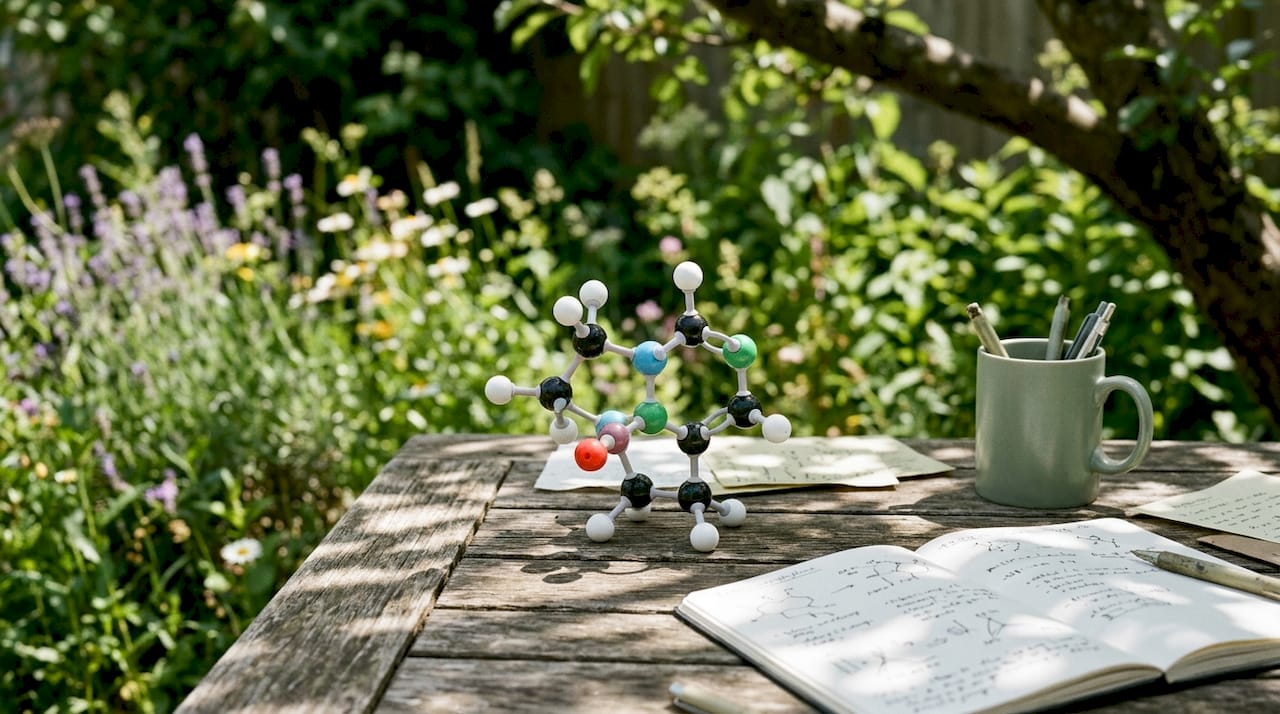
What makes caryophyllene truly unique is its interaction with the endocannabinoid system. It acts as a selective CB2 receptor agonist, located primarily in the peripheral immune system. Unlike classic cannabinoids, which also target the CB1 receptor in the brain, caryophyllene completely avoids this pathway. The result is a pharmacological action without euphoria or cognitive impairment.
The U.S. FDA classifies it as a safe food additive. This official recognition is rare for a cannabis compound and strengthens its credibility in the field of natural health. It occurs naturally in black pepper, cloves, and hops, which explains its characteristic spicy and woody aromatic notes.
| Characteristic | Detail |
|---|---|
| Chemical family | Bicyclic sesquiterpene |
| Molar mass | 204.351 g/mol |
| Boiling point | 262–264 °C |
| Target receptor | CB2 (peripheral immune system) |
| Psychoactive effect | None |
| FDA classification | Safe food additive |
Pro tip: Choose full-spectrum CBD products rather than isolate products: they retain the caryophyllene naturally present in the plant, which enhances the effects without requiring artificial addition.
What are the effects of caryophyllene on pain and anxiety?
The therapeutic properties of caryophyllene are based on its direct action through CB2 receptors. These receptors regulate the inflammatory response of the immune system. By activating them, caryophyllene reduces the production of pro-inflammatory mediators, which explains its anti-inflammatory and analgesic effects documented in numerous preclinical studies.
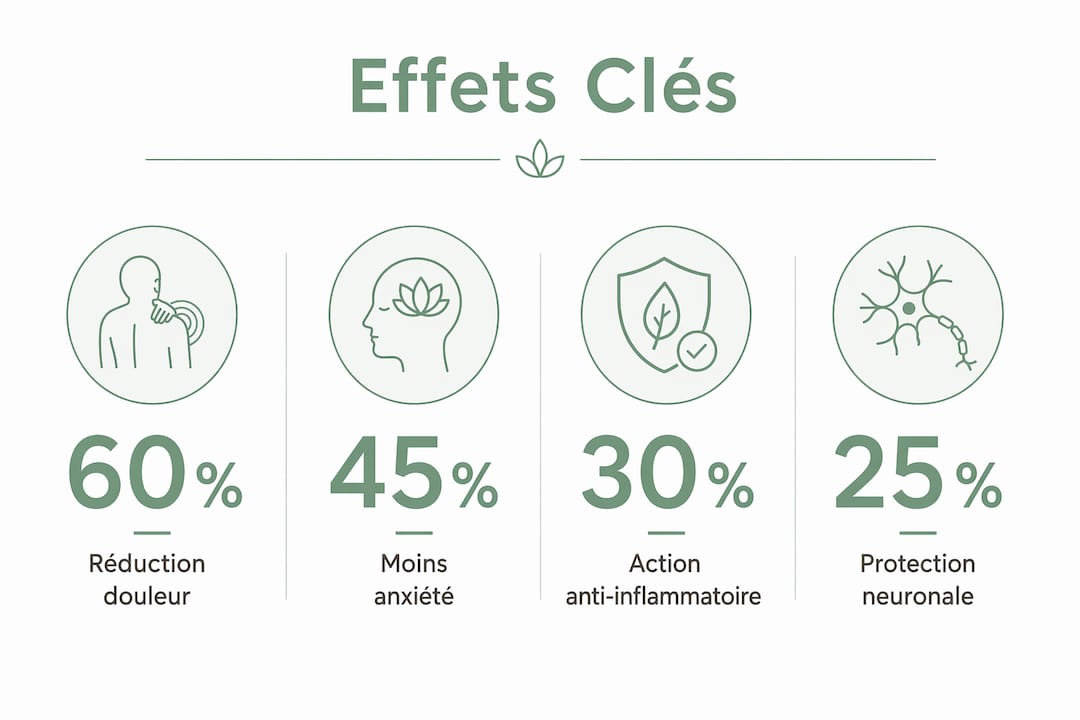
For people suffering from chronic pain, osteoarthritis, or localized inflammation, this mechanism is particularly relevant. The uses of CBD for pain often rely on this CB2 pathway, which caryophyllene naturally and selectively engages. The lack of an effect on CB1 also means there is no cross-tolerance with psychoactive cannabinoids.
The anxiolytic and neuroprotective effects constitute a second active area of research. Studies in animal models show a significant reduction in anxiety-related behaviors and modulation of nociception. These findings open up interesting prospects for managing chronic stress and providing long-term neuronal protection.
The protective profile of caryophyllene goes even further. Advanced research has identified cardioprotective, neuroprotective, and hepatoprotective properties, making this terpene a serious candidate for chronic inflammatory diseases. These avenues are still being explored, but they confirm the breadth of its potential.
Here are the main effects documented to date:
- Anti-inflammatory: reduction of inflammation through the modulation of peripheral CB2 receptors
- Analgesic: relief of chronic pain, particularly in cases of osteoarthritis and localized inflammation
- Anxiolytic: reduction in anxious behaviors observed in experimental models
- Neuroprotective: protection of nerve cells against oxidative damage
- Cardioprotective and hepatoprotective: protective properties currently being studied for chronic diseases
The scientific data available on caryophyllene remain essentially preclinical: animal and in vitro studies, without comprehensive clinical validation in humans. These results are promising, but they do not constitute formal medical recommendations. A cautious and informed approach remains the best stance for any consumer.
How does caryophyllene act synergistically with CBD?
The synergy between caryophyllene and cannabidiol (CBD) perfectly illustrates what researchers call the entourage effect. This phenomenon refers to the amplification of therapeutic effects when multiple cannabis compounds act together rather than separately. Caryophyllene, as a cannabimimetic terpene, plays a central role in this effect.
In vitro experiments show that the caryophyllene-CBD combination produces greater anti-inflammatory modulation than either compound alone. This synergy is explained by the complementary mechanisms: CBD acts on several receptors in the endocannabinoid system, while caryophyllene specifically targets CB2. Together, they cover a broader range of action.
For stress and anxiety management, this combination offers a tangible advantage: an enhanced anxiolytic effect without using psychoactive compounds. The safety profile of this combination is also favorable compared with certain traditional medications, which can cause dependence or significant side effects.
To fully benefit from this synergy, here are some practical recommendations:
- Prioritize full-spectrum products. They naturally contain caryophyllene alongside CBD, without selective extraction that would impoverish the terpene profile.
- Check the laboratory analyses. A good CBD product lists its terpene levels, including caryophyllene, on its certificate of analysis.
- Start with moderate doses. The synergy amplifies the effects, meaning that a lower dose may be sufficient compared with a pure isolate.
- Combine oil and topical application. For localized pain, combining a full-spectrum CBD oil for internal use with a caryophyllene-rich topical maximizes local and systemic action.
Pro tip: Consult the types of pain relieved by CBD to identify the product format best suited to your situation before buying.
Which extraction and use methods preserve caryophyllene?
Caryophyllene is a heavier sesquiterpene and less volatile than monoterpenes. Its optimal vaporization temperature is around 199 °C, well below its boiling point of 262–264 °C. This range makes it possible to extract the terpene without destroying it, unlike direct combustion, which degrades a large proportion of the active compounds.
| Product format | Caryophyllene content | Mode of action | Recommended use |
|---|---|---|---|
| Full-spectrum CBD flowers | High | Inhalation or vaporization | Fast effect, acute pain |
| Full-spectrum CBD oil | Medium to high | Sublingual or ingestion | Prolonged effect, chronic anxiety |
| CBD topicals | Variable | Topical application | Localized inflammation, osteoarthritis |
| CBD food supplements | Variable | Ingestion | Daily use, general well-being |
To maximize the effectiveness of caryophyllene in your CBD routine, several points deserve attention:
- Low-temperature vaporization: set the vaporizer between 185 °C and 210 °C to preserve the terpenes without combustion
- Store in a cool, dark place: heat and UV degrade terpenes; an opaque bottle in a cool place extends the product’s shelf life
- Supercritical CO₂ extraction: this industrial process preserves the complete terpene profile better than steam distillation, which can volatilize lighter compounds
- Reading analytical reports: a quality product indicates the beta-caryophyllene content in mg/g or as a percentage of the total terpene content
The thermal stability of caryophyllene is a real advantage compared with lighter terpenes. Limonene, for example, evaporates at much lower temperatures and degrades faster during storage. This robustness makes caryophyllene a terpene particularly well suited to CBD products intended for daily, long-term use.
Key points
Beta-caryophyllene is the only terpene that activates CB2 receptors in the endocannabinoid system without psychoactive effects, making it a central compound for the natural management of pain and anxiety.
| Point | Details |
|---|---|
| Unique cannabimimetic terpene | The only terpene recognized by the FDA as a dietary cannabinoid, with no psychoactive effects. |
| Targeted action on CB2 | Activates peripheral immune receptors, avoiding any CB1-related euphoria. |
| Anti-inflammatory and analgesic effects | Reduces inflammation and chronic pain by modulating the immune system. |
| Synergy with CBD | Enhances therapeutic effects in combination, according to in vitro experiments. |
| Optimal vaporization at 199 °C | Preserving the terpene requires a controlled temperature below its boiling point. |
What I’ve observed after years of following the CBD market
Caryophyllene remained in the shadow of CBD and THC for a long time. In 2026, the situation has changed. Consumers are asking specific questions about terpenes, and caryophyllene keeps coming up in conversations about chronic pain and stress. This is no coincidence.
What strikes me is the consistency between the science and the experiences of people who use full-spectrum products. Those who switch from a CBD isolate to a full-spectrum product often report a noticeable difference, particularly in managing inflammation. Caryophyllene is probably one of the main contributors to this difference.
The limitation I always emphasize: the evidence is still preclinical. Animal studies are promising, but they do not replace rigorous clinical trials in humans. Recommending caryophyllene as a medical treatment would be inaccurate. Presenting it instead as a natural compound with documented properties and a strong safety profile is fully justified.
My practical advice: don’t look for a “caryophyllene” product as if it were an added ingredient. Look for a full-spectrum CBD product with transparent lab analysis. If beta-caryophyllene appears among the listed terpenes at a significant concentration, you’ve found what you need. Manufacturer transparency is the best indicator of quality.
— Rod
CBD products rich in caryophyllene at Cbd-certified
Cbd-certified selects full-spectrum CBD products whose terpene profiles are verified by independent laboratories. Each product available from the certified CBD shop in Europe comes with its analysis results, allowing you to verify the beta-caryophyllene content before purchasing.
For pain management, CBD and CBG pain gummies combine cannabinoids and terpenes in a convenient, precisely dosed format. For anxiety and relaxation, Super Relax CBD and CBG oil offers a full spectrum designed for daily use. Delivery is available throughout the European Union, the United Kingdom, and Switzerland, with quality guarantees at every step.
Frequently asked questions
What is caryophyllene in CBD?
Beta-caryophyllene is a terpene naturally found in cannabis and other plants such as black pepper. It is the only terpene recognized as a dietary cannabinoid, capable of activating CB2 receptors without psychoactive effects.
Does caryophyllene cause psychoactive effects?
No. Caryophyllene activates only CB2 receptors, located in the peripheral immune system, and does not interact with the brain's CB1 receptors responsible for euphoric effects.
At what temperature should caryophyllene be vaporized?
The optimal vaporization temperature is around 199 °C. This range preserves the terpene without destroying it, unlike direct combustion, which degrades the active compounds.
Does caryophyllene help with anxiety?
Studies in animal models show significant anxiolytic effects. These results are promising, but clinical evidence in humans remains limited to date.
How do you choose a CBD product rich in caryophyllene?
Choose full-spectrum products with an independent laboratory analysis report. Check that beta-caryophyllene is explicitly listed among the terpenes with a measurable concentration.