
CBD Stress Management Guide: Methods and Dosages 2026
TL;DR:
- CBD, a natural compound found in hemp, reduces stress by modulating cannabinoid and serotonin receptors. Its effectiveness depends on gradual use; full-spectrum sublingual oil is preferred and should be combined with regular relaxation practices. A patient and balanced routine can produce lasting results in stress management.
Cannabidiol (CBD) is a natural compound found in hemp that reduces stress without causing psychotropic effects, unlike THC. This CBD stress-management guide presents the biological mechanisms, available forms, dosing protocols, and best practices for incorporating CBD into your daily routine. A 2019 study in The Permanente Journal showed a reduction in anxiety symptoms in 79% of participants after one month at 25 mg/day. This result positions CBD among the most documented natural solutions for stress management in Europe.
How does CBD work on stress and anxiety?
CBD acts on the central nervous system through two main targets: CB1 receptors in the endocannabinoid system and 5-HT1A serotonin receptors. These interactions explain its calming effects observed in numerous clinical trials. Unlike conventional anxiolytics, CBD indirectly modulates CB1 and 5-HT1A to stabilize emotions and reduce chronic stress, without documented physical dependence.
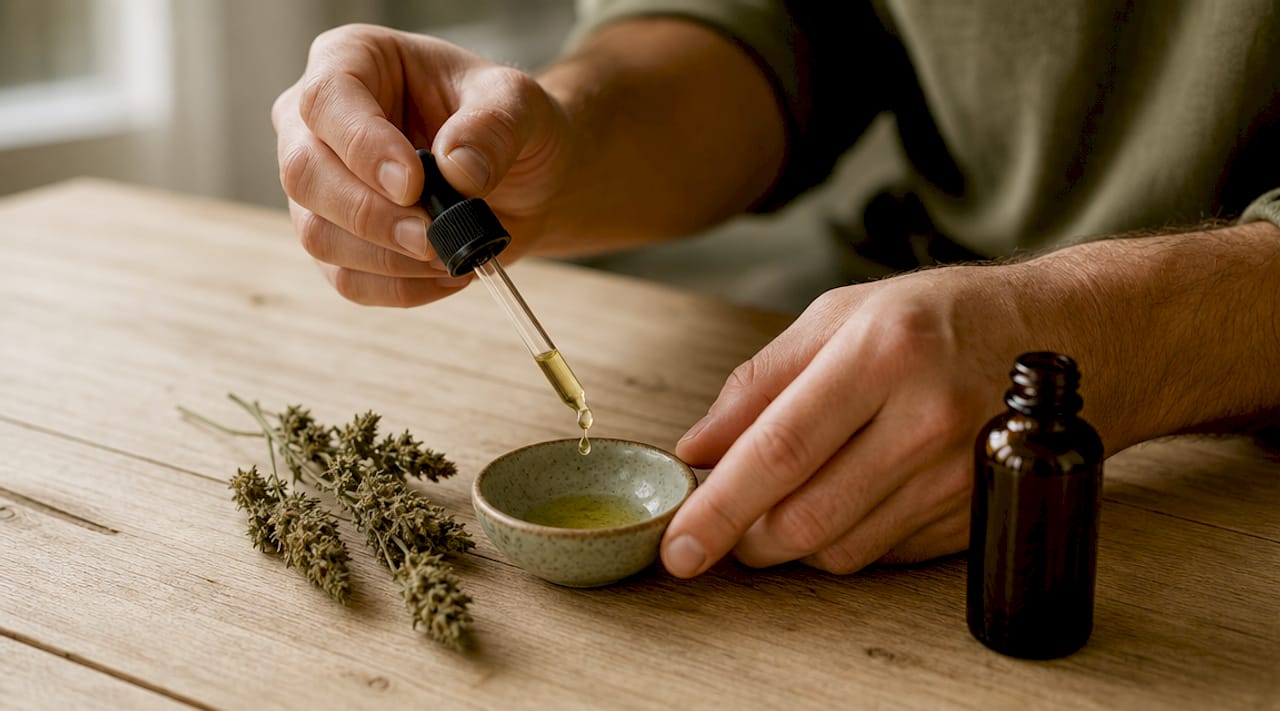
The distinction between acute stress and chronic anxiety is important for understanding how to use CBD for stress. Acute stress is an isolated response to a real threat. Chronic anxiety, on the other hand, keeps the body in a prolonged state of alert, with excessive cortisol secretion. CBD influences cortisol regulation and alleviates this “fight-or-flight” response that exhausts the body over time.
Here are the main documented biological effects of CBD on stress:
- Cortisol reduction: CBD limits the overproduction of this stress hormone during prolonged episodes.
- Activation of 5-HT1A receptors: this produces an effect similar to that of certain serotonin-based antidepressants, but without a prescription.
- Modulation of the endocannabinoid system: CBD supports emotional homeostasis, meaning the body’s ability to regain its natural balance.
- Improved sleep: better-quality sleep directly reduces vulnerability to stress the following day.
To explore the results of recent studies on this subject in greater depth, read this article on the role of CBD in anxiety.
Which forms of CBD should you choose to manage stress?
The European market offers several pharmaceutical forms of CBD, each with a distinct effectiveness profile. The choice depends on your lifestyle, the desired speed of action, and your personal tolerance.
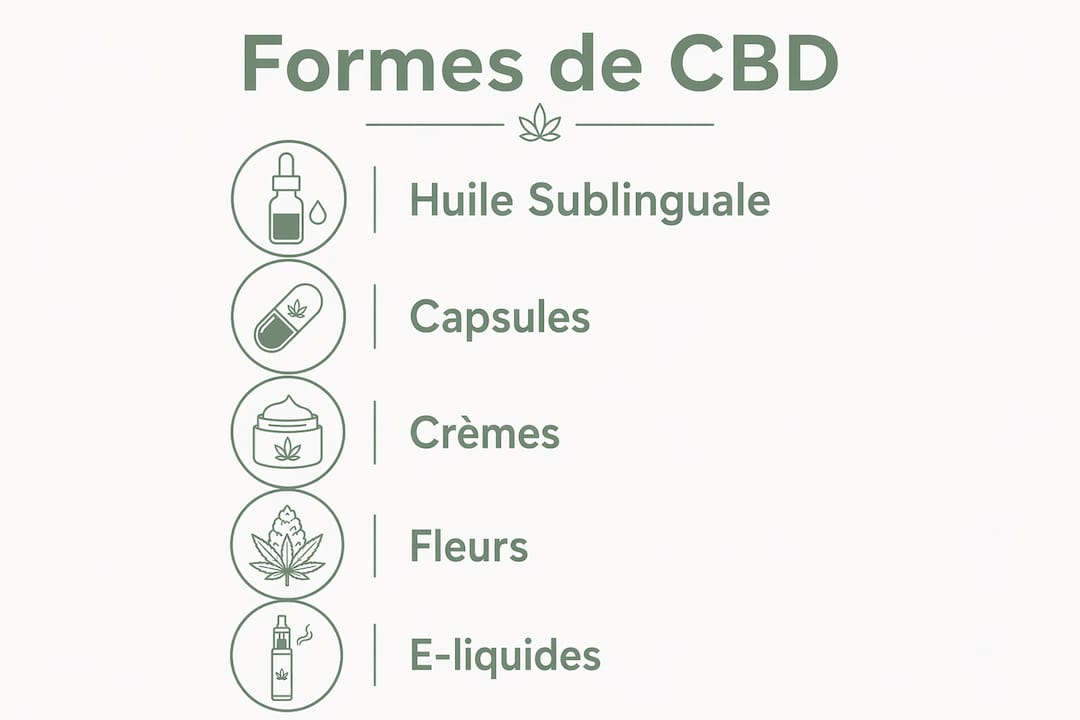
| Form | Bioavailability | Time to take effect | Ideal for |
|---|---|---|---|
| Sublingual oil | 13 to 19% | 15 to 45 minutes | Daily stress, dosage flexibility |
| Capsules | 6 to 12% | 1 to 2 hours | Regular routine, discretion |
| CBD infusions | Low | 30 to 60 minutes | Soothing evening ritual |
| Vaporization | 30 to 40% | 5 to 10 minutes | Acute stress attacks |
The sublingual route is recommended for its balance between effectiveness and speed of action. In practical terms, this means that CBD oil placed under the tongue reaches the bloodstream much faster than capsules digested in the stomach.
The choice of product spectrum matters as much as the form. Full-spectrum extracts with terpenes offer a more powerful and relaxing entourage effect than pure CBD isolates. The entourage effect refers to the synergy between CBD, other minor cannabinoids, and aromatic hemp terpenes. Terpenes such as linalool (also found in lavender) or myrcene amplify the product’s calming properties. To choose the right type of CBD for your profile, compare full-spectrum and broad-spectrum extracts based on your sensitivity to residual THC.
Pro tip: Keep the CBD oil under your tongue for 60 seconds before swallowing. This simple step maximizes bioavailability and allows you to use a lower dose for the same effect.
How should CBD be dosed to manage stress effectively?
CBD dosing is not universal. It depends on body weight, the intensity of the stress experienced, and the form chosen. Human clinical trials show anxiolytic effects with single doses of 300 to 600 mg for situations of intense stress, while continuous doses of 25 to 100 mg per day are considered safe for regular use. This broad range confirms that a gradual protocol is essential.
Here is a four-step starting protocol recommended by clinical guidelines:
- Weeks 1 to 2: start with 10 to 15 mg per day, in the evening, to assess your initial tolerance without disrupting your day.
- Weeks 3 to 4: increase to 20 to 25 mg per day if the effects are insufficient. Record your observations in a simple journal.
- Week 5 and beyond: adjust in 5 mg increments according to your actual needs. Gradually adjusting the dosage is more effective than taking a high dose immediately.
- Stabilization: once you have found your effective dose, maintain it consistently. Consistent dosing is more important for emotional stability than a strong immediate effect.
Important precaution: CBD interacts with the liver enzymes CYP3A4 and CYP2C19, which may alter the effectiveness of certain medications such as warfarin or clobazam. If you are taking medication, consult a healthcare professional before starting CBD supplementation.
Possible minor side effects include drowsiness, dry mouth, and digestive problems, mainly associated with high doses. These effects generally disappear when the dose is reduced or intake is divided into smaller doses.
Which practices should you combine with CBD to manage stress sustainably?
CBD complements a comprehensive approach but does not replace medical care or healthy lifestyle habits. The recommendations from Resclin experts confirm that CBD works synergistically with validated natural techniques for better stress management. This combination produces more stable results than CBD used alone.
The most effective practices to combine with CBD are as follows:
- Cardiac coherence: this breathing technique of 6 cycles per minute for 5 minutes regulates the autonomic nervous system. Combined with CBD, it enhances cortisol reduction.
- Mindfulness meditation: apps like Petit Bambou or Headspace offer 10-minute sessions suitable for beginners. Combining CBD with slow breathing maximizes the effectiveness of both practices.
- Moderate physical activity: 30 minutes of brisk walking, yoga, or swimming three times a week measurably reduces cortisol levels.
- Sleep hygiene: taking a dose of CBD 30 to 60 minutes before bedtime improves sleep quality, which strengthens resistance to stress the next day.
- Anti-inflammatory diet: reducing refined sugar and increasing omega-3s (oily fish, flaxseeds) supports the nervous system over the long term.
Consistency matters more than intensity. Taking 20 mg of CBD every evening for three weeks produces more stable effects than taking a 100 mg dose once a week. To build an effective CBD routine that incorporates these practices, schedule your doses at the same times each day.
Pro tip: Keep a wellness journal during the first 30 days. Note your stress level out of 10 every morning and evening, as well as your dose and the day’s practices. This simple tracking helps you identify your optimal protocol in less than a month.
Key points
CBD reduces stress by acting on the CB1 and 5-HT1A receptors, and its effectiveness is maximized by gradually increasing the dosage alongside regular relaxation techniques.
| Point | Details |
|---|---|
| Mechanism of action | CBD modulates the CB1 and 5-HT1A receptors to stabilize emotions and reduce cortisol. |
| Recommended form | Full-spectrum sublingual oil offers the best balance between speed of action and bioavailability. |
| Starting dosage | Start with 10 to 15 mg per day and increase in 5 mg increments according to your actual needs. |
| Medical precautions | Consult a doctor if you take warfarin, clobazam, or any other medication metabolized by CYP450. |
| Holistic approach | Combining CBD with coherent breathing, exercise, and good sleep produces lasting results. |
What I learned from observing hundreds of CBD users
After years of following CBD users in Europe, one mistake keeps recurring: people give up too soon. They take CBD for five days, feel no spectacular effect, and conclude that it does not work for them. CBD is not an anxiolytic with an immediate effect. Its action on the endocannabinoid system develops gradually, often over two to four weeks of regular use.
Another common mistake is choosing a cheap CBD isolate instead of a certified-quality full-spectrum extract. The difference in results is real. A product without terpenes or minor cannabinoids loses much of its relaxing potential. The low price is rarely a bargain when it comes to your well-being.
What also stands out to me is that the people who achieve the best results do not rely solely on CBD. They incorporate it into a routine: regular sleep, a few minutes of mindful breathing in the morning, and even light physical activity. CBD then becomes an amplifier of these habits, not a substitute.
My most direct advice: start small, be patient, and choose traceable products with accessible laboratory analyses. The rest follows naturally.
— Rod
Find quality-certified CBD in Europe
Cbd-certified selects its products based on strict certifications, independent laboratory analyses, and complete traceability from the plant to the bottle. Whether you are looking for a full-spectrum sublingual oil for your daily routine, capsules for discreet use at the office, or infusions for an evening ritual, the range covers all needs related to stress management.
Deliveries are available throughout the European Union, the United Kingdom, and Switzerland. Browse the full selection on the best CBD shops in Europe page to find the product suited to your profile and budget, with personalized advice to help you get started.
FAQ
Is CBD legal for managing stress in Europe?
CBD derived from industrial hemp (less than 0.3% THC) is legal in the vast majority of European countries, including France, Belgium, the Netherlands, and Switzerland. Check your country's specific regulations before purchasing.
How long does it take to feel the effects of CBD on stress?
Effects vary depending on the form chosen: 15 to 45 minutes for a sublingual oil, 1 to 2 hours for capsules. Lasting effects on chronic anxiety generally develop after two to four weeks of regular use.
Can you take CBD with anti-anxiety medication?
CBD interacts with the liver enzymes CYP3A4 and CYP2C19, which may alter the concentration of certain medications in the blood. You must consult your doctor before combining CBD with medication.
Which CBD oil concentration should you choose to start?
A 5% oil (approximately 500 mg per 10 ml) is suitable for beginners. It allows you to start with 10 to 15 mg per day, with comfortable room for adjustment before moving to higher concentrations.
Does CBD cause dependence?
The World Health Organization (WHO) concluded that CBD shows no potential for abuse or documented physical dependence. It can be discontinued gradually without withdrawal symptoms.