
CBD Resin Preparation Method: Practical Guide 2026
In brief:
- CBD resin is a mechanical concentrate rich in cannabidiol, obtained without chemical solvents. It is primarily prepared through ice-water extraction, which offers high purity and preserves the terpenes. Quality depends on the choice of flowers, the tools, compliance with cold temperatures, and legality.
CBD resin is a mechanical concentrate of trichomes rich in cannabidiol, obtained without any chemical solvents. This definition is fundamental: it distinguishes CBD resin from industrial extracts and ensures a safer product for personal use. Choosing the right CBD resin preparation method directly determines the final product’s purity, aroma, and concentration. In Europe, solventless mechanical methods are preferred because they comply with regulatory standards for THC levels. This guide details the most effective techniques, the necessary tools, and the precautions to follow.
What tools and ingredients are needed to prepare CBD resin?
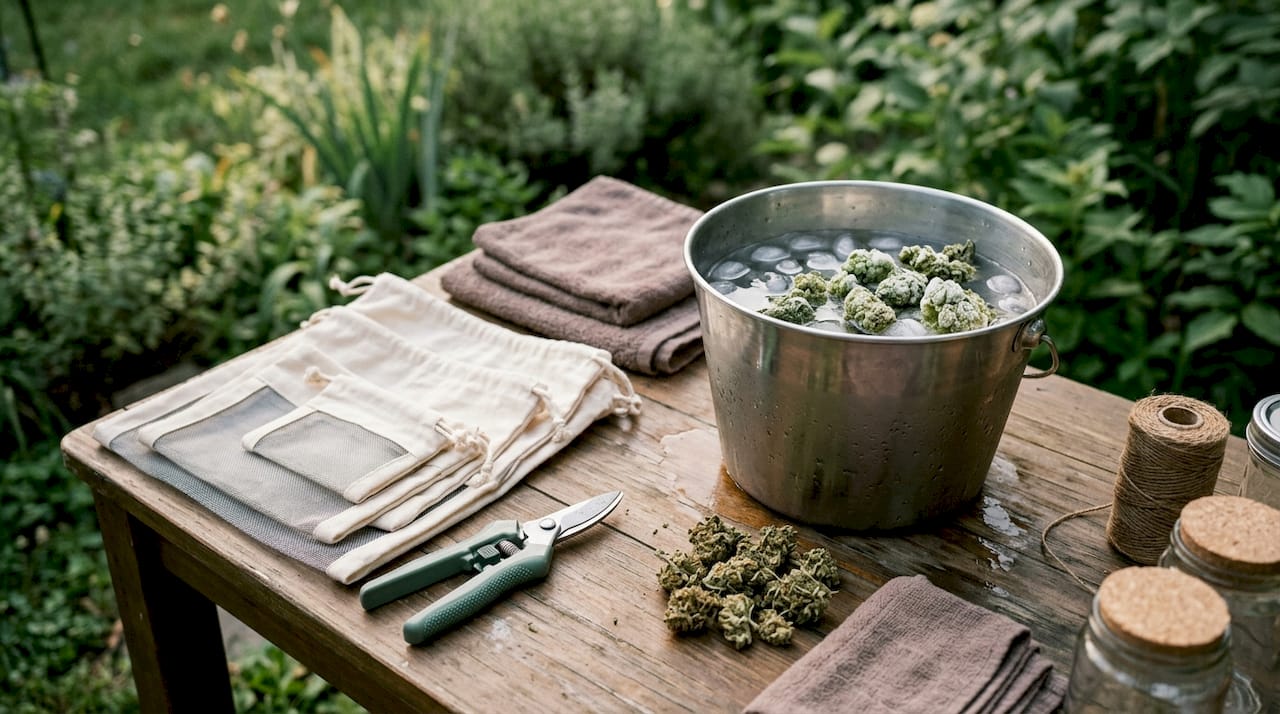
The quality of the equipment directly determines the quality of the resin obtained. Before starting, gathering the right tools helps avoid costly mistakes and material loss.
The essential tools
- Filter mesh bags (from 25 to 220 microns): separate the trichomes from plant debris through progressive sifting
- Food-grade plastic bucket (5 to 10 litres): serves as the main container for stirring with ice water
- Sufficient ice: keeps the water between 1 °C and 2 °C to make the trichomes more brittle
- Dry sieve (optional): useful for the dry-sifting method, with mesh sizes from 70 to 150 microns
- Silicone spatula: collects the resin without metal contamination
- Parchment paper: protects the resin during pressing or drying
The raw materials to choose
Choosing the CBD hemp flowers is the most crucial step. Certified flowers, rich in trichomes and low in THC, produce higher-quality resin. Freezing fresh flowers preserves terpenes better than conventional drying. This difference is directly noticeable in the aroma and richness of the final product.
To choose your CBD flowers well, favor varieties dense in trichomes, with a frosty appearance visible to the naked eye. The more numerous and intact the trichomes, the higher the yield.
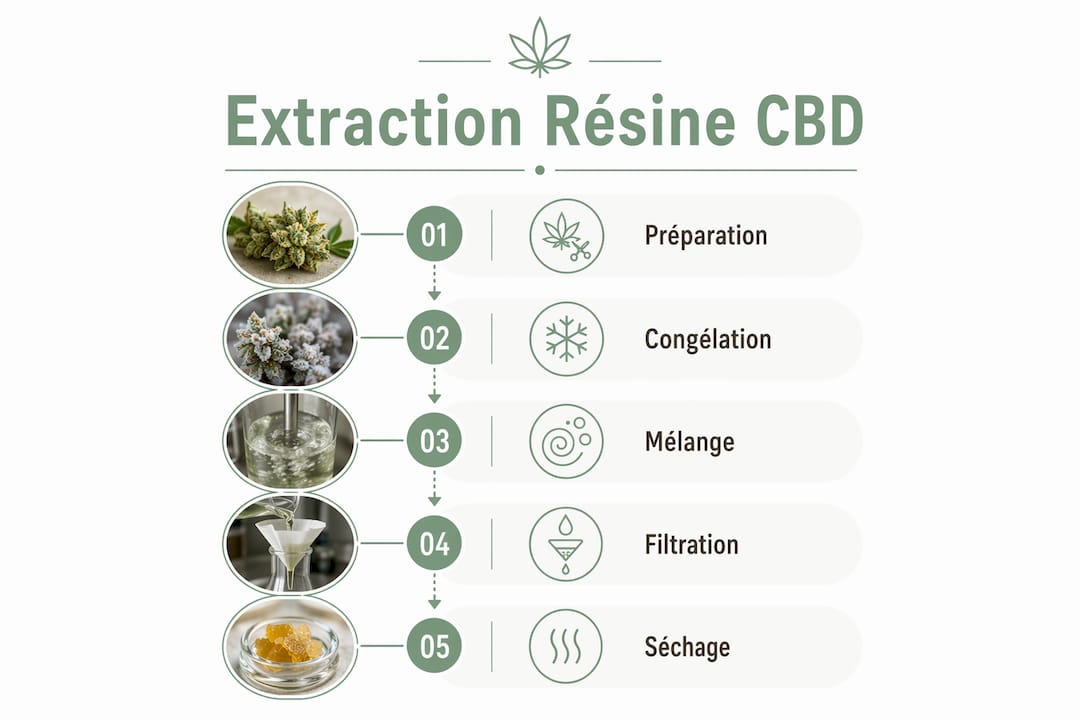
Pro tip: Freeze your fresh flowers for 24 hours before extraction. The cold stiffens the trichomes and makes them easier to separate, while preserving the aromatic terpenes that disappear during drying at room temperature.
How to prepare CBD resin using ice-water extraction?
Ice-water extraction, known as the Ice-O-Lator method, is the standard for obtaining pure, aromatic CBD resin. It is based on a simple principle: the cold weakens the trichomes, which detach easily from the flowers during stirring.
Detailed steps of the Ice-O-Lator method
- Prepare the ice water: fill the bucket with purified water and ice. The temperature must reach between 1 °C and 2 °C before adding the flowers.
- Place the frozen flowers: put the flowers into the bucket, starting with the bag with the widest mesh (220 microns).
- Stir gently: agitate the mixture for 15 to 20 minutes in a regular and controlled manner. Excessively vigorous agitation tears off plant debris that contaminates the resin.
- Filter through decreasing mesh sizes: remove each bag in succession, from the widest to the finest (220, 160, 120, 73, 25 microns). Each bag retains a different fraction of the trichomes.
- Collect the resin: collect the deposit at the bottom of each bag with a silicone spatula. The finest meshes (25 to 73 microns) contain the purest resin.
- Dry the resin: spread the collected resin on parchment paper and let it dry in a cool place. Freeze-drying remains the ideal method for preserving terpenes.
Comparison of fractions by mesh size
| Mesh size | Resin quality | Characteristics |
|---|---|---|
| 25–73 microns | Very high | Pure resin, rich in terpenes, melts completely in the flame |
| 73–120 microns | High | Good purity, slightly less concentrated |
| 120–220 microns | Average | More plant debris, higher yield |
High-quality Ice-O-Lator resin melts completely in a flame, which connoisseurs call « full melt ». This is a sign of exceptional purity, achieved through a rigorous process and quality raw material.
Pro tip: After collection, place the wet resin in the freezer for 30 minutes before working with it. It becomes firmer and easier to handle without sticking to the tools.
What are the other common methods for preparing CBD resin?
Three other techniques deserve attention for preparing CBD resin at home. Each offers a different balance between simplicity, equipment, and final quality.
Dry sifting
Dry sifting is the oldest method. Dried flowers are rubbed over sieves of different sizes to separate the trichomes. The result is kief, a powder of trichomes that can be pressed into resin. This technique requires no special equipment, but its purity is lower than that of Ice-O-Lator because plant debris passes more easily through the mesh.
Hot pressing (Rosin)
Hot pressing, or Rosin, uses heat and pressure on flowers or kief to extract the resin. Typical temperatures range from 80 °C to 120 °C, with pressing times ranging from 30 seconds to 3 minutes. A low temperature (around 80 °C) better preserves the terpenes and produces more aromatic resin. This method is quick and requires no water, but a quality press represents an investment.
Hand rolling
Hand rolling is the quintessential traditional technique. Fresh flowers are rolled between the palms until the resin deposits on the skin, then collected by scraping. The yield is low and purity limited, but the technique requires no equipment. It is suitable for occasional experimentation, not regular production.
Comparison table of methods
| Method | Equipment | Purity | Yield | Difficulty |
|---|---|---|---|---|
| Ice-O-Lator | Bags, bucket, ice | Very high | Medium | Moderate |
| Dry sifting | Sieve | Average | Medium | Low |
| Rosin (pressing) | Press, paper | High | Good | Moderate |
| Hand rolling | None | Low | Low | Very low |
Variable-yield methods such as dry sifting and Rosin remain accessible to beginners. Ice-O-Lator requires more rigor but consistently produces a superior result.
What precautions should be taken and what mistakes should be avoided during preparation?
Preparing CBD resin at home requires rigor. A few common mistakes are enough to compromise the quality or legality of the final product.
Key point: In Europe, CBD resin must come from flowers whose THC content does not exceed 0.3%. Solventless mechanical methods make it easier to comply with this limit because they do not add any chemical residue to the final product.
The essential points to watch are as follows:
- Maintain the cold chain: water that is too warm during ice-water extraction softens the trichomes and increases plant contamination
- Use purified water: tap water may contain minerals that affect the resin's purity
- Dry at low temperature: hot drying damages terpenes and promotes mold growth
- Maintain hygiene: clean surfaces, disinfected tools, and washed hands before each handling
- Check legality: use only flowers whose THC content complies with European regulations
Quality resin can be recognized by its golden to light brown color, pronounced aromatic smell, and supple texture without excess moisture. Greenish resin or resin with a strong vegetal odor contains too much chlorophyll, indicating insufficient filtration.
How can CBD resin be used for personal or therapeutic purposes?
Homemade CBD resin can be used in several ways depending on preferences and goals. Here are the most common methods of consumption:
- Vaporization: the most effective method for preserving terpenes and dosing precisely. A vaporizer set between 160 °C and 185 °C releases cannabinoids without combustion.
- Infusion in a fat: the resin dissolves in a vegetable oil (coconut oil, olive oil) gently heated. This homemade hemp oil preparation can then be incorporated into recipes or applied topically.
- Incorporation into culinary preparations: the resin can be added to butters or oils for suitable recipes, provided the temperature does not exceed 180 °C to prevent cannabinoid degradation.
- Sublingual use: a small amount of resin dissolved in oil can be placed under the tongue for rapid absorption.
For beginners, a very low dose is recommended. The effect of CBD resin varies depending on its concentration, consumption method, and individual sensitivity. The difference between CBD oil and CBD flowers helps explain why resin works differently from other forms of CBD.
Key points
The Ice-O-Lator method remains the reference technique for preparing pure, aromatic CBD resin that complies with European standards.
| Point | Details |
|---|---|
| Reference method | The Ice-O-Lator produces the purest resin through filtration with progressively finer mesh in ice water. |
| Decisive raw material | Certified hemp flowers that are freshly frozen guarantee a higher terpene yield. |
| Cold drying required | Freeze-drying or cold drying preserves aromas and prevents mold. |
| European compliance | The resin must come from flowers with a THC level no higher than 0.3% to be legal in Europe. |
| Strict hygiene | Purified water, clean surfaces, and disinfected tools are essential to prevent contamination. |
What I learned while making CBD resin at home
After several years of experimenting with different extraction techniques, one conviction became clear: solventless mechanical methods are not only safer, they also produce an aroma superior to anything a solvent can offer.
The first time I used the Ice-O-Lator method with fresh-frozen flowers, the result surprised me. The resin obtained melted completely in the flame, a sign of purity I had never achieved with dry sifting. This experience changed the way I approach extraction.
My advice for beginners: start with dry sifting to understand the principle of trichome separation. Then move on to the Ice-O-Lator when you are ready to invest in mesh bags. Rosin is an excellent intermediate option if you are looking for speed and quality without the complexity of ice water.
When it comes to legality, I do not compromise. Using flowers with THC levels exceeding European limits carries real risks. The mechanical methods I recommend here do not alter the cannabinoid profile of the raw material. Compliance therefore begins when choosing the flowers, not afterward.
— Rod
Cbd-certified: your source for certified CBD flowers and accessories
Preparing quality CBD resin starts with reliable raw materials. Cbd-certified offers a selection of certified hemp flowers that comply with European regulations, delivered within the European Union, the United Kingdom, and Switzerland.
For those looking to equip themselves or source flowers suitable for extraction, the European certified CBD shop from Cbd-certified offers products selected for their quality and traceability. A 25 g CBD flower pack is an excellent starting point for testing the Ice-O-Lator method or dry sifting. Every order benefits from careful delivery and customer service available to answer your questions about use and preparation.
Frequently asked questions
What exactly is CBD resin?
CBD resin is a concentrate of trichomes mechanically extracted from hemp flowers, without chemical solvents. It concentrates cannabidiol and terpenes in a dense, aromatic form.
What is the best method for preparing CBD resin at home?
Ice-water extraction (Ice-O-Lator) produces the purest resin. It requires mesh bags, ice, and gentle stirring for 15 to 20 minutes at a temperature of 1 °C to 2 °C.
Is preparing CBD resin legal in Europe?
The preparation is legal provided that hemp flowers with a THC content not exceeding 0.3% are used, in accordance with European regulations. Solvent-free mechanical methods naturally comply with this limit.
How do you store homemade CBD resin?
Store the resin in an airtight container away from light and heat. Refrigerating or freezing it preserves the terpenes and prevents degradation for several months.
Can you prepare CBD oil from homemade resin?
Yes. The resin dissolves in gently heated vegetable oil (coconut oil or olive oil) to produce a homemade hemp oil preparation. This oil can be used orally, sublingually, or topically depending on your needs.