
CBD resin extraction steps: practical guide 2026
TL;DR:
- CBD resin is extracted mainly by dry sifting, ice-water extraction, or cold pressing to obtain a pure, aromatic product. Quality depends on preparation, particularly the choice of flowers, cold temperatures, and adherence to essential temperatures and steps. These artisanal methods ensure safety, simplicity, and better preservation of terpenes and cannabinoids.
CBD resin extraction is the process of isolating trichomes rich in cannabinoids and terpenes from hemp flowers, using mechanical or solventless methods, to obtain a concentrate of optimal quality. The three main techniques accessible to individuals are dry sifting (dry sift), ice-water extraction (bubble hash), and cold pressing (rosin). Each method follows precise steps that directly determine the purity, yield, and aromatic profile of the final product. This guide details each step, the equipment required, and the mistakes to avoid for a successful at-home extraction.
What equipment and preparation are needed before extraction?
The quality of your resin depends as much on preparation as on the extraction itself. Before beginning the CBD resin extraction process, gather the tools suited to the chosen method.
Equipment by method:
- Dry sifting: fine-mesh screens (70 to 160 microns), clean collection tray, rigid cards for gathering the kief, nitrile gloves
- Ice-water extraction: food-grade plastic buckets (10 to 20 liters), 25- to 220-micron filter bags, a large quantity of ice cubes, spatula, absorbent paper
- Cold pressing (rosin): heated hydraulic press, parchment paper, precision thermometer, silicone container for collection
Preparing the plant material is a frequently overlooked step, but it determines everything that follows. Hemp flowers must be perfectly dried and, for dry sifting or ice-water extraction, frozen beforehand for at least 24 hours. The cold stiffens the trichomes, making it easier to separate them from the plant material without crushing them. To choose your flowers carefully, favor varieties with a high trichome density and flowers from certified cultivation.
Hygiene is non-negotiable at every step. Work on disinfected surfaces, wear gloves to prevent contamination from the heat of your hands, and keep your tools in a clean, dry environment. A cool workspace (ideally between 15 and 20 °C) significantly improves the quality of the collected kief.
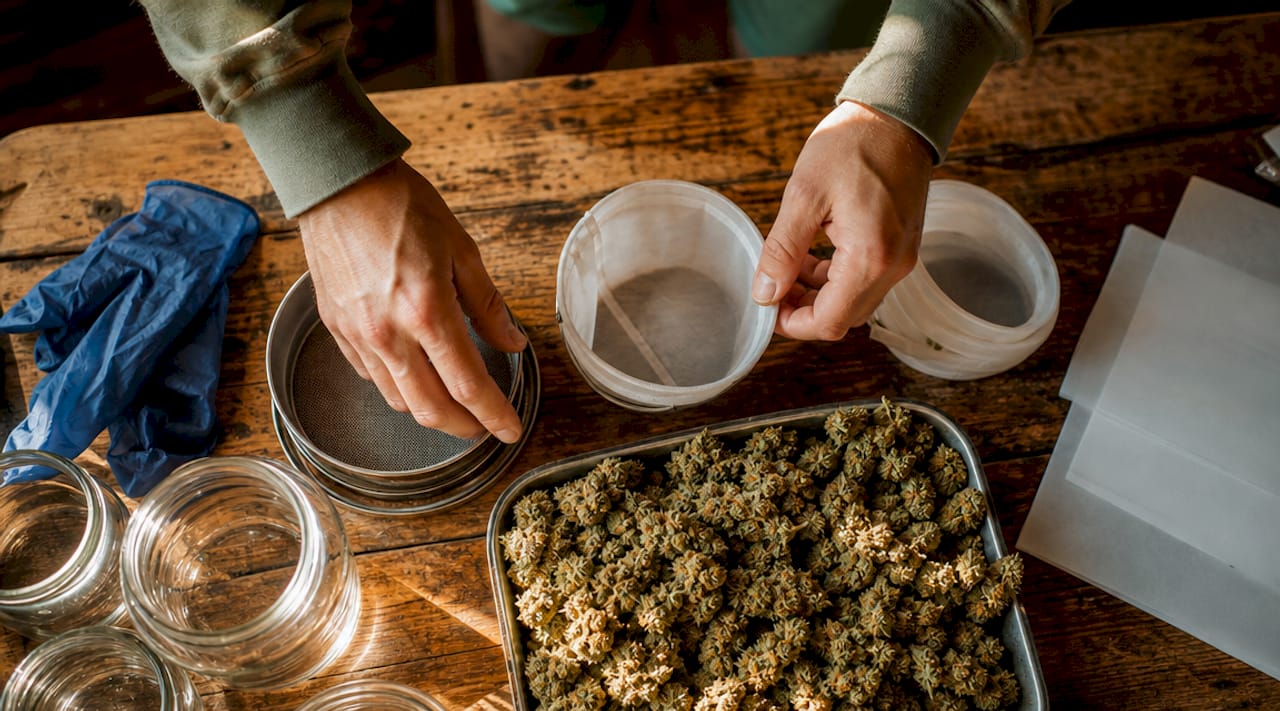
Pro tip: Freeze your screens and filter bags together with the flowers. Cold tools reduce thermal friction and preserve the most volatile terpenes from the outset.
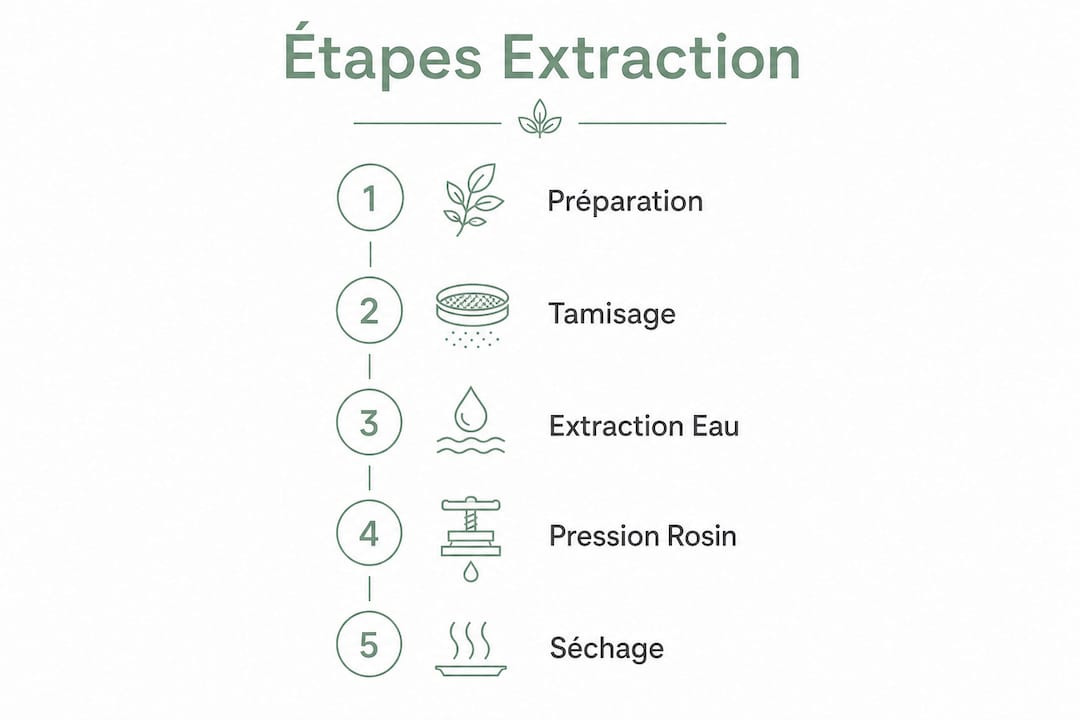
What are the steps involved in extraction by dry sifting?
Dry sifting, or dry sift, is the most accessible artisanal method, using screens ranging from 70 to 160 microns. It is perfectly suited to beginners who want to obtain quality kief without a significant investment in equipment.
Detailed steps:
- Freezing the flowers. Place your dried hemp flowers in an airtight bag and freeze them for at least 24 hours. This step stiffens the trichomes and makes it easier to detach them cleanly.
- Setting up the screen. Place your 90-to-120-micron mesh screen over a clean collection tray. This mesh range offers the best balance between purity and yield.
- Rubbing the flowers. Gently rub the frozen flowers over the surface of the screen using regular circular movements. Avoid excessive pressure, which could cause unwanted plant residue to pass through.
- Collecting the kief. Gather the kief that has fallen onto the tray with a rigid card. For increased purity, sift the kief a second time through a finer screen (73 microns).
- Immediate storage. Transfer the kief into an airtight glass container, away from light and heat, until use or pressing.
| Parameter | Recommended value | Impact |
|---|---|---|
| Mesh size | 90 to 120 microns | Balance between purity and yield |
| Working temperature | 15 to 20 °C | Limits terpene degradation |
| Freezing time | Minimum 24 hours | Rigid trichomes, clean separation |
| Sifting passes | 2 passes recommended | Improves the purity of the final kief |
The main limitation of dry sift is the thermal friction generated by rubbing. Dry sifting degrades the most volatile monoterpene terpenes, resulting in a pronounced but less nuanced aromatic profile than with cold extraction. This method remains ideal for quickly producing kief intended to be pressed into rosin.
Pro tip: Work in small quantities (10 to 15 grams maximum per batch) to maintain a low temperature and minimize contact between your hands and the screen.
How to perform an ice-water extraction (bubble hash)?
Ice-water extraction, known as bubble hash or ice-o-lator, is the preferred method for obtaining high-purity resin while maximizing terpene preservation. Resin obtained through cold extraction reaches a purity of 85 to 95%, thanks to the progressive separation of trichomes using 220-, 160-, 120-, and 73-micron filter bags. This result consistently exceeds that of dry sifting.
Steps for ice-water extraction:
- Preparing the ice water. Fill a 15-liter bucket with cold water and a large quantity of ice cubes. The temperature must remain between 0 and 4 °C throughout the process to make the trichomes brittle without dissolving them.
- Inserting the filter bags. Fit the filter bags into the bucket, from finest to coarsest (from 25 microns inside to 220 microns outside). Each bag retains a different fraction of trichomes.
- Agitation of the plant material. Add the frozen flowers to the ice water and stir for 15 to 20 minutes with a spatula or a low-speed blender. Agitation detaches the trichomes from the plant material.
- Progressive filtration. Remove the bags one by one, starting with the coarsest. Gently press each bag to extract the residual water without forcing plant material through.
- Collection and drying. Collect the resin from each bag with a spatula. Spread it on absorbent paper and let it dry for 24 to 72 hours in a cool, well-ventilated place. A freeze-dryer reduces this time to 24 to 48 hours while preserving the aromas.
| Criterion | Bubble hash | Dry sift |
|---|---|---|
| Purity obtained | 85 to 95% | 60 to 80% |
| Terpene preservation | Very good | Good |
| Equipment required | Filter bags, buckets, ice cubes | Screen, tray |
| Complexity | Moderate | Low |
| Drying time | 24 to 72 hours | None |
Cold extraction limits the degradation of volatile terpenes compared with dry sift. This result is explained by the complete absence of thermal friction and by the role of cold in preserving the chemical integrity of the trichomes throughout the procedure.
Pro tip: Drying must be thorough to prevent microbial growth. Never press the resin before it is completely dry to the touch and crumbly.
What are the steps for cold-press extraction (rosin)?
Rosin is a solventless extraction technique that combines moderate heat and mechanical pressure to release resin directly from flowers or kief. Solventless methods such as rosin are safer and more accessible to individuals than complex chemical extractions, making them the go-to choice for home use in 2026.
Rosin pressing steps:
- Preheating the press. Set the temperature of your heated plates between 71 °C and 104 °C. A low temperature (71 to 80 °C) preserves more terpenes; a higher temperature increases oil yield.
- Material preparation. Place your dried flowers or kief in a 25- to 90-micron mesh bag (rosin bag). This bag retains plant matter and ensures a clean extract.
- Pressing. Place the bag between two sheets of parchment paper and insert the assembly between the plates of the press. Apply gradual pressure for 30 to 90 seconds, depending on the density of the material.
- Extract collection. Remove the parchment paper and collect the resin with a silicone spatula. The extract appears as a golden to amber oil, with varying viscosity depending on the temperature used.
- Storage. Store the rosin in an airtight silicone or glass container in the refrigerator, away from light. The resin can be stored this way for several weeks without any noticeable loss of quality.
Benefits of rosin:
- No chemical solvents used, so no residue remains in the final product
- Fast process (less than 5 minutes per press)
- Temperatures between 71 °C and 104 °C allow you to adjust the balance between yield and terpene preservation
- Accessible equipment: a quality hair straightener may be enough to get started
The main limitation of rosin is its lower yield compared with industrial supercritical CO₂ extraction. Supercritical CO₂ extraction remains the industrial standard, but its cost and complexity make it inaccessible for home use. Rosin offers the best compromise between simplicity, safety, and quality for individuals.
How can you avoid common mistakes and ensure quality?
Even with good equipment, several common mistakes compromise the quality of the final product. Here are the most important points to watch:
- Neglecting decarboxylation. Decarboxylation is an essential step for activating cannabinoids if you want a therapeutic effect. It involves heating the resin to approximately 110 °C for 30 to 45 minutes before consumption.
- Working at too high a temperature. Excessive heat during sieving or pressing destroys the most volatile terpenes and degrades aromatic quality. Follow the recommended temperature ranges for each method.
- Insufficiently drying the resin. Resin that is still damp develops mold within a few hours. Drying for 24 to 72 hours is the minimum standard before storage or consumption.
- Storing in light or heat. UV light and heat quickly degrade cannabinoids and terpenes. Always use opaque, airtight containers and keep them in a cool place.
- Ignoring laboratory analyses. For any regular production, request a certificate of analysis (COA) for each batch, including the cannabinoid profile, terpenes, and absence of residual solvents. Cbd-certified offers laboratory analyses to help you understand what your extract contains.
The extraction method directly influences the resin’s final aromatic profile. Cold extraction preserves volatile compounds better than any other artisanal method, resulting in a more fragrant resin with greater complexity on the palate.
For CBD extraction methods for safe and effective use, consult Cbd-certified’s comprehensive guide, which details the specific precautions for each technique.
Key Points
The extraction method chosen determines the purity, yield, and aromatic profile of your CBD resin, with ice-water extraction offering the best result in terms of terpene preservation.
| Point | Details |
|---|---|
| Flower Preparation | Freeze the flowers for at least 24 hours before any mechanical extraction to stiffen the trichomes. |
| Dry Sifting | Use 90- to 120-micron mesh for an optimal balance between purity and yield. |
| Ice-Water Extraction | Keep the water between 0 and 4°C and dry the resin for 24 to 72 hours to prevent mold. |
| Rosin Pressing | Set the press between 71°C and 104°C depending on whether you prioritize terpenes or yield. |
| Quality and Safety | Ask for a certificate of analysis (COA) and always store the resin in an opaque, airtight container. |
What My Experience Has Taught Me About CBD Resin Extraction
After testing the three methods under real home conditions, my conviction is clear: bubble hash is the technique that rewards patience the most. Dry sift is appealing because of its simplicity, but thermal friction is a silent enemy of aromas. You get kief quickly, but you lose part of what makes good resin truly interesting.
What most guides do not say is that the quality of the raw material matters more than the sophistication of the equipment. I have seen mediocre extractions made with expensive equipment, and excellent resins produced with basic filter bags and carefully selected hemp flowers. Invest in hemp quality first, not gadgets.
For home use, I strongly advise against any extraction with chemical solvents. Rosin and bubble hash offer results comparable to professional extracts, without the risks associated with handling butane or ethanol. Safety is not a constraint: it is simply the condition for obtaining a product you can be proud of. And if you want to understand the terpenes in your extract, take the time to learn about their aromatic profiles. It completely changes the way you perceive your resin.
— Rod
Find the best certified CBD resins in Europe
You now know the key steps for extracting CBD resin. If you would like to start with a guaranteed-quality raw material or discover resins already extracted according to rigorous standards, Cbd-certified selects the best products available in Europe for you.
Every product offered by Cbd-certified comes with a certificate of analysis (COA) verifying the cannabinoid profile, terpenes, and absence of residues. Delivery is available throughout the European Union, the United Kingdom, and Switzerland. Discover the full selection at the best CBD shops in Europe and order with confidence.
FAQ
Which extraction method is best suited for beginners?
Dry sifting is the most accessible method for beginners, as it requires only a fine-mesh sieve and a collection tray. It quickly produces kief without complex equipment.
How long does resin need to dry after ice-water extraction?
Drying resin obtained through bubble hash takes between 24 and 72 hours in a cool, well-ventilated place. A freeze dryer reduces this time to 24 to 48 hours while preserving more terpenes.
What temperature should be used for rosin pressing?
The recommended temperatures for rosin range from 71 °C to 104 °C. A lower temperature (71 to 80 °C) better preserves terpenes, while a higher temperature increases oil yield.
Can CBD resin be extracted without solvents at home?
Yes. Rosin and dry sifting are two completely solvent-free methods that are perfectly suitable for home use. These techniques are safer than chemical extractions and produce residue-free resin.
Why request a certificate of analysis (COA) for your resin?
A COA for each batch confirms the cannabinoid and terpene profile and certifies the absence of residual solvents or contaminants. This is the only way to objectively verify the quality and purity of your extract.