
Better understand CBD’s role in relieving anxiety
TL;DR:
- CBD is perceived as a natural alternative for reducing anxiety, but its effectiveness remains to be scientifically confirmed.
- Studies on CBD and anxiety have methodological limitations, requiring caution and sound judgment.
- Its safety profile is favorable, but consulting a professional is essential when taking medication.
Anxiety affects millions of Europeans, and within a few years CBD has become one of the most frequently cited natural options for dealing with it. Yet between enthusiastic testimonials and scientists’ warnings, it is difficult to know what to make of it. Natural does not automatically mean effective or risk-free. This article offers an informed and balanced look at what science truly knows, what it still does not know, and how to incorporate CBD thoughtfully into a broader wellness approach.
Table of contents
- Why does CBD appeal so much for anxiety?
- What science shows about CBD and anxiety
- Side effects and safety: what should you watch for?
- How can CBD be incorporated into daily anxiety management?
- What you are not told about CBD and anxiety
- Finding reliable CBD products for managing anxiety
- Frequently asked questions about CBD and anxiety
Key Points
| Point | Details |
|---|---|
| Mixed effectiveness | CBD shows potential for anxiety, but the evidence remains incomplete according to recent science. |
| Overall safety | CBD is safe for most people, mainly causing minor side effects, with no recognized addictive properties. |
| Importance of personalized dosing | Low doses, certified products, and medical advice are essential for safe use. |
| Placebo effect present | Some of the perceived benefit could be due to the placebo effect, which must be taken into account during evaluation. |
| Recommended comprehensive support | CBD is only a complementary tool in a comprehensive approach to managing anxiety. |
Why does CBD appeal so much for anxiety?
The popularity of CBD in Europe for managing anxiety is not coincidental. It responds to several very real expectations among people seeking alternatives or supplements to conventional treatments, which are often perceived as too burdensome, too restrictive, or too addictive.
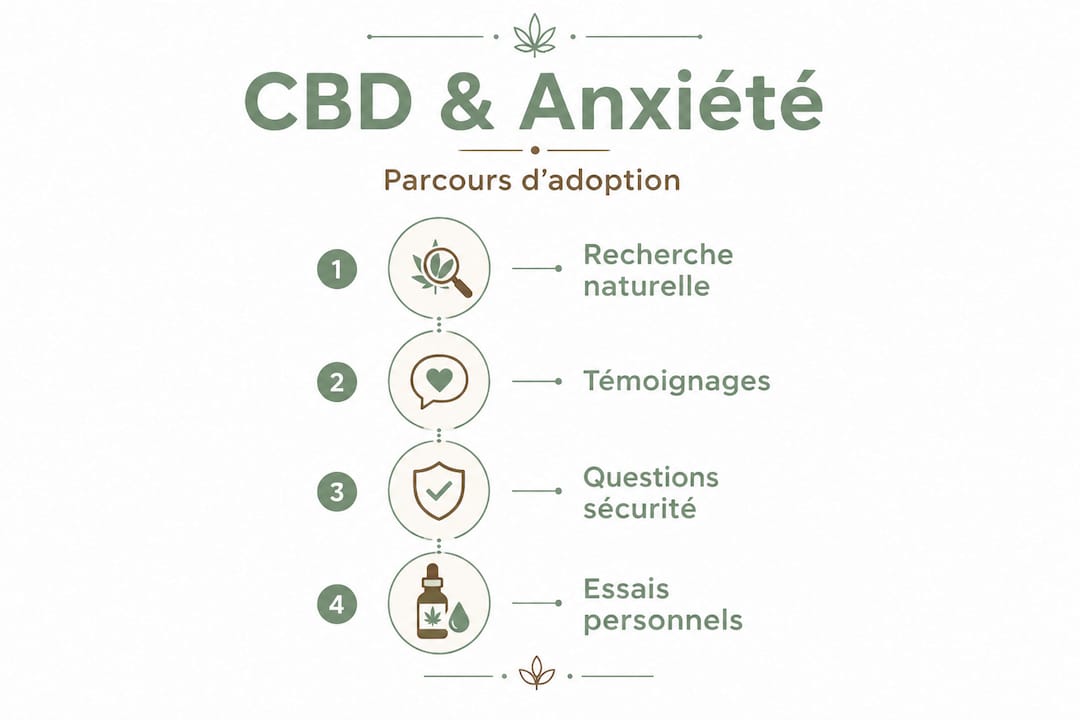
Many people with anxiety turn to solutions perceived as more natural and less medicalized. CBD, extracted from the hemp plant, is part of a broader trend toward returning to plant-based substances. This image of naturalness is reassuring, even though it is not enough to guarantee a product’s effectiveness or safety.
Word of mouth also plays a major role. Thousands of positive testimonials circulate on forums, social media, and in wellness magazines. These personal accounts, often sincere, create a sense of collective trust around CBD. They fuel growing demand, even in the absence of definitive medical consensus.
Moreover, the presumed biological mechanisms of CBD are genuinely interesting. Cannabidiol interacts with the endocannabinoid system, a network of receptors found throughout the body, and it could influence serotonin receptors. This connection with serotonin, often called the “happiness molecule,” has intrigued researchers for several years. Recent work shows that CBD has anxiolytic potential through these biological mechanisms, although human evidence still needs to be strengthened.
Among the reasons that lead people with anxiety to CBD are:
- The absence of psychoactive effects, unlike THC
- Legal availability in most European countries
- The diversity of available forms (oils, capsules, infusions, flowers)
- The perception of a favorable tolerability profile compared with benzodiazepines
- Accessibility without a prescription in many contexts
For those who want to better understand the connection between CBD and mental health, the information available online now makes it possible to navigate the subject with more nuance than even five years ago.
CBD is not a miracle molecule, but it represents a serious option for those seeking natural support in managing their daily anxiety, provided they approach it realistically.
What science shows about CBD and anxiety
The scientific findings on CBD and anxiety are real, but they deserve to be read with caution. Understanding their limitations is just as important as celebrating their positive conclusions.
The first major challenge is methodological heterogeneity. Studies vary enormously in their protocols: different dosages, distinct methods of administration, non-standardized types of anxiety, and observation periods that are too short. This makes comparisons difficult and generalizable conclusions remain weak. A critical analysis highlights that only 30% of high-quality studies report a clear positive effect, while some even indicate negative or neutral results.
| Type of anxiety | Current level of evidence | Key observations |
|---|---|---|
| Social anxiety | Moderate | Some positive controlled trials |
| Generalized anxiety disorder | Low to moderate | Variable results; need for longer trials |
| PTSD (post-traumatic stress disorder) | Moderate | Effects on sleep noted |
| Situational anxiety | Moderate | Reduction reported in laboratory |
| Panic disorder | Very low | Few specific studies |
An often-underestimated factor is the effect of dosage. CBD follows what researchers call a bell-shaped curve: at low doses, anxiolytic effects appear to be present; at high doses, they may reverse or disappear. This unusual dose-response relationship explains why some users report very positive effects while others feel nothing, or even a slight worsening of their inner tension.
The placebo effect also plays a significant role in users’ self-assessments. In open-access settings, without clinical supervision, it is difficult to distinguish the actual pharmacological effect from the simple psychological benefit associated with the act of taking care of oneself. The scientific evidence on anxiety is promising but still partial, and large-scale studies are lacking.
For those interested in plant-based forms, the proven benefits of CBD flowers also deserve to be examined in light of these same scientific nuances.
Side effects and safety: what should you watch for?
Understanding CBD’s effectiveness without discussing its safety would be incomplete. The good news: CBD’s tolerability profile is generally favorable, but a few points warrant caution.
The most frequently reported adverse effects remain mild. A recent study confirms a favorable safety profile for CBD: few serious side effects, no recognized dependence, and limited but real drug interactions.
The most common effects include:
- Dry mouth, particularly with oils and tinctures
- Mild drowsiness, especially at higher doses or in combination with other substances
- Changes in appetite, which may go in either direction depending on the individual
- Mild nausea with initial doses, often temporary
- Diarrhea in rare cases, often linked to high doses or low-quality products
Drug interactions are the issue that deserves the most attention. CBD is metabolized by the liver through the CYP450 enzyme system, the same system that processes many common medications: anticoagulants, antidepressants, antiepileptics, and immunosuppressants. These interactions can alter the active concentration of a medication in the blood, either increasing or decreasing it. Anyone taking regular medication should absolutely consult a doctor before starting CBD.
The World Health Organization has officially established that CBD is not addictive, which clearly distinguishes it from benzodiazepines often prescribed for anxiety. This lack of physical dependence is one of the reasons so many Europeans are interested in it.
To proceed safely, it is recommended to start with low doses and increase gradually. The guide on how to find the effective dose offers a structured approach for beginners. The CBD microdosing approach is particularly popular for minimizing side effects while testing individual responses.
Pro tip: Always start with less than 10 mg per dose and wait at least 90 minutes before increasing it, especially if you’re using capsules or edibles, which are absorbed more slowly.
How can CBD be incorporated into daily anxiety management?
After laying the foundations of safety, let’s get down to practical matters. How can CBD be used intelligently and responsibly as part of a daily approach to anxiety?
-
Start low and observe. An initial dose of 5 to 25 mg per day is generally recommended for beginners. The golden rule is not to increase it too quickly. Allow at least one week at a stable dose before evaluating the effects. Low doses between 25 and 100 mg per day remain within the range that most studies consider reasonable and safe.
-
Choose certified, transparent products. Not all CBD products are created equal. Extract quality, extraction method, the availability of independent laboratory analyses, and clear indication of the CBD content are essential criteria. Avoid products without a certificate of analysis.
-
Choose the form suited to your lifestyle. Sublingual oil for relatively fast action (20 to 45 minutes), capsules for convenience and discretion, flowers for those who prefer light inhalation, and infusions for a more ritualistic and soothing approach. Each form has its own specific characteristics.
-
Do not self-medicate over the long term. CBD can support a wellness journey, but it does not replace medical or psychological care in cases of chronic anxiety or a diagnosed disorder.
-
Consult a healthcare professional if you are taking other medications. As mentioned earlier, drug interactions are real. An informed doctor can adjust your treatment plan.
| CBD form | Time to take effect | Duration of effect | Ease of use | Ideal for |
|---|---|---|---|---|
| Sublingual oil | 20 to 45 min | 4 to 6 h | Good | Regular use, precise dosage |
| Capsules | 45 to 90 min | 6 to 8 h | Excellent | Discretion, travel |
| Flowers | 5 to 15 min | 2 to 4 h | Moderate | Fast effect, relaxation |
| Infusions | 30 to 60 min | 3 to 5 h | Very good | Soothing ritual, evening |
Pro tip: For anxiety, full-spectrum CBD oil is often preferred because it contains other cannabinoids and terpenes that enhance the effect through what is known as the entourage effect.
To explore dosage and adapting it to your lifestyle in greater depth, the resources on understanding dosage and on how to add CBD to your daily routine offer concrete, practical guidance.
What you are not told about CBD and anxiety
It is time to say something that many sites in this field carefully avoid: CBD is not a universal solution, and claiming otherwise helps no one.
The vast majority of available studies suffer from serious methodological weaknesses: small samples, short durations, and a lack of rigorous control groups. The most enthusiastic results often come from industry-funded studies or unrepresentative clinical cases. Evidence on the long-term effects is still very limited. Let’s be honest: we still do not really know what years of regular CBD consumption do to the body.
Another delicate point: the relief felt by many users is highly personal. It is often difficult to distinguish the pharmacological effect from the benefit related to the ritual itself, the attention devoted to one’s own well-being, or a genuine placebo effect. This is not a criticism; it is a biological reality. An anxious brain sometimes responds very well to signals of care, whatever their nature.
What we truly believe, after analyzing hundreds of reviews and data points, is that CBD works best as part of a comprehensive approach rather than as a standalone solution. Combined with relaxation practices, psychological support when necessary, good sleep hygiene, and a suitable lifestyle, it can make a real contribution. On its own, it probably will not work miracles for severe cases of anxiety. The uses of CBD in 2026 also reflect a trend toward this more integrated and realistic view.
The enthusiasm surrounding CBD is understandable. But it deserves to be fueled by critical curiosity, not excessive promises.
Finding reliable CBD products for managing anxiety
If you have decided to try CBD for anxiety, choosing the product and supplier is just as important as the dosage. A poor-quality product may contain lower levels of CBD than stated, traces of solvents, or non-compliant THC levels.
European CBD Shop offers a carefully selected range of certified CBD products that are laboratory-tested and compliant with European regulations. Whether you are looking for an oil for daily use, capsules for discreet use while traveling, or flowers for an aromatic break, the shop guides you toward reliable, transparent options. See the list of the best CBD shops in Europe to compare retailers and make an informed choice. Deliveries are available throughout the EU, the United Kingdom, and Switzerland. Find all practical information about deliveries and returns directly on the website.
Frequently asked questions about CBD and anxiety
Is CBD legal everywhere in Europe for managing anxiety?
CBD is legal in most European countries, generally provided that the product contains less than 0.2% THC, but regulations vary by country, and checking local legislation before any purchase is recommended.
How long does it take to feel the effects of CBD on anxiety?
The perceived effect can vary from a few minutes with inhaled flowers to several days with capsules taken regularly, as individual responses to CBD vary considerably depending on each person’s dose, product form, and metabolism.
What are the main side effects of CBD for anxiety?
Side effects are rare and mild in the vast majority of cases, with dry mouth and slight drowsiness being the most frequently reported, alongside an overall favorable tolerability profile confirmed by recent studies.
Does CBD cause dependence?
According to the World Health Organization, CBD is not addictive, which distinguishes it from conventional anti-anxiety medications such as benzodiazepines, which can cause physical and psychological dependence.
Can CBD replace a conventional anti-anxiety treatment?
CBD should never replace a prescribed treatment without medical advice, as healthcare professionals remain essential for assessing the risks of interactions and tailoring care to each individual situation.