
Understanding CBD forms for anxiety, insomnia, and pain
Given the growing range of CBD products available in Europe, many consumers feel lost among oils, flowers, resins, and capsules. Yet each form has unique characteristics that make it more or less suitable depending on your goal: relieving anxiety, improving sleep, or alleviating chronic pain. This guide helps you identify the form of CBD best suited to your personal situation, drawing on scientific data and practical advice for informed and safe use.
Table of contents
- Overview of available forms of CBD
- How does CBD work in your body?
- Comparison table: which form of CBD for each need?
- Usage tips according to your goal: insomnia, anxiety, and pain
- Points to consider: legislation and expert advice
- Where can you find quality-certified CBD products?
- Frequently asked questions about CBD forms
Key Points
| Point | Details |
|---|---|
| Each form, a specific use | Oils, flowers, resins, and capsules each have their benefits depending on anxiety, insomnia, or pain. |
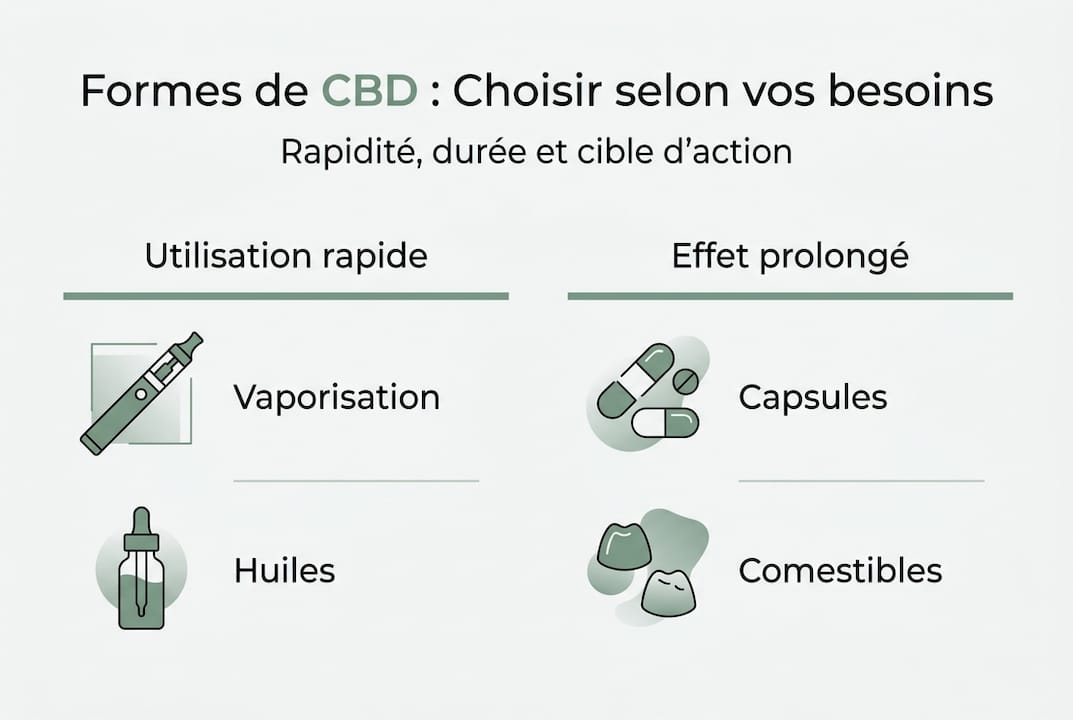
| Speed or duration | Flowers/resins act very quickly; capsules/edibles provide a long-lasting effect. |
| Strictly regulated legality | In Europe, only CBD containing less than 0.3% THC is authorized in various forms. |
| The entourage effect is preferred | Full- or broad-spectrum extracts are preferred for optimal effects. |
| Adapt the choice to your needs | Identify your goal (sleep, anxiety, pain) to select the ideal form of CBD. |
Overview of available forms of CBD
The European market now offers an impressive variety of CBD products, each providing a distinct administration method and absorption rate. The main forms of CBD include oils (sublingual), flowers, resins/concentrates, softgels/capsules, e-liquids/vaping, topicals (creams/balms), and edibles, meeting varied needs according to your lifestyle and therapeutic expectations.
Sublingual oils are the most versatile form. You place a few drops under your tongue, where the mucous membranes rapidly absorb the CBD. The effect appears within 15 to 30 minutes and lasts 4 to 6 hours. This method is particularly suitable for people seeking precise dosing and a moderate but lasting effect.
CBD flowers and resins are mainly used by vaporization or infusion. Vaporization offers the fastest absorption, with effects felt within 5 to 15 minutes. The types of CBD flowers vary according to their terpene profiles, directly influencing the intensity and nature of the effect experienced. Resins contain higher concentrations of cannabinoids and terpenes, producing a more pronounced effect.
Softgels and capsules provide complete discretion and standardized dosing. Their digestive absorption takes 1 to 2 hours, but the effect lasts 6 to 10 hours. Ideal for a stable daily routine, they suit people who want to avoid the characteristic taste of hemp.
E-liquids allow gentle inhalation through an electronic cigarette. The effect occurs quickly, comparable to vaporized flowers, but lasts slightly less. This option appeals to former smokers seeking a familiar alternative.
Topicals (creams, balms) act locally on the skin without entering the bloodstream. Perfect for targeting a specific painful area, they relieve muscle tension and joint inflammation within 20 to 40 minutes.
Edibles (candies, chocolates) offer a pleasant experience, but their digestive absorption is the slowest. The effect takes 1 to 2 hours to appear but can last up to 8 hours, making them ideal for prolonged relief.
Pro tip: Always start with the minimum recommended dose and increase it gradually according to how you feel. Every body reacts differently to CBD.
How does CBD work in your body?
To understand why each form produces distinct effects, you need to grasp how CBD interacts with the endocannabinoid system, reduces inflammation, modulates pain, has anxiolytic effects, and affects sleep. This natural regulatory system influences mood, sleep, pain, and the immune response.
CBD primarily binds to CB1 receptors (central nervous system) and CB2 receptors (immune and peripheral systems). Unlike THC, it does not directly activate these receptors but modulates their activity, explaining the absence of psychoactive effects. This subtle interaction helps regulate your body without disrupting its natural balance.
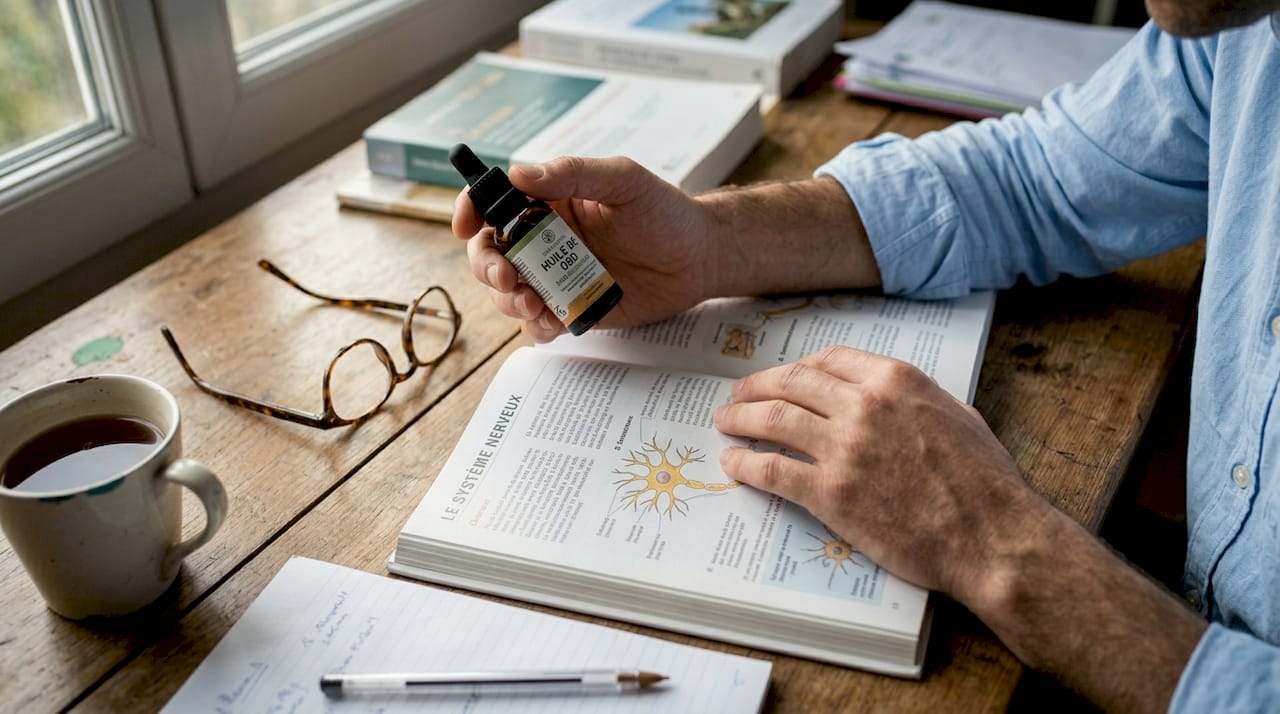
The anti-inflammatory effect comes from the activation of TRPV1 receptors, which are involved in the perception of pain and temperature. By stimulating these receptors, CBD alleviates pain signals transmitted to the brain. This action explains why so many people suffering from chronic pain find relief with CBD.
The anxiolytic effect is explained by CBD’s influence on the 5-HT1A serotonin receptors. Serotonin regulates mood and anxiety. By facilitating serotonergic transmission, CBD produces a calming effect without the side effects of conventional anxiolytics. This property makes it a valuable ally for managing everyday stress.
Improved sleep is primarily due to reduced anxiety and stress, major factors in insomnia. CBD does not act as a direct sleeping pill but creates the conditions favorable to natural sleep onset. It also regulates sleep-wake cycles by interacting with the mechanisms of action of CBD on the circadian rhythm.
One encouraging finding: 79% of regular CBD users report a significant improvement in their quality of life, whether for anxiety, sleep, or pain. This statistic reflects CBD’s real-world effectiveness when used appropriately and regularly.
“CBD offers a natural approach to regulating internal balance without disrupting cognitive functions, unlike traditional pharmaceutical solutions.”
The impact on the endocannabinoid system varies depending on the route of administration. Inhalation produces a rapid but brief blood peak, while ingestion offers gradual and prolonged release. Understanding these differences helps you choose the form suited to your lifestyle and the intensity of your symptoms.
Comparison table: which form of CBD for each need?
To help you navigate the options, here is a summary table comparing the main forms of CBD according to your therapeutic goals:
| Form | Onset of action | Duration of effect | Insomnia | Anxiety | Chronic pain | Discretion |
|---|---|---|---|---|---|---|
| Sublingual oils | 15-30 min | 4-6h | ★★★ | ★★★★ | ★★★ | ★★★★ |
| Vaporized flowers | 5-15 min | 2-3h | ★★ | ★★★★ | ★★★ | ★★ |
| Vaporized resins | 5-15 min | 2-4h | ★★ | ★★★★★ | ★★★★ | ★★ |
| Softgels/Capsules | 60-120 min | 6-10h | ★★★★★ | ★★★ | ★★★★ | ★★★★★ |
| E-liquids | 5-15 min | 2-3h | ★ | ★★★ | ★★ | ★★★★ |
| Topicals | 20-40 min | 3-5h | ★ | ★ | ★★★★★ | ★★★★★ |
| Edibles | 60-120 min | 6-8h | ★★★★ | ★★★ | ★★★ | ★★★★★ |
This table reveals clear patterns. For insomnia: capsules/edibles have a long-lasting effect, oils an intermediate one, and flowers/resins an immediate but short-lived effect. If you are looking to fall asleep quickly, vaporized flowers may help, but to maintain deep sleep throughout the night, opt for capsules or oils.
For chronic pain: topicals for localized relief, oils for overall relief, and inhalation for rapid relief. Localized joint pain responds better to a balm applied directly, while widespread fibromyalgia requires a systemic approach through oils or capsules.
Terpenes play a crucial role in overall effectiveness. Myrcene promotes relaxation and sleep, linalool soothes anxiety, and limonene boosts mood. Flowers and resins naturally retain these terpenes, creating an “entourage effect” in which all the hemp compounds work synergistically. This is why the full spectrum often outperforms pure CBD isolate.
Pro tip: To maximize the entourage effect, combine a full-spectrum oil in the morning with terpene-rich flowers in the evening. This two-pronged approach meets your needs over 24 hours.
The dosage for insomnia and anxiety varies considerably from one person to another. Start with 10-15 mg per day and adjust according to how you feel over a week. Some find their balance at 20 mg, while others need 50 mg or more.
Usage tips according to your goal: insomnia, anxiety, and pain
Now that you understand the mechanisms, here is how to optimize your use according to your main concern.
For insomnia
Capsules/edibles are recommended for persistent insomnia, oils for anxiety, and topicals/inhaled products for pain. Take your dose 1 to 2 hours before bedtime so that the effect coincides with your usual sleep time.
- Capsules or edibles: 25-50 mg of CBD, 90 minutes before bedtime
- Sublingual oil: 20-40 mg, 30 minutes before bedtime
- Myrcene-rich flowers: vaporized 15 minutes before bedtime for quick sleep onset
Combine with a stable sleep routine: a cool temperature, complete darkness, and screens turned off 1 hour beforehand. CBD enhances the effectiveness of these good practices but does not replace rigorous sleep hygiene.
For anxiety
Anxiety often requires several daily doses to maintain a stable state of calm. Sublingual oils offer ideal flexibility.
- Sublingual oil: 10-20 mg, 2 to 3 times a day (morning, noon, evening)
- Flowers or resins: occasional vaporization during anxiety peaks
- Capsules: 25 mg morning dose for all-day coverage
The therapeutic use of CBD for anxiety shows the best results with a regular rather than occasional approach. Your endocannabinoid system functions better with a constant intake than with sporadic doses.
For chronic pain
The strategy depends on the nature of your pain: localized or generalized, inflammatory or neuropathic.
- Localized pain: CBD balm or cream applied 2-3 times a day to the affected area
- Generalized pain: 30-50 mg of oil morning and evening, supplemented by vaporization if needed
- Acute flare-up: vaporized flowers or resins for rapid relief
Professional advice: For chronic pain, combine a daily base of oil or capsules with vaporized flowers in case of a painful flare-up. This combination provides both prevention and rapid intervention.
The role of terpenes in CBD becomes particularly important for pain. Beta-caryophyllene has powerful anti-inflammatory properties, while pinene improves alertness without worsening pain.
If you are already taking medication for pain, anxiety, or sleep, consult a healthcare professional before adding CBD to your routine. CBD may alter the effectiveness of certain treatments, sometimes requiring dose adjustments.
Points to consider: legislation and expert advice
Before incorporating CBD into your routine, several legal and practical aspects deserve your attention.
European legal framework 2026
In France/EU, THC <0.3%. Flowers/resins are permitted as aromatic herbs; beware of health claims and drug interactions. This THC limit guarantees the absence of psychotropic effects while preserving the entourage effect.
CBD flowers and resins are legally sold as aromatic products, not intended for consumption. This legal distinction protects sellers while allowing consumers to use these products according to their personal needs. The legal framework for CBD is constantly evolving, so stay informed about the latest regulations.
Drug interactions
CBD inhibits certain liver enzymes (CYP450) responsible for metabolizing many medications. This interaction may increase or decrease the effectiveness of your current treatments. The medications concerned include anticoagulants, antidepressants, antiepileptics, and certain analgesics.
If you are undergoing medical treatment, inform your doctor of your intention to use CBD. A dosage adjustment may be necessary to maintain the therapeutic effectiveness of your medications.
Quality and traceability
- Prioritize products tested by an independent laboratory with certificates of analysis available
- Check the origin: hemp grown in Europe under strict controls
- Choose full-spectrum or broad-spectrum rather than isolate to benefit from the entourage effect
- Avoid unusually low prices, which often indicate questionable quality
Vaporization vs combustion
For flowers and resins, vaporization offers clear advantages over combustion. It heats the product to a controlled temperature (160-200°C), releasing cannabinoids and terpenes without creating toxic substances. Combustion exceeds 400°C, producing tar and carcinogenic compounds similar to those in tobacco.
“The full-spectrum entourage effect increases CBD’s effectiveness compared with pure isolate, creating a natural synergy between all the compounds in hemp.”
The effectiveness of CBD flowers largely depends on the consumption method. Investing in a quality vaporizer protects your respiratory health while maximizing the absorption of active compounds.
Where can you find quality-certified CBD products?
Choosing a reliable supplier guarantees the quality, traceability, and legal compliance of your CBD products. The best CBD shops in Europe offer a carefully selected range tested in laboratories, with certificates of analysis detailing the cannabinoid profile and absence of contaminants.
Look for stores offering personalized advice based on your profile and goals. A good seller will guide you toward the appropriate form and dosage rather than pushing the most expensive product. Transparency about hemp origin, extraction methods, and quality testing distinguishes serious professionals from opportunists.
For beginners, certified CBD flowers offer an accessible introduction to the world of CBD with varied terpene profiles. If you prefer discretion and precise dosing, a relaxing CBD oil is an excellent starting point for exploring the benefits of cannabidiol.
Leading European stores deliver throughout the EU, the United Kingdom, and Switzerland, allowing you to access premium products wherever you are. Choose retailers offering several forms of CBD so you can adjust your approach as your needs evolve.
Frequently asked questions about CBD forms
Which form of CBD works the fastest?
Vaporized flowers and resins act the fastest, with effects appearing within 5 to 15 minutes thanks to direct absorption through the lungs.
Which form should you choose for long-lasting insomnia?
For persistent insomnia, opt for capsules or edibles (lasting 6-10h); CBD oil taken in the evening is also effective, with an intermediate duration.
Is CBD legal in France in all its forms?
Yes, if THC <0.3%, flowers/resins are permitted as aromatic herbs. All forms are legal as long as they comply with this limit.
Are there side effects depending on the form of CBD?
CBD is generally well tolerated, but rare side effects may occur; drug interactions are possible, so caution is recommended if you are already taking medication.
Will the effect differ between isolate and full-spectrum CBD?
Yes, full-spectrum CBD (the entourage effect) is generally more effective than isolate alone thanks to the synergy between cannabinoids and terpenes.