
CBD and the hippocampus in anxiety: a scientific explanation
In brief:
- CBD acts on the hippocampus by activating 5-HT1A receptors to modulate anxiety and promote neurogenesis. Doses of around 300 mg show clear efficacy, but the effect also depends on a comprehensive approach. It is a useful supplement but does not replace medical treatment in cases of serious disorders.
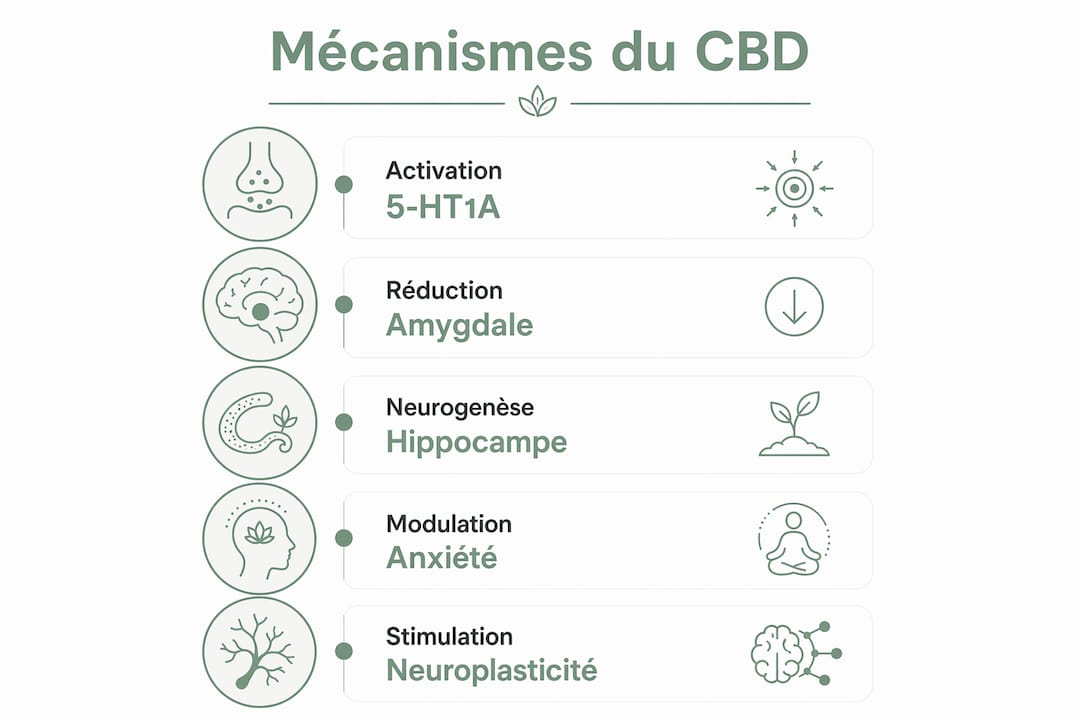
Cannabidiol (CBD) acts on the hippocampus to modulate anxiety by targeting 5-HT1A serotonin receptors, a precise neurochemical target shared by certain conventional anxiolytics. This CBD-hippocampus connection explains why cannabidiol is of such interest to mental health researchers. The hippocampus is the brain region that stores emotional memories and regulates the stress response. When this area is disrupted by chronic stress, fear circuits go into overdrive. Understanding this mechanism means understanding why the explanation of the link between CBD, the hippocampus, and anxiety is not simply a matter of marketing, but is grounded in documented neurobiology.
What are the neurobiological mechanisms of CBD in the hippocampus?
CBD primarily modulates anxiety via 5-HT1A receptors, mimicking the action of certain anxiolytics without blocking serotonin reuptake. This mechanism is fundamental: unlike SSRIs, CBD does not saturate the serotonergic system; it modulates it in a more targeted way.
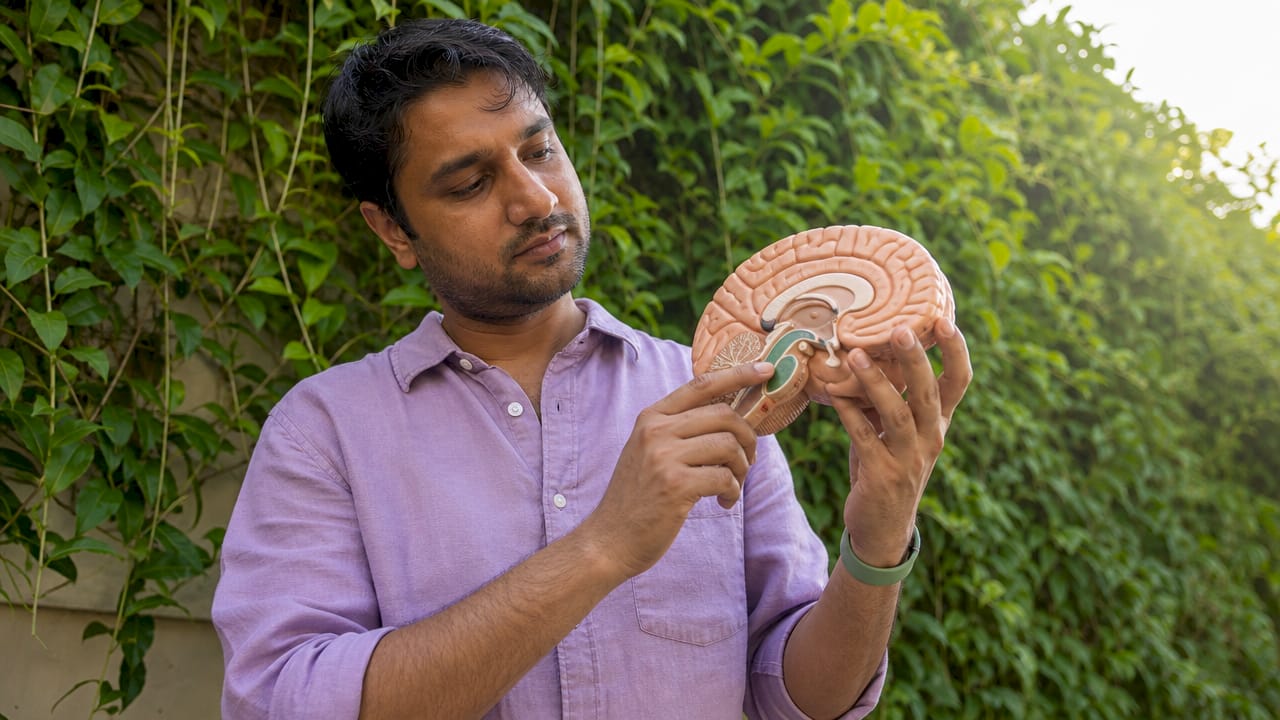
The hippocampus stores and recalls emotional memories, playing a direct role in the anxiety response to repeated traumatic experiences. When a negative memory is reactivated, the hippocampus sends a signal to the amygdala, which triggers fear. By acting on the hippocampus’s 5-HT1A receptors, CBD reduces amygdala activity and thus limits avoidance behaviors and conditioned fear.
Here are the main mechanisms identified by research:
- Serotonergic modulation: CBD activates 5-HT1A receptors, reducing anxiety-related neuronal hyperactivity.
- Glutamate/GABA balance: CBD limits neuronal hyperexcitability by regulating these two opposing neurotransmitters, which calms fear circuits.
- Hippocampal neurogenesis: CBD promotes the creation of new neurons in the hippocampus, a process directly linked to the relief of chronic stress.
- Action on the endocannabinoid system: CBD does not directly activate CB1/CB2 receptors like THC, but influences other neurochemical pathways involved in mood regulation.
Hippocampal neurogenesis deserves particular attention. Chronic stress destroys neurons in the hippocampus, reducing its ability to contextualize threats. CBD partially reverses this process. This is one of the strongest explanations for understanding how CBD helps with anxiety over the long term.
Pro tip: Combining CBD with practices that also stimulate neurogenesis, such as regular physical exercise or meditation, may amplify its effects on the hippocampus and stress.
What clinical evidence supports CBD for anxiety?
Double-blind trials are the benchmark for clinical evidence. Studies using 300 to 400 mg of CBD show a significant reduction in social anxiety compared with placebo. This result is reproducible across several independent protocols, which gives it weight.
“CBD shows promise for mild to moderate anxiety, but recent meta-analyses emphasize that it is not suitable for severe psychiatric disorders.” Source: Addict Aide
CBD’s safety profile is generally favorable. Mild side effects are reported in approximately 1 in 7 people in cannabinoid studies. These effects mainly include drowsiness, slight dry mouth, or changes in appetite, with no clinical severity.
| CBD dose | Anxiolytic effect observed | Notes |
|---|---|---|
| Low (less than 150 mg) | Limited or absent | Often insufficient for a measurable effect |
| Intermediate (300 mg) | Significant | Most documented dose in clinical trials |
| High (more than 600 mg) | Reduced or reversed | Bell-shaped curve: excess reduces efficacy |
The bell-shaped efficacy curve is a point that is often ignored. An intermediate dose of 300 mg produces a greater anxiolytic effect than very low or very high doses. Increasing the dose indiscriminately does not enhance the effect; it may even cancel it out.
The placebo effect plays a significant role in positive testimonials about CBD and anxiety. This does not disqualify CBD, but it requires a critical reading of studies and personal experiences.
How can CBD be used safely for anxiety?
CBD is a dietary supplement, not a medication. This distinction is fundamental for setting expectations and avoiding replacing prescribed medical treatment without professional advice.
Here is a gradual approach recommended by practitioners:
- Start with 10–25 mg per day. This is the starting range most often cited in the literature for an adult not currently taking medication. Wait at least one week before evaluating the effect.
- Increase in 10 mg increments. Do not double the dose all at once. The bell-shaped efficacy curve means that a dose that is too high may be less effective than a moderate dose.
- Document how you feel. Keeping a simple journal (time taken, dose, perceived anxiety level) helps identify your personal optimal dose. This step is often overlooked, but it is crucial.
- Incorporate CBD into a holistic approach. CBD is more effective when combined with good sleep hygiene, regular physical activity and, if necessary, psychological support.
- Check the product’s compliance. Choose products with a THC content below 0.3% (European standard), accompanied by an independent laboratory analysis. Poorly labeled products pose a real risk on the market.
To find the dose suited to your profile, it is helpful to consult a structured dosing guide before starting.
Pro tip: Take CBD at a fixed time, preferably in the evening if your anxiety disrupts your sleep. Consistent use influences the stability of its effects on the nervous system.
What are the benefits and limitations of CBD for anxiety?
CBD has documented benefits, but also limitations that current research openly acknowledges. A balanced view helps guard against unrealistic expectations.
Observed benefits:
- Reduction of the stress response and conditioned fear through the hippocampus and amygdala.
- Possible improvement in sleep quality, which is often disrupted by chronic anxiety.
- Favorable tolerability profile compared with certain conventional anxiolytics such as benzodiazepines.
- Support for hippocampal neurogenesis, useful in contexts of prolonged stress.
Current limitations:
| Limitation | Explanation |
|---|---|
| Lack of long-term studies | Most trials last less than 12 weeks |
| Variability in results | Individual responses to CBD vary considerably |
| Placebo effect | Difficult to distinguish from the actual pharmacological effect in some studies |
| Severe disorders excluded | CBD does not replace treatment for major depression or schizophrenia |
The choice of CBD type also affects its effectiveness. Full-spectrum CBD contains terpenes and minor cannabinoids that may amplify its effects through what researchers call the entourage effect. CBD isolate is more predictable in terms of dosage but potentially less effective. Broad-spectrum CBD offers a compromise: no THC, but with other active cannabinoids. For therapeutic use in Europe, broad-spectrum and full-spectrum CBD are generally preferred.
In Europe, CBD is legal as a food supplement in most European Union member states, the United Kingdom, and Switzerland, provided that the THC content remains below the regulatory threshold. Regulations are evolving, and products sold by certified retailers offer a better guarantee of compliance.
Key points
CBD reduces anxiety by acting on the hippocampus through 5-HT1A receptors, promoting neurogenesis and modulating fear circuits, but its maximum effectiveness depends on appropriate dosing and a holistic approach to health.
| Point | Details |
|---|---|
| Main target: 5-HT1A | CBD activates these receptors in the hippocampus to reduce anxiety-related hyperactivity. |
| Documented optimal dose | 300 mg is the most effective dose in clinical trials on social anxiety. |
| Hippocampal neurogenesis | CBD promotes the creation of new neurons, partially reversing the effects of chronic stress. |
| Limitations to know | CBD is not suitable for serious psychiatric disorders, and the placebo effect is real. |
| Safe use | Start with 10–25 mg, increase gradually, and choose compliant certified products. |
What I learned from following research on CBD and anxiety
After reading dozens of studies and following the evolution of research on CBD and mental health, one thing strikes me: most people looking for a natural solution for anxiety arrive with expectations that are either too high or too low. The former think CBD will erase their anxiety within a week. The latter have read a skeptical article and conclude that it is a scam.
The reality is more nuanced and, in my view, more interesting. CBD is not an anxiolytic in the classic pharmacological sense. It is a modulator. It does not switch anxiety off like a switch; it lowers the threshold for fear to be triggered. This distinction changes everything about how it should be used.
What seems most underestimated in current research is the role of hippocampal neurogenesis. Much is said about 5-HT1A receptors, but CBD’s ability to support the creation of new neurons in a brain region weakened by chronic stress is potentially its most lasting effect. And it is precisely the effect that requires time, consistency, and a coherent healthy lifestyle.
My personal recommendation: don’t start using CBD expecting results within three days. Give yourself at least six weeks, document how you feel, and combine it with at least one other stress-management practice. For those who want to explore natural anxiety management in greater depth, combined approaches consistently deliver better results than CBD alone.
— Rod
Cbd-certified: certified CBD products to support your balance
Cbd-certified selects CBD products that comply with European regulations, with independent laboratory analyses for each product. Whether you are looking for full-spectrum oil, broad-spectrum oil, or an isolate, the shop offers a range suited to different profiles and needs.
Deliveries are available throughout the European Union, the United Kingdom, and Switzerland. To find the product best suited to managing your anxiety, visit the certified selection in Europe directly on the website. Each product comes with clear information on its composition, recommended dosage, and traceability. This guarantees an informed purchase, with no unpleasant surprises regarding compliance or quality.
Frequently asked questions
How does CBD act on the hippocampus to reduce anxiety?
CBD activates 5-HT1A receptors in the hippocampus, reducing amygdala activity and limiting conditioned fear. It also promotes hippocampal neurogenesis, a key mechanism in relieving chronic stress.
What dose of CBD is effective for anxiety?
Clinical trials show that a 300 mg dose produces the most significant anxiolytic effects. For daily use, it is recommended to start with 10–25 mg and gradually increase according to how you feel.
Can CBD replace medical treatment for anxiety?
No. CBD is a food supplement, not a medication. Meta-analyses confirm its potential for mild to moderate anxiety, but it is not suitable for severe psychiatric disorders and does not replace medical supervision.
What is the difference between full-spectrum CBD and CBD isolate for anxiety?
Full-spectrum CBD contains minor cannabinoids and terpenes that may enhance the anxiolytic effect through the entourage effect. Isolate is more predictable in terms of dosage but potentially less effective. Broad-spectrum CBD offers a compromise without THC.
Is CBD legal in Europe for managing anxiety?
Yes, CBD is legal in most European Union countries, the United Kingdom, and Switzerland as a food supplement, provided that the THC content remains below the regulatory threshold of 0.3%.