
CBD and rheumatic pain: mechanisms and advice
In brief:
- CBD reduces inflammation and soothes pain by modulating endocannabinoid and TRPV1 receptors. Its gradual effectiveness is enhanced when combined with magnesium, especially for improving sleep. However, it should be used as a supplement, after consulting a doctor and taking its drug interactions into account.
Cannabidiol (CBD) is a natural modulator of the endocannabinoid system that reduces inflammation and the perception of pain associated with rheumatic conditions. Its role in rheumatic pain is based on two main actions: inhibiting pro-inflammatory cytokines and modulating pain receptors. Fibromyalgia, one of the most widespread rheumatic conditions, affects approximately 1.6% of the French population, 80% of whom are women. This prevalence highlights the real need for complementary solutions to conventional treatments. CBD, often combined with magnesium, represents a serious option for improving the quality of life of those affected.
What are the mechanisms of action of CBD against rheumatic pain?

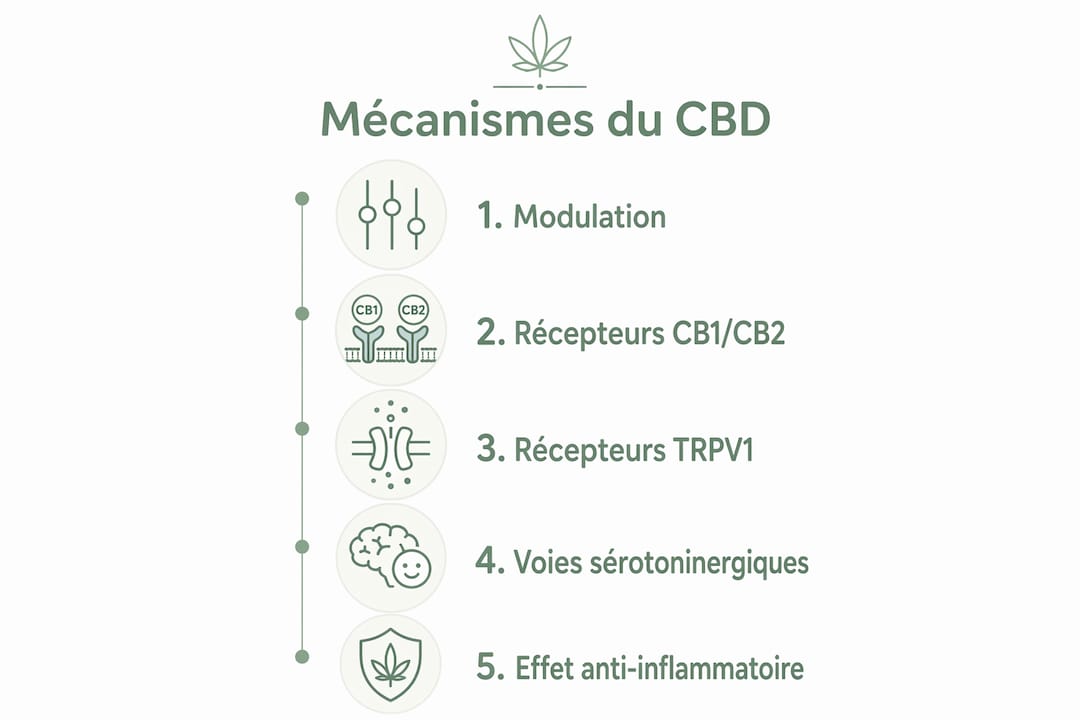
CBD acts primarily through the endocannabinoid system, a network of receptors found throughout the body. CB1 receptors, concentrated in the central nervous system, and CB2 receptors, more abundant in immune tissues, are CBD’s two main targets. By binding to these receptors, CBD modulates the transmission of pain signals and regulates the inflammatory response.
Beyond the endocannabinoid system, CBD acts on TRPV1 receptors and serotonergic pathways. TRPV1 receptors are directly involved in the perception of heat and intense pain. By modulating them, CBD alleviates the sensation of pain without completely blocking nerve transmission.
CBD’s anti-inflammatory effect is particularly relevant for rheumatic pain. CBD inhibits pro-inflammatory cytokines, molecules that amplify inflammation at its source. This action goes beyond simply masking pain: it targets the inflammatory process itself.
A fundamental distinction must be made between CBD and THC. CBD produces no psychoactive effects. It acts indirectly on endocannabinoid receptors, unlike THC, which binds to them directly and causes the “high” effect. For people suffering from chronic pain, this difference is decisive.
- CB1 and CB2 receptors: primary targets of CBD for modulating pain and inflammation
- TRPV1 receptors: involved in the perception of heat and acute pain
- Serotonergic pathways: help reduce anxiety related to chronic pain
- Pro-inflammatory cytokines: inhibited by CBD to act at the source of inflammation
Pro tip: Choose a broad-spectrum CBD oil rather than a pure isolate. Hemp compounds work synergistically, known as the entourage effect, for a more pronounced effect on inflammatory pain.
What do clinical studies say about CBD and rheumatic diseases?
Scientific evidence on the effectiveness of CBD for rheumatic pain is promising but still incomplete. Available studies mainly focus on chronic inflammatory pain such as osteoarthritis and rheumatoid arthritis. Results show improved pain tolerance and better sleep quality among treated individuals.
The clinical effects of CBD are gradual, not immediate. People report a gradual reduction in pain over several weeks rather than instant relief. This reality must be communicated clearly to prevent premature discontinuation of treatment.
For acute pain, such as pain occurring after surgery, the evidence is less convincing. Evidence on postoperative pain remains insufficient to recommend CBD as a replacement for conventional painkillers. CBD is therefore better suited to chronic pain than to severe acute pain.
| Type of pain | Level of evidence | Observed result |
|---|---|---|
| Osteoarthritis | Moderate | Reduced inflammation and improved sleep |
| Rheumatoid arthritis | Moderate | Relief from chronic pain |
| Fibromyalgia | Moderate (with magnesium) | Improved sleep and reduced cramps |
| Postoperative pain | Low | Insufficient to replace analgesics |
| Neuropathic pain | Moderate | Reduced pain sensitivity |
Gradual tolerance is key. The body adapts to CBD over several weeks, which is why regular use is preferable to occasional use. People who stop after a few days do not give CBD enough time to work fully.
What is the synergy between CBD and magnesium for pain?
Magnesium is a cofactor in more than 300 enzymatic reactions in the body. A deficiency directly increases sensitivity to pain. Magnesium acts as an antagonist of NMDA receptors, which play a central role in amplifying pain signals at the neuronal level.
The combination of CBD and magnesium creates genuine complementarity. Magnesium reduces neuronal excitability, while CBD modulates the central perception of pain. These two mechanisms act at different levels of the nervous system, strengthening their combined effectiveness.
“The combination of magnesium and CBD targets both neuronal excitability and the modulation of overall pain perception, offering a complementary approach to chronic pain management.” — Dr Rémy Honoré
The clinical results of this combination are tangible. The combination of CBD and magnesium reduces the time it takes to fall asleep by 17 minutes and prevents muscle cramps. For people with fibromyalgia, where sleep disturbances worsen pain, this effect is particularly valuable.
Here is how to combine CBD and magnesium in a practical and safe way:
- Choose the right form of magnesium: magnesium bisglycinate is better tolerated by the digestive system than magnesium oxide. It is suitable for daily long-term use.
- Take magnesium in the evening: its relaxing effect on the muscles and nervous system is more useful at the end of the day, before bedtime.
- Combine it with sublingual CBD oil: taking CBD 30 minutes before bedtime complements magnesium’s effects on sleep and muscle relaxation.
- Maintain consistency: the effects of this combination develop over several weeks. Irregular use limits the benefits.
Pro tip: Start with a low dose of CBD (5–10 mg per day) and gradually increase it every two weeks. This approach reduces the risk of side effects and helps identify your minimum effective dose.
What precautions should be taken when using CBD for rheumatism?
CBD generally has a favorable safety profile, but side effects do occur. The most common are drowsiness, dry mouth, and mild digestive disorders. These effects occur mainly at the beginning of treatment or when doses are increased too quickly.
Drug interactions are the most serious point to watch. CBD inhibits the liver enzymes CYP3A4 and CYP2C19, which are responsible for the metabolism of many common medications. This inhibition can alter the blood concentration of certain treatments, particularly anticoagulants, immunosuppressants, and certain antidepressants.
- Drowsiness: common at the beginning of treatment, especially at high doses
- Dry mouth: benign and alleviated by sufficient hydration
- Digestive disorders: possible mild nausea, often related to the carrier oil
- Drug interactions: real risk with medications metabolized by CYP3A4 and CYP2C19
- Pregnancy and breastfeeding: use not recommended as a precaution; insufficient data
Medical consultation before starting CBD is essential for anyone taking medication. CBD is a supplement, not a substitute for conventional treatments. To learn more about CBD safety for people with chronic illnesses, specialized resources are available.
How can CBD be used effectively for joint pain?
The form of administration determines the speed and location of the effect. Sublingual CBD oil is the most effective form for rapid absorption into the bloodstream. Topical balms and gels are recommended for localized pain, such as osteoarthritis in the knee or an inflamed joint.
To compare the two main approaches:
| Form | Mode of action | Time to effect | Ideal for |
|---|---|---|---|
| Sublingual oil | Systemic absorption through mucous membranes | 15–45 minutes | Diffuse pain, fibromyalgia, sleep |
| Topical balm or gel | Local action on the joint | 20–60 minutes | Localized osteoarthritis, targeted joint pain |
For chronic pain, consistency of use is more important than the dose. Studies suggest that combining CBD and CBG with regular daily use produces better results than occasional use. CBG (cannabigerol) enhances CBD’s anti-inflammatory effects, particularly for joint pain.
- Start with 5–10 mg of CBD per day sublingually
- Increase the dose every two weeks if necessary
- Choose certified products without psychoactive THC to avoid any adverse effects
- Combine sublingual oil and topical balm for both diffuse and localized pain
- Keep a tracking journal to record changes in pain and sleep
Key points
CBD acts as an anti-inflammatory and analgesic modulator in rheumatic pain, with effectiveness enhanced by regular use and combination with magnesium.
| Point | Details |
|---|---|
| Mechanism of action | CBD modulates CB1, CB2, and TRPV1 receptors to reduce pain and inflammation. |
| CBD and magnesium synergy | The combination reduces neuronal excitability and measurably improves sleep. |
| Gradual effects | The benefits develop over several weeks; regular use is essential. |
| Medication precautions | CBD inhibits the CYP3A4 and CYP2C19 enzymes; consult a doctor before combined use. |
| Choosing the format | Sublingual oil acts systemically; topical balm targets localized joints. |
What I have observed after years of monitoring the use of CBD for chronic pain
The people who benefit most from CBD for their rheumatic pain all have one thing in common: they integrate it into a comprehensive approach. They do not replace their medical treatment. They add CBD to a routine that often includes physical therapy, an anti-inflammatory diet, and psychological support.
What strikes me is the tendency to look for a single solution. CBD is not that solution. It is one tool among others, and a tool that requires patience. People who give up after two weeks, saying that “it doesn’t work,” simply have not given CBD enough time to act.
The combination with magnesium seems underestimated to me. The data on reducing sleep onset latency and preventing cramps are concrete. Yet few people think of combining the two. It is often the combination that makes the difference, not CBD alone.
My most direct advice: talk to your doctor before you start. Not to get permission, but to avoid a drug interaction you might not see coming. CBD is accessible, but it is not harmless when you take other medications.
— Rod
Certified CBD products to help with rheumatic pain
People suffering from chronic joint pain need reliable products with no surprises about their composition. Cbd-certified offers a selection of tested and certified CBD products, guaranteeing the absence of psychoactive THC and a precise cannabidiol concentration.
Whether you are looking for sublingual oil for general effects or a topical balm to target a painful joint, the Cbd-certified store meets both needs. Each product comes with its composition sheet and independent laboratory analysis results. Deliveries are available throughout the European Union, the United Kingdom, and Switzerland. To explore the full selection, visit the European CBD store from Cbd-certified and choose with confidence.
Frequently asked questions
Does CBD replace medication for rheumatic conditions?
No. CBD is a complement to conventional treatments, not a substitute. Its use should always be discussed with a healthcare professional, especially when taking medication.
How long does it take to feel the effects of CBD on pain?
The effects of CBD are gradual and generally develop over two to four weeks of regular use. Occasional use produces few results for chronic pain.
Is CBD effective for osteoarthritis and rheumatoid arthritis?
Available studies show improved pain tolerance and sleep in osteoarthritis and rheumatoid arthritis. The evidence remains moderate, and results vary from person to person.
Can CBD and magnesium be combined safely?
Yes, the combination is generally well tolerated. It reduces the time needed to fall asleep by 17 minutes and prevents muscle cramps, two useful benefits for people with fibromyalgia.
Which form of CBD should you choose for localized joint pain?
A topical CBD balm or gel is recommended for localized joint pain. For widespread pain or associated sleep disorders, sublingual oil remains the most effective form.