
CBD and fibromyalgia: understanding its effects and limitations
TL;DR:
- Most studies suggest a 25 to 40% reduction in pain with CBD among people with fibromyalgia.
- CBD works through the endocannabinoid system by modulating pain, inflammation, and sleep.
- European safety and regulations require prior medical consultation and careful product selection.
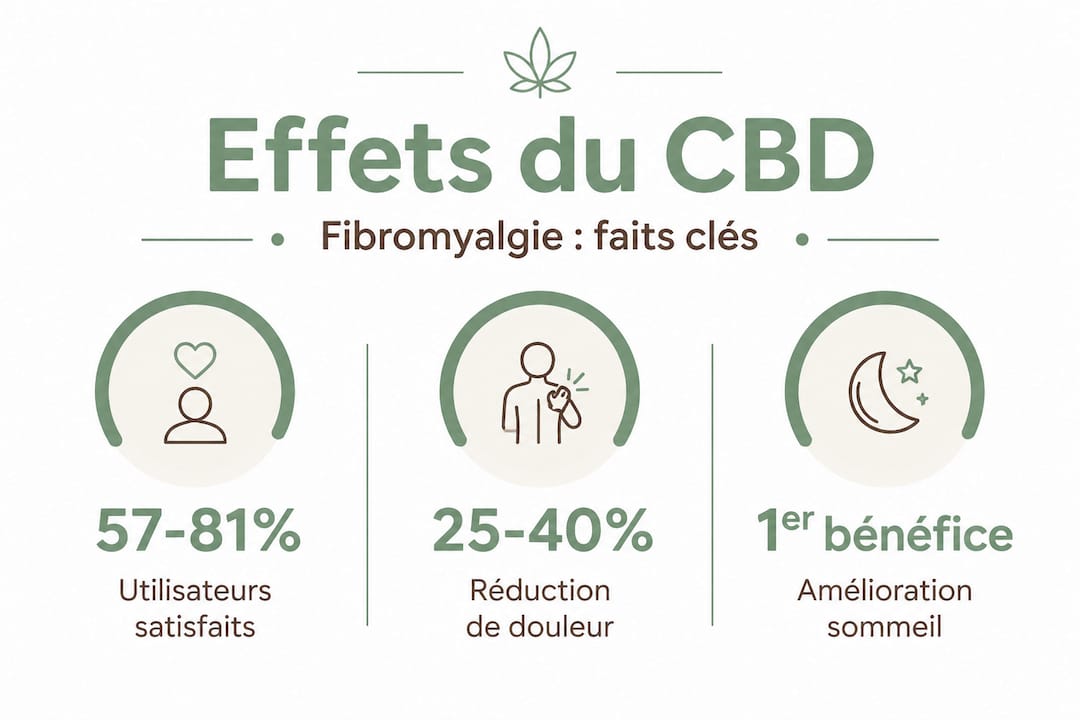
Fibromyalgia affects approximately 2 to 4% of the European population, meaning several million people live daily with widespread pain, profound fatigue, and unrestful nights. Given the limitations of conventional treatments, CBD has become a recurring topic of discussion in patient communities. But between commercial promises and medical skepticism, it is difficult to know what to make of it. Pilot studies show pain reductions of 25 to 40% and improved quality of life in 57 to 81% of patients. This figure inspires hope, but it must also be understood in context.
Table of contents
- Understanding fibromyalgia and its pain
- How does CBD act on chronic pain?
- What the studies say: the real effectiveness of CBD for fibromyalgia
- Side effects, safety, and the regulatory framework in Europe
- Choosing and using CBD correctly: practical advice
- The expert’s view: what most people forget about CBD and fibromyalgia
- Find quality CBD in Europe: your next step
- Frequently asked questions about CBD and fibromyalgia
Key Points
| Point | Details |
|---|---|
| How CBD works | CBD works by modulating receptors involved in pain perception and inflammation. |
| Variable effectiveness | Relief varies from person to person, and long-term evidence remains limited. |
| Side effects to monitor | Most side effects are minor, but medical monitoring is recommended. |
| Choosing the type of CBD | Full- or broad-spectrum CBD is often preferred for optimal effects in patients. |
| Medical consultation is essential | Guidance from a healthcare professional is essential before self-medicating with CBD. |
Understanding fibromyalgia and its pain
Fibromyalgia is a complex chronic condition whose central mechanism is what doctors call central sensitization. In practical terms, the nervous system amplifies pain signals to the point that normal stimuli, such as a simple touch, become unbearable. This phenomenon explains why the pain is so difficult to treat with conventional painkillers.
The main symptoms can be grouped as follows:
- Widespread musculoskeletal pain, often described as burning or deep aches
- Sleep disorders involving unrefreshing sleep, sometimes accompanied by sleep apnea or restless legs syndrome
- Persistent chronic fatigue, even after a full night’s sleep
- Brain fog (fibrofog), memory and concentration problems
- Increased sensitivity to noise, light, and temperature
Approximately 90% of fibromyalgia patients are women, and the disease most often begins between the ages of 30 and 50, according to European epidemiological data.
Conventional treatments include antidepressants, anticonvulsants such as pregabalin, and physical therapy. These approaches relieve some patients, but many tolerate them poorly or find them insufficient. This is where the growing interest in natural remedies comes in. CBD, among others, attracts attention because its mechanism of action directly affects the types of pain relieved by central sensitization, particularly neuropathic pain. The fact that CBD interacts with the endocannabinoid system to modulate chronic pain via CB1 and CB2 receptors, glycine receptors, and increased anandamide levels is precisely what makes it a serious yet nuanced avenue.
Now that the context of fibromyalgia has been established, let us examine the mechanisms through which CBD may act.
How does CBD act on chronic pain?
CBD, or cannabidiol, is a molecule extracted from hemp. Unlike THC, it is not psychoactive. Its action on pain is indirect and involves several biological pathways simultaneously.
The endocannabinoid system (ECS) is a network of receptors found throughout the human body. It naturally regulates pain, inflammation, sleep, and mood. The two main receptors are:
- CB1: located mainly in the brain and spinal cord, involved in pain perception and cognitive functions
- CB2: present in the immune system and peripheral tissues, involved in the inflammatory response
CBD does not bind directly to these receptors as THC does. Instead, it modulates their sensitivity and prevents the breakdown of anandamide, a natural endocannabinoid that plays an important analgesic role. CB1/CB2 modulation, glycine receptors in the spinal cord, anandamide stimulation, and cytokine inhibition thus form a set of complementary mechanisms that may, together, reduce the central sensitization characteristic of fibromyalgia.
Glycine receptors, located in the spinal cord, also play a key role in pain transmission. CBD activates them, which helps reduce pain signals before they even reach the brain. This mechanism is particularly relevant to neuropathic pain, which is common in fibromyalgia.
To better understand all these interactions, it is helpful to read about CBD and the endocannabinoid system, particularly its role in pain and anxiety.
Pro tip: Don’t confuse speed with haste. CBD does not produce an immediate effect like a conventional painkiller. Its effects build over several weeks of regular use. Many patients stop too soon, before their endocannabinoid system has had time to adapt.
Once the mechanisms are understood, it remains to see what the studies actually say about the effectiveness of CBD for patients with fibromyalgia.
What the studies say: the real effectiveness of CBD for fibromyalgia
Studies on CBD and fibromyalgia are still in their early stages, but their results are consistent enough to warrant attention. Most available data come from observational studies—that is, studies in which patients use CBD and report their experiences—rather than from randomized controlled clinical trials.
| Study type | Main results | Limitations |
|---|---|---|
| Observational studies | 25% to 40% reduction in pain, improved quality of life in 57% to 81% of patients | No control group, selection bias |
| Pilot trials | Improved sleep and reduced morning stiffness | Small samples (20 to 50 patients) |
| 2021–2024 meta-analyses | Moderate beneficial effect of cannabinoids on pain and quality of life | Moderate quality of evidence, especially for combined CBD+THC |
| Randomized controlled trials (RCTs) | Conflicting results, some negative for isolated CBD | Few available trials, short durations |
Meta-analyses published between 2021 and 2024 show a moderate beneficial effect of cannabinoids on pain and quality of life in fibromyalgia, but emphasize that most positive results concern the CBD+THC combination, not CBD alone. Long-term randomized trials specifically examining pure CBD are still lacking.
“Current data support clinical interest in cannabinoids for fibromyalgia, but they do not yet allow firm recommendations based on high-level evidence.”
It is also useful to look at user satisfaction with CBD compared with conventional medications: in several surveys, approximately 70% of chronic users reported being satisfied with CBD, a notable figure even when taking the possible placebo effect into account.
For people with fibromyalgia, improved sleep is often the first reported benefit, even before pain reduction. This is important: improved sleep alone can reduce central sensitization and thereby ease daytime pain. To learn more about CBD safety for people with chronic conditions, particularly possible interactions, a comprehensive guide is available.

After these figures, a major point needs to be made regarding medical supervision, safety, and regulation.
Side effects, safety, and the regulatory framework in Europe
CBD is generally well tolerated, but this does not mean it is risk-free, especially for people with fibromyalgia who often take several medications simultaneously. Side effects are generally mild: drowsiness in approximately 29% of cases, dry mouth, and temporary digestive problems.
The most frequently reported side effects include:
- Drowsiness or lethargy (especially at the beginning of treatment)
- Dry mouth
- Mild nausea or changes in appetite
- Diarrhea at high doses
- Slight decrease in blood pressure
One particularly important point for people with fibromyalgia: CBD is metabolized by the liver via the cytochrome P450 enzyme system. This same system processes many common medications, such as opioids, antiepileptics, and certain antidepressants. Interactions via cytochrome P450 may alter the concentrations of these medications in the blood, which can be dangerous without medical monitoring.
Pro tip: If you take pregabalin (Lyrica) or any other antiepileptic for your fibromyalgia, you must discuss CBD with your doctor before starting. The combination may increase drowsiness or alter the effectiveness of your regular treatment.
From a regulatory standpoint, the situation in Europe is evolving. The HAS does not recommend CBD as the primary treatment for fibromyalgia, and the ANSM strictly regulates its use. However, since 2021, a national medical cannabis trial (including CBD and THC formulations) has been underway in France for patients suffering from refractory pain, including those with severe fibromyalgia. Other European countries, such as Germany, have had broader access frameworks since 2024. To understand CBD uses in 2026 within this changing legal context, it is useful to stay informed about regulatory developments in your country.
After this overview of the data, it is appropriate to offer an honest and pragmatic perspective for patients who wish to try CBD.
Choosing and using CBD correctly: practical advice
Not all CBD products are created equal. Choosing the right type of CBD, the right dose, and the right administration method can make a real difference in the results obtained.
| CBD type | Composition | Benefits for fibromyalgia | Disadvantages |
|---|---|---|---|
| Isolate | 99% pure CBD | Precise dosage, without THC | No entourage effect |
| Broad spectrum | CBD + terpenes + minor cannabinoids, without THC | Partial entourage effect, legal everywhere | Less studied than full spectrum |
| Full spectrum | CBD + THC (trace) + terpenes | Full entourage effect, better results in studies | THC traces, varying regulations |
The limited evidence on pure CBD and the superiority of full spectrum observed over isolate in available studies suggest that the entourage effect—that is, the synergy between all the components of hemp—plays a real role. The benefits of full-spectrum hemp are well documented for pain, anxiety, and insomnia.
Here’s how to approach CBD use responsibly:
- Start with a low dose, between 10 and 20 mg per day, and gradually increase it over two to four weeks according to tolerance and effects.
- Choose a suitable administration method: sublingual oil offers faster absorption (15 to 45 minutes) than capsules (1 to 2 hours), but both are valid depending on your lifestyle.
- Keep a tracking journal: record your pain, sleep quality, and daily intake to assess changes over 4 to 6 weeks.
- Inform your doctor about your plans, especially if you take medication, and ask for your liver function to be monitored over time.
- Check the product’s certificates of analysis (COAs): a good CBD product should always be accompanied by an independent analysis confirming its cannabinoid content and the absence of contaminants.
With this advice in mind, it is time to offer an honest and enlightening perspective on the real role of CBD in fibromyalgia.
The expert’s view: what most people forget about CBD and fibromyalgia
There is a real tension in the world of CBD applied to fibromyalgia. On the one hand, the theoretical mechanisms are solid. Russo’s hypothesis of clinical endocannabinoid deficiency, which suggests that some patients with fibromyalgia produce fewer natural endocannabinoids, provides a convincing biological basis for interest in CBD. On the other hand, a recent randomized controlled trial showed that CBD was not superior to placebo for fibromyalgia pain under certain experimental conditions.
This contradiction is not a reason to reject CBD, but it should encourage caution regarding overly enthusiastic claims. Individual variability is real. Some patients respond to CBD and see their daily lives transformed. Others feel no effect at all. There is still no reliable way to predict in advance which group you belong to.
What many also forget is the risk of relying exclusively on self-medication. CBD can be a valuable tool as part of a comprehensive approach that includes cognitive behavioral therapy, appropriate exercise, and psychological support. But it does not replace any of these approaches. For those seeking targeted support for sleep, CBD flowers and their benefits for anxiety and sleep may be an interesting complementary option. CBD may help. But rarely on its own, and never without medical consideration of your personal situation.
Find quality CBD in Europe: your next step
If you have decided to explore CBD as a complement to your fibromyalgia care, choosing the product and seller is just as important as the molecule itself. Poorly dosed, contaminated, or untraceable CBD may not only be ineffective but potentially harmful.
At CBD Certified, we select only products tested by independent laboratories, with certificates of analysis available for every product. Our range includes a broad-spectrum CBD oil formulated without THC, particularly suitable for people who want to benefit from the entourage effect safely. We deliver throughout the European Union, the United Kingdom, and Switzerland. To choose from the options available near you, browse our selection of the best CBD shops in Europe and choose verified quality.
Frequently asked questions about CBD and fibromyalgia
Can CBD really relieve fibromyalgia-related pain?
According to pilot and observational studies, pain reductions of 25% to 40% have been reported in 57% to 81% of patients, but more rigorous randomized trials are still needed to confirm these results on a large scale.
What are the side effects of CBD for people with fibromyalgia?
They are usually mild: drowsiness in approximately 29% of cases, dry mouth or mild digestive disturbances, but the hypersensitivity associated with fibromyalgia may make some patients more reactive.
Can CBD be used with other medications to treat fibromyalgia?
It is possible, but interactions through the cytochrome P450 system with opioids and antiepileptic drugs make a prior medical consultation essential.
Is CBD recommended by health authorities in France and Europe for fibromyalgia?
No, HAS does not recommend it as a primary treatment, but ANSM has been conducting a national medical cannabis trial since 2021 for refractory chronic pain.
Pure CBD, full spectrum, or broad spectrum: which should you choose for fibromyalgia?
Experts favor full- or broad-spectrum products for the entourage effect, particularly for neuropathic pain and sleep disorders, but individual responses vary considerably.