
CBD Quality in Switzerland: Criteria and Advice 2026
- The quality of CBD in Switzerland is based on strict standards for origin, supercritical CO2 extraction, and traceability. These criteria ensure organic, purified products that comply with more permissive THC regulations. Checking the certificate of analysis (CoA) is essential to ensure a reliable and safe purchase.
The quality of CBD in Switzerland is defined by compliance with strict cultivation, extraction, and traceability standards, from the field to the consumer. The Swiss market stands out in Europe for its more permissive regulation of THC levels and a culture of transparency that requires producers to publish their laboratory analyses. Understanding these criteria helps avoid mediocre products, choose genuinely effective CBD, and consume safely. This guide details the standards behind the reputation of Swiss CBD and provides practical tools for identifying the best available options.
What criteria determine the quality of CBD in Switzerland?
The quality of CBD in Switzerland rests on five technical pillars that every informed buyer should know: the origin of the hemp, the extraction method, laboratory analyses, traceability, and legal compliance.
The origin of the hemp and organic farming
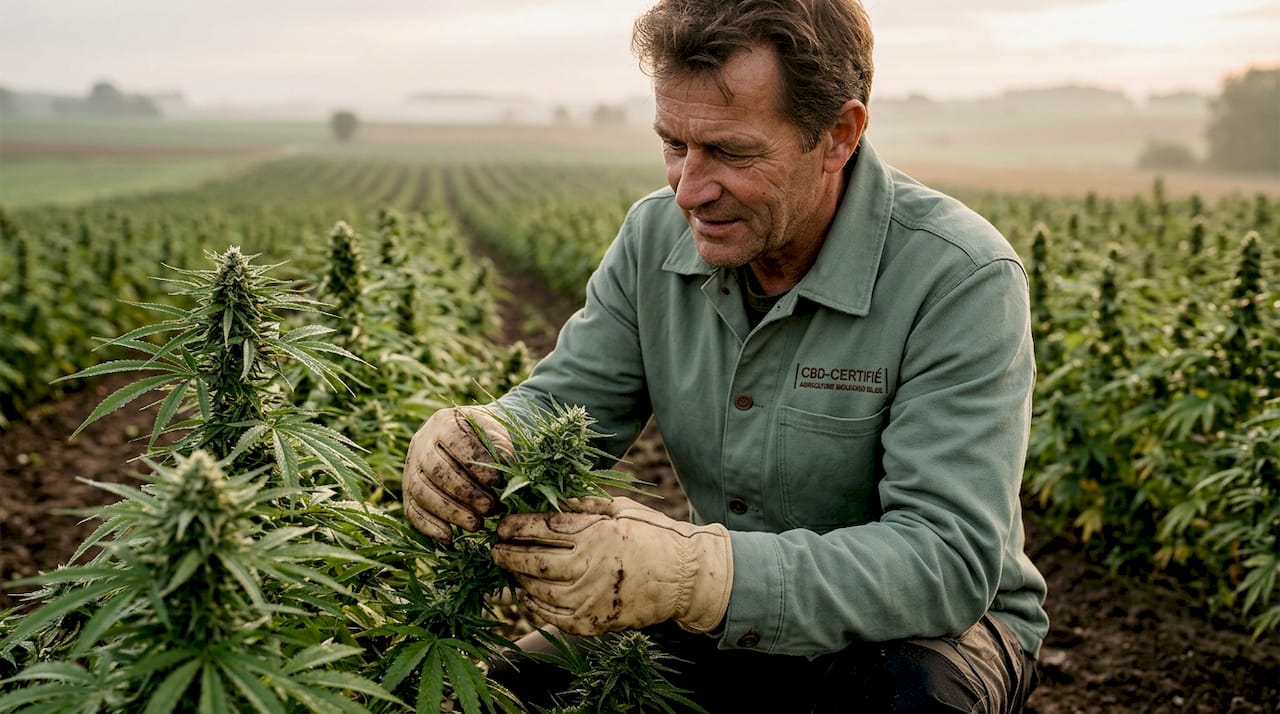
Serious Swiss producers favor certified organic farming, without synthetic pesticides or chemical fertilizers. Hemp grown in clean soil absorbs fewer contaminants, which directly translates into a purer extract. Switzerland has favorable climatic and soil conditions for this crop, and several local farms have obtained organic certifications recognized at European level.
The extraction method
Supercritical CO2 extraction is the benchmark for premium CBD products. This method preserves the hemp’s natural terpenes without leaving solvent residues. Ethanol or hydrocarbon extraction is less expensive but carries a risk of residual contamination. A product extracted with supercritical CO2 therefore offers superior purity and stability.
Certificates of analysis (CoA)
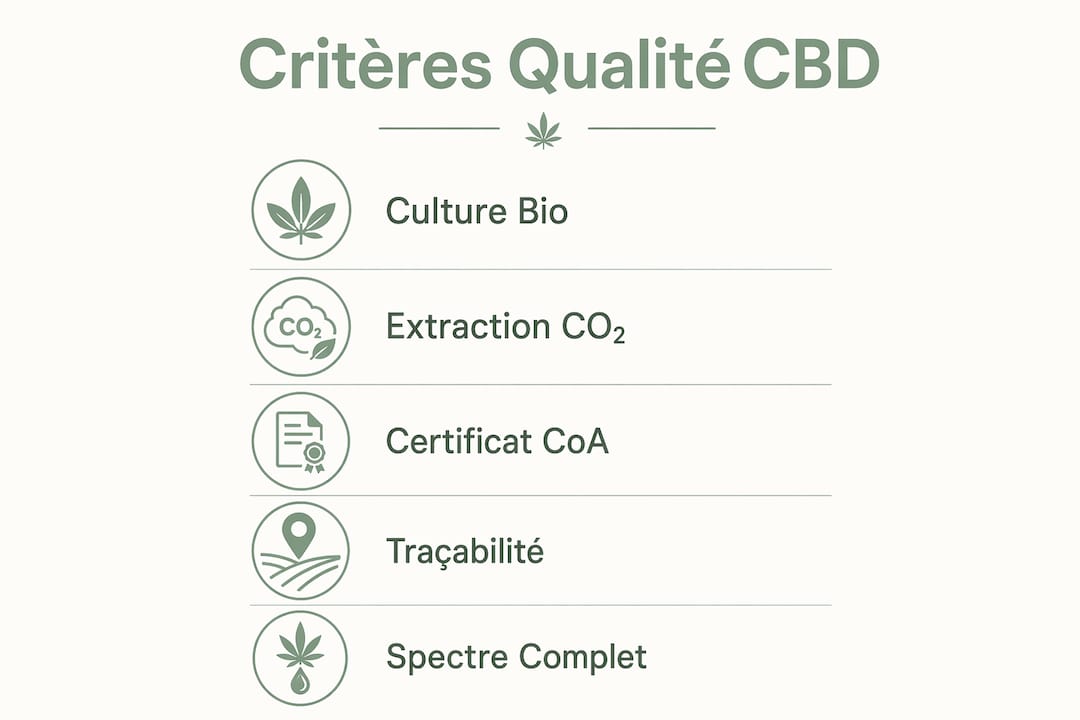
Reliable manufacturers publish the analysis results for each batch, including cannabinoid levels, any potential presence of pesticides, and heavy metals. A CoA issued by an accredited independent laboratory is the strongest proof of a product's quality. Without this document being accessible to consumers, no marketing claim can be verified.
Traceability from seed to sale
Swiss CBD benefits from complete traceability thanks to the centralization of production stages by certain local operators. This traceability ensures that each batch can be traced back to the cultivation plot, which is rare on an international scale. It represents a major competitive advantage for Swiss brands that export.
The entourage effect and full spectrum
A full-spectrum extract contains all the cannabinoids, terpenes, and flavonoids naturally present in hemp. The entourage effect refers to the synergy between these compounds, which enhances the benefits of CBD compared with a pure isolate. For therapeutic or wellness use, a full-spectrum product made from Swiss organic hemp offers the best balance of quality and effectiveness.
Professional tip: Always ask for a product's CoA before purchasing. If the seller cannot provide it or if the document is more than 12 months old, look elsewhere.
How can you recognize a quality CBD product in Switzerland?
Identifying a good CBD product does not require advanced technical knowledge. A few simple checks are enough to distinguish a reliable product from a questionable offering.
- Check the CoA on the manufacturer's website. The certificate must be issued by an independent laboratory, dated within the past year, and list the levels of CBD, THC, pesticides, and heavy metals.
- Read the label carefully. A quality product clearly indicates the CBD concentration (in mg), the type of spectrum (full, broad, or isolate), the origin of the hemp, and the extraction method.
- Look for organic certifications. Labels such as Bio Suisse or the European equivalent AB guarantee that no synthetic chemicals were used in cultivation. Major Swiss brands adopt these certifications to strengthen consumer trust.
- Compare product types according to your intended use. Sublingual oils offer rapid absorption and precise dosing. Flowers and resins are suitable for experienced consumers. CBD cosmetics act locally without systemic effects.
- Check the manufacturer's transparency. A reputable producer publishes the address of its operation, its certifications, and its contact details. Anonymity is a warning sign.
The following table compares the main types of CBD products available in Switzerland according to their key characteristics.
| Product type | Absorption | Dosage | Recommended use |
|---|---|---|---|
| Sublingual oil | Fast (15 to 45 min) | Precise dosage in drops | Anxiety, sleep, chronic pain |
| Flowers and resins | Very fast (if vaporized) | Variable | Experienced consumers |
| Capsules | Slow (1 to 2 h) | Very precise | Regular daily use |
| CBD cosmetics | Local, with no systemic effects | Topical | Muscle pain, skin care |
To take your selection further, the choosing a suitable CBD product guide from Cbd-certified explains each step in practical terms.
What are the effects of CBD and what precautions should be taken?
CBD, or cannabidiol, is a non-psychoactive compound found in hemp whose health effects are receiving increasing attention. Its best-documented benefits include reducing anxiety, improving sleep, and alleviating certain chronic pain.
The effects vary depending on several factors:
- Body type and body weight influence the effective dose. A person weighing 50 kg will react differently to the same amount of CBD than a person weighing 90 kg.
- Individual tolerance develops over time. Beginners often experience more pronounced effects at low doses.
- The method of consumption determines the speed of action. A sublingual oil takes effect within 15 to 45 minutes, while a capsule takes 1 to 2 hours.
- Product quality directly determines effectiveness. Poorly extracted or contaminated CBD can cause adverse effects without providing any real benefit.
The dosage should be tailored to each individual, starting with low doses and gradually increasing them based on the observed response. This approach reduces the risk of side effects such as drowsiness or mild digestive problems.
Regarding drug interactions, CBD may interfere with certain medications metabolized by the liver, particularly blood thinners and antiepileptic drugs. Prior medical consultation is recommended for anyone undergoing treatment. Mixing it with alcohol is not recommended because it amplifies the sedative effects.
Professional tip: Start with 5 to 10 mg of CBD per day for one week before adjusting. Record your observations in a journal to identify the dose and form that suit you best. This guide to safe CBD use can support you through this process.
What are the CBD regulations in Switzerland in 2026?
Switzerland applies a specific legal framework to CBD that clearly distinguishes it from its European neighbors. This framework has a direct impact on the quality of products available on the market.
| Criterion | Switzerland | European Union |
|---|---|---|
| Permitted THC level | Up to 1% | Up to 0.3% (under review at 0.2%) |
| Legal status of CBD | Legal for sale and consumption | Varies depending on the member state |
| Production controls | Strict federal regulation | Harmonized European directives |
| Importation | Subject to customs declaration | Free movement within the Schengen Area |
Swiss legislation allows up to 1% THC in CBD products, a higher threshold than in the European Union. This higher threshold makes it possible to retain more minor cannabinoids in full-spectrum extracts, which promotes the entourage effect and improves the perceived effectiveness of the products.
This regulation requires producers to test their products before placing them on the market, creating a natural filter against low-quality products. Distributors that fail to comply with these standards face administrative sanctions and having their products withdrawn. For consumers, buying a legally distributed product in Switzerland therefore offers a guarantee of compliance that purchasing in unregulated markets cannot provide.
Key points
The quality of CBD in Switzerland rests on the combination of certified organic cultivation, supercritical CO2 extraction, independent laboratory analyses, and a legal framework that requires transparency at every stage of the production chain.
| Point | Details |
|---|---|
| Legal THC content | Switzerland allows up to 1% THC, higher than the European standard of 0.3%. |
| Supercritical CO2 extraction | This method guarantees a solvent-free extract and preserves the natural terpenes. |
| Certificate of Analysis (CoA) | Requiring a recent CoA from an independent laboratory is the most reliable verification. |
| Organic cultivation | Certified organic Swiss farms exclude pesticides and chemical contaminants. |
| Full traceability | The best Swiss producers trace every batch from seed to sale. |
What I have observed after years of following the Swiss CBD market
Switzerland has built a solid reputation in the CBD sector, and this is no coincidence. Swiss rigor applies here as elsewhere: the local producers that survive in this market are those that invested in transparency from the outset, not those that sought to cut analysis costs.
What strikes me is that many Swiss consumers still buy CBD without asking for the CoA. This is an avoidable mistake. I have seen legally sold products display CBD concentrations well below what was stated on the label. Without independent analysis, you are paying for a promise, not a product.
The other point I want to emphasize is that the quality of organic CBD in Switzerland is not an empty marketing argument. Hemp grown without pesticides in controlled Swiss soil produces a chemically cleaner extract than hemp imported from regions without strict agricultural regulations. The difference is noticeable in use and visible in the analyses.
My practical advice for getting started: choose a full-spectrum, organic oil with a CoA accessible online. Start with 10 mg per day. Wait two weeks before judging. Patience is the most underestimated skill when using CBD.
— Rod
Discover Cbd-certified's CBD selection
Cbd-certified selects each product according to strict criteria: certified organic origin, supercritical CO2 extraction, and certificates of analysis accessible directly on the product pages. The shop offers a wide range of legal CBD products compliant with Swiss and European standards, from sublingual oils and flowers to resins and cosmetics. Each batch is traced and verified before being put on sale. For a reliable, transparent CBD purchase in Europe delivered to Switzerland, Cbd-certified offers the security of a platform that never compromises on quality.
FAQ
What defines quality CBD in Switzerland?
Quality CBD in Switzerland comes from certified organic hemp, is extracted using supercritical CO2, and is accompanied by an independent certificate of analysis verifying cannabinoid, pesticide, and heavy metal levels.
Is CBD legal in Switzerland in 2026?
Yes, CBD is legal in Switzerland provided that the product contains less than 1% THC, a threshold set by Swiss federal legislation that is higher than the European Union’s.
How can you check the quality of a CBD product before buying?
Ask for the certificate of analysis (CoA) for the relevant batch, issued by an independent laboratory and dated within the past year. Also check that the label states the CBD concentration, spectrum type, and origin of the hemp.
What is the best form of CBD for beginners in Switzerland?
Full-spectrum sublingual oil is the most recommended form for beginners because it allows precise dosing and rapid absorption. Start with 5 to 10 mg per day and adjust according to your personal response.
Can you safely buy organic Swiss CBD online?
Yes, provided you choose a shop that publishes the CoAs for its products and clearly indicates the origin and certifications of each item. Platforms like Cbd-certified offer tested products with certificates accessible directly to consumers.