
Medical advances surrounding CBD: what we know in 2026
In brief:
- CBD, the non-psychoactive molecule in cannabis, has documented therapeutic effects in several medical fields.
- It is approved in Europe to treat, among other conditions, severe forms of epilepsy resistant to conventional anti-epileptic drugs.
Cannabidiol (CBD) is defined as a non-psychoactive molecule extracted from cannabis, whose therapeutic effects are now documented in several medical fields. Medical advances involving CBD have accelerated since the approval of Epidyolex® as a medicine in Europe for rare epilepsies. Clinical research is gradually validating its effectiveness against anxiety, chronic pain and, more recently, certain viral infections. These advances are based on precise mechanisms of action involving the CB1, CB2, TRPV1 and 5-HT1A receptors, which modulate pain, inflammation and emotions in the body.
1. What are the proven benefits of CBD in treating rare epilepsies?
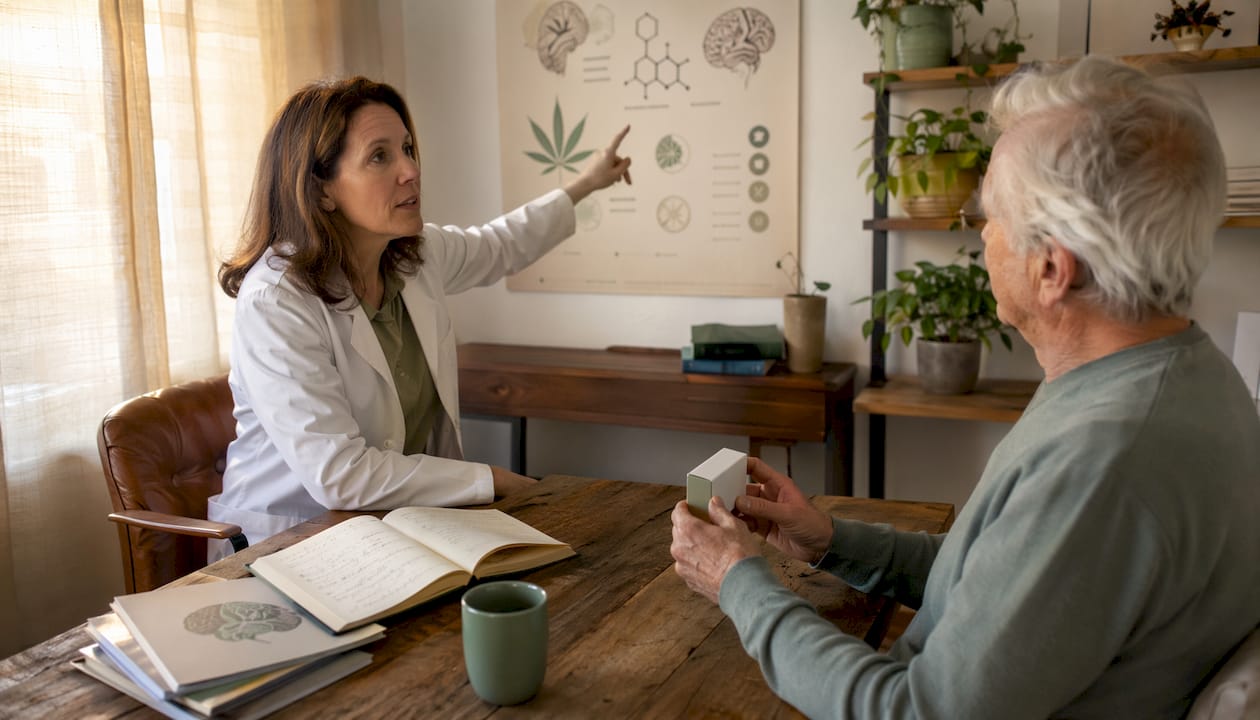
Epidyolex® is the only CBD-based medicine authorized in Europe to treat two severe forms of epilepsy: Dravet syndrome and Lennox-Gastaut syndrome. Both conditions are resistant to conventional anti-epileptic drugs and primarily affect children. The approval of this medicine by the European Medicines Agency represents a major regulatory validation for cannabinoids in medicine.
The clinical data are robust. According to Cochrane reviews updated in 2026, Epidyolex® reduces seizure frequency in more than 40% of treated cases. This figure means that a majority of patients refractory to other treatments achieve a measurable clinical improvement.
The mechanism of action of CBD in epilepsy involves, among other things, TRPV1 receptors and sodium channels, which regulate neuronal excitability. CBD acts on several receptors simultaneously, which explains its distinct action profile compared with conventional anti-epileptic drugs. This multiple mode of action is both a therapeutic advantage and a source of complexity when determining the dosage.
Key points to remember about epilepsy and CBD:
- Epidyolex® is prescribed only under strict medical supervision.
- The therapeutic doses used in clinical practice are much higher than those found in over-the-counter dietary supplements.
- Regular follow-up with a neurologist remains essential for adjusting treatment.
- Interactions with other antiepileptic drugs, such as valproate, have been documented and require monitoring.
2. CBD and anxiety management: what is the state of the research?
CBD produces a measurable anxiolytic effect at specific doses. A 2024 study conducted in Toronto with 361 participants showed a 30% reduction in generalized anxiety symptoms with a daily intake of 300 mg of CBD. This result is significant, but it concerns a specific dose and a supervised protocol, not unsupervised, unrestricted use.
The mechanism involved acts through the 5-HT1A receptor, a serotonin receptor that CBD directly activates. This action explains why CBD may reduce emotional reactivity without causing marked sedation at moderate doses. To explore this mechanism further, the CBD-hippocampus relationship offers useful scientific insight into anxiety regulation.
The placebo effect plays a significant role in studies on CBD and anxiety. Some of the perceived benefit may come from the consumption ritual or the participant’s expectations, which complicates interpretation of the results. Double-blind, placebo-controlled studies are still insufficient to draw definitive conclusions.
Practical recommendations for anxiety:
- Prefer taking CBD in the evening or outside periods requiring a high level of alertness.
- Do not substitute CBD for validated cognitive behavioral therapy.
- Consult a doctor before taking it, especially if you are currently taking anti-anxiety medication or antidepressants.
- Start with a low dose and increase gradually under supervision.
Pro tip: Before incorporating CBD into anxiety management, keep a symptom diary for two weeks. This makes it possible to objectively assess CBD’s actual effect against your personal baseline.
3. Advances in pain relief and sleep disorder management with CBD
CBD produces an analgesic effect by activating TRPV1 receptors, which regulate pain transmission in the peripheral nervous system. This effect has been documented for neuropathic and musculoskeletal pain, but results vary across studies and populations. Its effectiveness is not universal and depends heavily on the type of pain, the dose, and the duration of treatment.
| Type of pain | Current level of evidence | Clinical note |
|---|---|---|
| Neuropathic pain | Moderate | Positive results in several controlled trials |
| Musculoskeletal pain | Low to moderate | Benefit varies among individuals |
| Inflammatory pain | Preliminary | Promising data, limited human trials |
| Cancer pain | Insufficient | Used as an adjunct, not as the primary treatment |
For sleep, CBD has a clearly dose-dependent effect. At low doses, it may have an alerting effect. At moderate or high doses, it promotes falling asleep and improves sleep quality. This nonlinearity is a critical point that many people overlook when starting CBD for insomnia.
CBD does not replace good sleep hygiene. Fundamental practices such as maintaining regular sleep times, limiting screen use, and managing stress remain priorities. CBD serves as a complementary tool, not a standalone solution.
Pro tip: For sleep, take CBD 60 to 90 minutes before bedtime at a moderate to high dose. Avoid taking microdoses in the evening if you are seeking a sedative effect, as they may produce the opposite effect.
4. Innovative research: CBD PrEP and antiviral potential
A study published in April 2026 by the CNRS and the Cochin Institute revealed that CBD blocks HIV-1 transmission in the genital mucosa. This result opens up a radically new therapeutic avenue, far beyond the traditional symptomatic uses of cannabidiol.
“Activation of the TRPV1 ion channel by CBD inhibits mucosal transmission of HIV-1, suggesting that a topical CBD-based formulation could constitute a new prevention method, referred to as ‘CBD PrEP.’ This discovery, resulting from work by the CNRS and the Cochin Institute, remains to be confirmed by human clinical trials.”
The concept of CBD PrEP is based on topical products applied locally before potential exposure to the virus. This mechanism differs completely from current systemic antiretroviral treatments. Activation of the TRPV1 channel by CBD represents an innovative approach that goes beyond its traditional symptomatic use.
| Aspect | CBD PrEP | Conventional antiretroviral PrEP |
|---|---|---|
| Mode of action | Topical, local, via TRPV1 | Systemic, oral or injectable |
| Research stage | Preclinical (2026) | Approved and used clinically |
| Systemic effects | Minimal (local application) | Possible liver and kidney effects |
| Potential accessibility | High if validated | High cost in some countries |
Researchers are also considering extending this approach to other viral infections transmitted through mucosal contact. These new studies on CBD still need to be confirmed by clinical trials in humans before any medical application.
5. What precautions and limitations should be considered when using CBD medically?
CBD is not risk-free, even at moderate doses. Approximately 1 in 7 patients using cannabinoids report side effects such as drowsiness and digestive problems. This rate remains low, but it means that adverse effects are not exceptional and should be anticipated.
The risk of drug interactions is the most serious point to watch. CBD interacts with the CYP450 system, a group of liver enzymes that metabolize many common medications, including anticoagulants, antiepileptic drugs, and heart medications. Taking them simultaneously may alter the plasma concentrations of these medications and cause unexpected effects.
Essential precautions before using CBD:
- Consult a doctor if you are taking any long-term treatment.
- Avoid CBD during pregnancy and breastfeeding due to insufficient safety data.
- Check the quality and composition of products: favor products with third-party certificates of analysis available.
- Do not consider CBD a treatment for depression: the evidence in mental health remains insufficient for this indication.
- Buy from reliable sources to ensure compliance with THC and CBD content levels.
The scientific community is calling for rigorous clinical trials to guide the medical use of cannabinoids. The variable quality of products available on the market makes certification and traceability essential for any serious approach.
Key points
Medical advances involving CBD are based on solid evidence for drug-resistant epilepsy, promising data for anxiety and pain, and experimental avenues for viral prevention.
| Point | Details |
|---|---|
| Drug-resistant epilepsy | Epidyolex® reduces seizures in more than 40% of cases according to the 2026 Cochrane reviews. |
| Anxiety and dosage | A dose of 300 mg/day showed a 30% reduction in symptoms in a clinical study from Toronto. |
| Sleep and pain | CBD's effect is dose-dependent and complementary to, not a substitute for, existing treatments. |
| Antiviral potential | The CNRS and Institut Cochin have identified a promising action against HIV-1 via the TRPV1 receptor. |
| Precautions | Interactions via CYP450 and product variability make medical advice essential before taking anything. |
What these advances have taught me about therapeutic CBD
After years of following the evolution of cannabinoid research, I see a persistent trend: the public always moves faster than science. Every promising new study immediately becomes a “miracle cure” on social media, even before phase 3 clinical trials have been completed.
The CNRS discovery on CBD PrEP is the perfect example. It is a real and fascinating advance. But between a preclinical study and a validated medical product lie years of work and thousands of patients to include in rigorous trials. Presenting it as a solution available today would be irresponsible.
What strikes me positively, however, is the growing strength of the evidence on epilepsy. Epidyolex® is not a dietary supplement sold online. It is a prescribed, dosed, monitored medication. This distinction between regulated medical use and unrestricted consumption is fundamental and too often ignored.
My advice is simple: if you are looking to use CBD for a real health issue, start by discussing it with your doctor. Not to get their permission, but to avoid a drug interaction you may not have anticipated. Caution here is not timidity. It is rigor.
— Rod
Cbd-certified's certified selection for informed use
Choosing a quality CBD product is not a matter of price. It is a matter of traceability, certification, and transparency about the product’s actual composition.
Cbd-certified offers a selection of tested and certified products, available for delivery throughout the European Union, the United Kingdom, and Switzerland. Each product meets strict compliance criteria, with CBD and THC levels verified by independent laboratories. To find the product suited to your needs, see the selection available at the CBD shop in Europe from Cbd-certified. If you would like to learn more about the secure purchasing process, practical guides are also available to help you.
Frequently asked questions
Is CBD a recognized medication?
CBD is recognized as a medication only in the form of Epidyolex®, prescribed for two rare forms of epilepsy. Other CBD products are food supplements and do not have medicinal product status.
What dose of CBD is effective for anxiety?
A clinical study in Toronto showed a 30% reduction in generalized anxiety symptoms with 300 mg of CBD per day. This dose is significantly higher than that of over-the-counter products and requires medical supervision.
Can CBD replace sleeping pills?
CBD does not replace medical treatments for sleep. It may improve falling asleep at moderate to high doses, but its effect is complementary and should be part of good overall sleep hygiene.
Does CBD interact with other medications?
Yes. CBD alters the metabolism of many medications through the CYP450 enzyme system, particularly anticoagulants and antiepileptic drugs. Medical advice is essential before taking it if you are currently undergoing treatment.
What is CBD PrEP?
CBD PrEP is a viral prevention concept based on the topical application of CBD to block HIV-1 transmission in mucous membranes. This approach, stemming from a study by the CNRS and the Cochin Institute published in 2026, still needs to be confirmed by human clinical trials.