
Trichomes and CBD: complete guide for consumers
In brief:
- Capitate-stalked trichomes are the main glands storing CBD and terpenes in the cannabis plant. Their density and maturity, particularly their milky coloration, determine the quality and potency of the final product. CBD biosynthesis relies on precise enzymatic mechanisms in these trichomes, which are sensitive to environmental conditions.
Trichomes are the microscopic resin glands of cannabis flowers where cannabidiol (CBD) is synthesized and stored. These tiny crystalline structures directly determine a flower's potency, aroma, and effects. For any European CBD consumer, understanding this explanation of CBD trichomes is key to choosing genuinely high-quality products. Trichome density is a direct indicator of the final cannabinoid concentration, far beyond what the label displays.
What are the types of trichomes, and how do they influence CBD quality?
Cannabis plants produce three distinct types of trichomes, each with a specific role in understanding CBD trichomes.
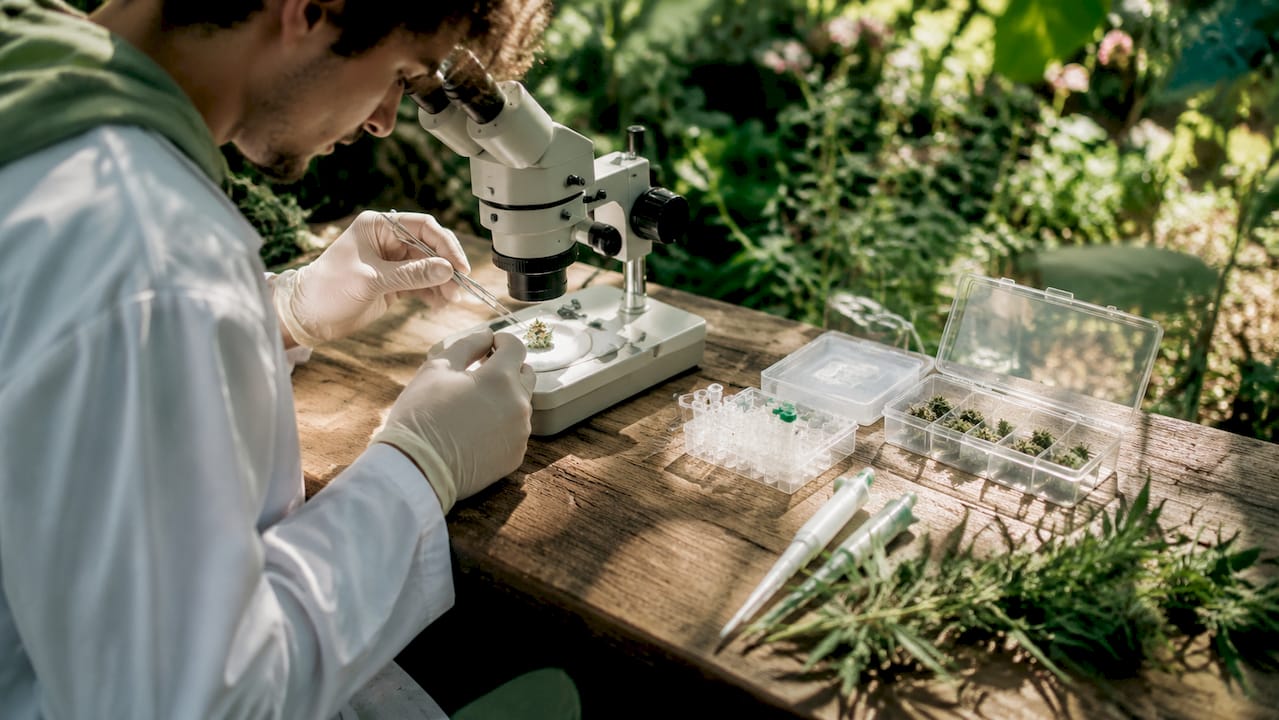
Bulbous trichomes are the smallest, visible only under a microscope. They cover the entire surface of the plant but produce few cannabinoids. Capitate-sessile trichomes are slightly larger, with a rounded head resting directly on the stalk. They contribute modestly to resin production. Capitate-stalked trichomes are the most important. They have a long stalk topped with a large spherical head and concentrate most of the CBD, terpenes, and other active compounds.
The density of capitate-stalked trichomes is a direct indicator of the final cannabinoid concentration. The more a flower is covered with them, the higher its CBD potential.
| Trichome type | Size | CBD production | Visibility |
|---|---|---|---|
| Bulbous | Very small | Low | Microscope only |
| Capitate-sessile | Small to medium | Moderate | Magnifying glass |
| Capitate-stalked | Large | High | Visible to the naked eye |
The size and density of capitate-stalked trichomes are the true indicators of resin and cannabinoid yield, far more than the simple surface color of a flower. A flower visibly covered in white crystals signals a potentially higher CBD concentration than a dull flower, even if both display the same percentage on the packaging.
How do trichomes synthesize CBD?
CBD biosynthesis in trichomes follows a precise enzymatic cascade. Understanding this mechanism helps explain why two flowers of the same variety can produce different effects.
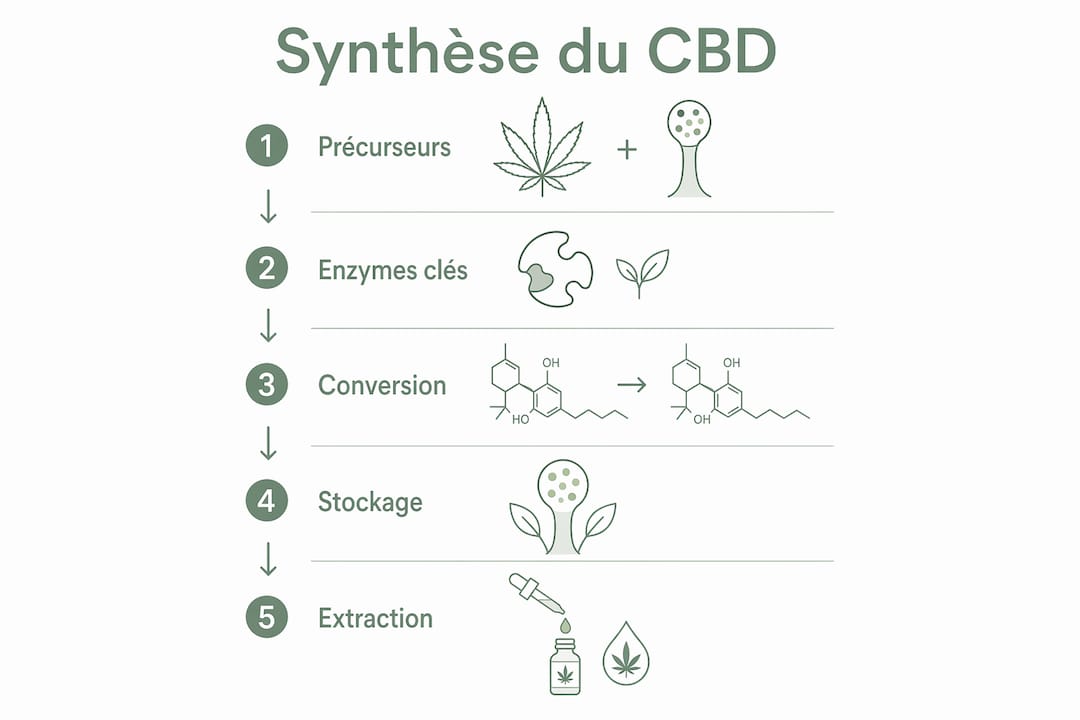
It all begins with the fusion of two metabolic pathways: the polyketide pathway and the MEP pathway (methylerythritol phosphate). This combination produces CBGA, or cannabigerolic acid. CBGA is the universal precursor of all major cannabinoids, including CBD, THC, and CBC.
Here are the key steps in this synthesis:
- CBGA formed: the plant combines the two metabolic pathways in the secretory cells of the trichomes.
- Activated CBDA synthase: this specific enzyme converts CBGA into CBDA (cannabidiolic acid), the acidic form of CBD.
- Storage in the subcuticular cavity: CBDA is stored in an external cavity of the trichomes, rich in hydrogen peroxide, which protects the cells from the toxicity of concentrated cannabinoids.
- Decarboxylation: under the effect of heat or time, CBDA loses a carboxyl group and becomes active CBD.
Professor Ton Bisseling identified that these enzymatic mechanisms take place in isolated microenvironments within the trichomes. This detail is fundamental: a flower’s potency depends as much on the efficiency of these enzymes as on the plant’s genetics.
Pro tip: When extracting CBD, preserving the integrity of the trichomes is essential. Excessively aggressive grinding or excessive heat before extraction destroys enzymes and degrades acidic cannabinoids before they can be used properly.
How does trichome maturity determine the harvest?
Trichome color is the best indicator of the optimal time to harvest a CBD flower. This change in hue reflects a real chemical transformation, not merely a visual one.
-
Clear and transparent trichomes: the plant is still in the active production phase. Acidic cannabinoids are accumulating but have not reached their maximum concentration. Harvesting at this stage produces a weak flower.
-
Cloudy or opaque trichomes: CBDA concentration is at its peak. This is the ideal stage for a CBD flower with balanced effects and fresh aromas. For maximum potency, harvest when 80–90% of the capitate-stalked trichomes are cloudy with less than 10% amber.
-
Amber trichomes: degradation has begun. CBDA gradually transforms into CBN (cannabinol), a compound with more sedative effects. A flower harvested late will be more relaxing but contain less pure CBD.
-
Mixed cloudy and amber trichomes: an intermediate profile, often sought for an effect that is both soothing and moderately active.
The maturity of trichomes, indicated by their color, reflects a chemical transformation that directly affects the effects and aroma of the flower. A grower who harvests too early or too late obtains a cannabinoid profile very different from the one intended.
Pro tip: To observe trichomes at home, a 30x to 60x magnifying glass is sufficient. USB digital magnifiers sold for less than €20 can even take photos to compare the development of a flower over several days.
Which environmental factors influence trichome production?
Growing conditions directly modify the density and quality of trichomes in CBD plants. Experienced growers adjust several parameters to maximize resin production.
Trichomes serve a natural defense function for the plant. They filter UV-B rays, regulate water loss, and release terpenes to repel insects and predators. Stimulating these defense mechanisms in a controlled manner increases resin production.
The main factors to control are:
- UV-B exposure: targeted exposure to ultraviolet light stimulates the plant to produce more trichomes as a protective shield. Growers use specific UV-B lamps toward the end of flowering.
- Vapor pressure deficit (VPD): a well-calibrated VPD reduces excessive water stress while maintaining slight tension that promotes resin synthesis. Advanced growers adjust VPD and UV exposure to stimulate trichomes without harming plant health.
- Photoperiod: switching to a photoperiod of 12 hours of light and 12 hours of darkness triggers flowering and intensive trichome production.
- Temperature: slightly cool nights (around 18–20 °C) at the end of flowering encourage trichome densification and intensify aromas.
- Controlled stress: a slight nitrogen restriction during the flowering phase directs the plant’s resources toward resin production rather than vegetative growth.
These targeted environmental stresses stimulate resin production without compromising the health of the flowers. The difference between an ordinary flower and an exceptional flower often comes down to these fine adjustments in cultivation.
How important are trichomes for European CBD consumers?
The importance of CBD trichomes is directly reflected in the consumer experience. A flower rich in trichomes offers a higher CBD concentration, more complex aromas, and a more complete effects profile.
Trichomes do not only produce CBD. They also synthesize terpenes, aromatic molecules that contribute to the specific effects of each variety. Myrcene provides an earthy, relaxing note, limonene a citrusy, invigorating touch, and beta-caryophyllene a peppery aroma with soothing properties. All these compounds act synergistically with CBD in what researchers call the entourage effect.
To choose CBD flowers wisely, here are the visual and sensory criteria to look for:
- Crystalline appearance: a flower covered in white crystals visible to the naked eye indicates a high density of capitate-stalked trichomes.
- Pronounced aroma: since terpenes are produced in the same trichomes as CBD, a highly fragrant flower is generally also rich in cannabinoids.
- Sticky texture: the resin in trichomes makes the flowers slightly sticky to the touch. A dry, non-sticky flower has often lost some of its trichomes.
- Trichome color: under a magnifying glass, mostly milky trichomes indicate that the harvest is taking place at the right time.
The stalked glands are advanced criteria used by growers to estimate the yield potential and quality of CBD flowers. As a consumer, learning to recognize them gives you a real advantage when assessing a product’s quality before purchase.
Key points
Capitate-stalked trichomes are the only structures in the cannabis plant where CBD is synthesized and stored, making their density the most reliable quality criterion for a flower.
| Point | Details |
|---|---|
| Capitate-stalked trichomes | These glands produce most of the CBD and terpenes in cannabis flowers. |
| Biosynthesis via CBGA | CBGA is the universal precursor to CBD, formed through two enzymatic pathways in trichomes. |
| Color and maturity | Trichomes that are 80–90% milky indicate peak CBD concentration at the time of harvest. |
| Environmental factors | Controlled UV-B, VPD, and photoperiod increase trichome density and quality. |
| Purchasing criteria | A sticky, crystalline, highly aromatic flower indicates a high density of intact trichomes. |
What trichomes taught me about the true quality of CBD
After years of observing CBD flowers from all origins, one thing still strikes me: most consumers look at the CBD percentage on the label and stop there. It is a mistake.
The displayed percentage is a laboratory measurement performed on a sample. What really matters is the condition of the trichomes when you receive the flower. A flower with 15% CBD and intact, milky trichomes will give you a much richer experience than a flower with 20% whose trichomes have been degraded by poor drying or rough transport.
What surprised me most when I delved deeper into the biochemistry of trichomes was the concept of the enzymatic microenvironment. These small molecular factories function under very precise conditions. A temperature fluctuation or poorly controlled humidity causes the enzymes to lose their effectiveness. The consumer sees none of this. They receive a flower that looks beautiful but whose potential was compromised long before harvest.
My practical advice: invest in a small 40x magnifying glass. Examine your flowers before consuming them. Transparent or broken trichomes indicate degraded quality. Milky, dense trichomes are a sign of a product that was harvested and stored correctly. For CBD chemotypes, the same logic applies: genetics determine the potential, but trichomes determine whether that potential was realized.
— Rod
CBD flowers rich in trichomes available from Cbd-certified
Cbd-certified selects its CBD flowers according to strict quality criteria, paying particular attention to the density and integrity of the trichomes. Each product offered in the European shop is chosen for its actual cannabinoid concentration and complete aromatic profile.
Fans of ready-to-consume flowers will appreciate the assorted CBD pre-rolls, prepared from flowers selected for their rich trichome content. Cbd-certified delivers throughout the European Union, the United Kingdom, and Switzerland, with suitable storage guarantees to preserve the trichomes until they reach your door.
Frequently asked questions
What exactly are CBD trichomes?
Trichomes are tiny resin glands located on cannabis flowers. They synthesize and store CBD, terpenes, and other active cannabinoids.
How can you recognize a flower rich in trichomes?
A flower rich in trichomes appears crystalline, is slightly sticky to the touch, and gives off a pronounced aroma. A 30x to 60x magnifying glass can confirm the density and color of the trichomes.
Which trichome color indicates the best CBD?
Trichomes that are predominantly milky, with less than 10% amber ones, indicate peak CBD concentration. Amber trichomes indicate degradation into CBN, which is more sedative.
Do trichomes also contain terpenes?
Yes. Capitate-stalked trichomes produce both CBD and terpenes. This is why a highly aromatic flower is generally also rich in cannabinoids.
Are CBD and THC formed in the same trichomes?
Yes. CBD and THC share the same production sites in capitate-stalked trichomes, starting from the same precursor, CBGA. The specific enzyme (CBDA synthase or THCA synthase) determines which of the two is produced.