
What is CBD curing, and why is it essential?
In short:
- CBD curing is a biochemical maturation process that improves the product’s aromatic profile and stability. It requires precise conditioning, a temperature between 15 and 20°C, and controlled humidity for 6 to 8 weeks. Proper curing ensures smoother, more aromatic flowers with better-balanced effects.
CBD curing is the controlled maturation process that transforms dried flowers into an aromatic, smooth, and stable product. This stage, distinct from simple drying, triggers profound enzymatic reactions that eliminate residual chlorophyll, break down bitter sugars, and fully develop the terpenes. Without this process, even a flower with superior genetics retains an unpleasant herbal taste and less harmonious effects. Curing is what separates standard CBD from a truly premium product, and understanding how it works changes the way you choose your flowers.
What is CBD curing: definition and technical specifics
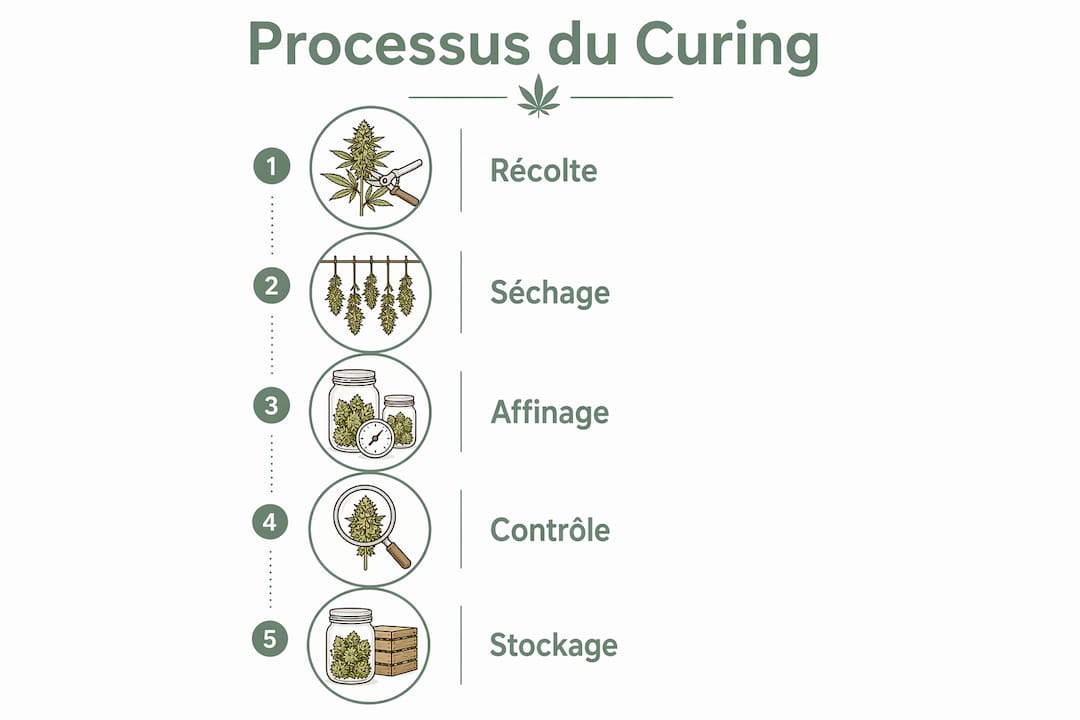
Curing, or affinage in French, refers to the biochemical maturation phase that follows the drying of CBD flowers. Whereas drying removes most of the moisture, curing is a chemical transformation that develops terpenes and stabilizes cannabinoids. These two stages are complementary but fundamentally different in their objectives.
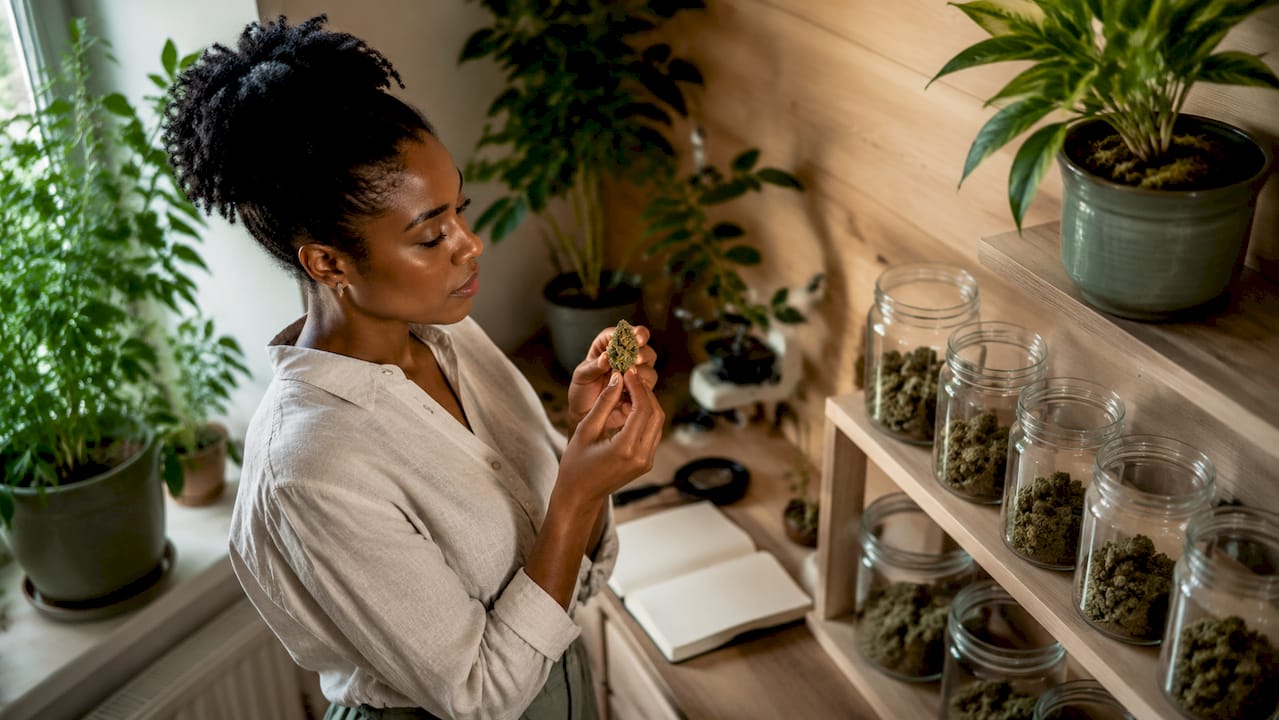
The ideal duration of the process is at least 6 to 8 weeks, with noticeable sensory quality already after 2–4 weeks. Some experienced growers extend the curing process to 3 months to enhance the relaxing effects and further stabilize the chemical profile. Patience here is a technical variable, not merely advice.
The environmental conditions are strict and non-negotiable:
- Temperature: maintain between 15 and 20°C at all times
- Relative humidity: keep between 58 and 62% to prevent mold and drying out
- Container: airtight glass jars, filled three-quarters full to allow gas exchanges
- Tools: digital hygrometer to measure humidity, two-way regulators such as Boveda to stabilize it
Pro tip: Fill your jars to 75% of their capacity. This free space is vital: it allows the gas exchanges necessary for enzymatic reactions. An overfilled jar suffocates the process.
| Parameter | Target value | Consequence if not followed |
|---|---|---|
| Temperature | 15–20°C | Terpene degradation and mold growth |
| Humidity | 58–62 % | Drying out or rotting of the flowers |
| Minimum duration | 2–4 weeks | Persistent herbal taste, unstable effects |
| Optimal Duration | 6–8 weeks | Complete aromatic profile, stabilized cannabinoids |
| Jar filling | 75 % | Insufficient gas exchange if overfilled |
What are the tangible benefits of curing for CBD quality?
Curing improves CBD quality on three levels simultaneously: sensory, chemical, and experiential. These benefits are not incidental. They result directly from the biochemical transformations that take place in the jar.
Aromatically, slow drying followed by curing preserves more than 80% of the variety's native terpene profile. Terpenes are the molecules responsible for the characteristic odors and flavors of each cultivar. Losing them means losing the flower's aromatic identity.
Chemically, enzymatic transformation eliminates the sugars and starches responsible for harsh smoke. Chlorophyll gradually breaks down, taking with it the fresh-cut grass taste found in poorly cured products. The result is smoother smoke that is less irritating to the throat.
Curing plays a decisive role in stabilizing cannabinoids and terpenes, creating the conditions for an optimal entourage effect in which CBD, terpenes, and other compounds act synergistically.
The tangible benefits for the user are as follows:
- More complex flavor: floral, earthy, or fruity notes fully express themselves
- Increased smoothness: less irritation and a more enjoyable consumption experience
- More balanced effects: the synergy between cannabinoids and terpenes is preserved
- Extended storage: properly cured flowers can be stored longer without losing their potential
How to achieve effective curing: steps and best practices
Successful curing begins well before the first jar is closed. Post-drying preparation determines everything that follows.
- Check the drying: the stems should crack slightly, while the flowers should remain slightly pliable. If they crumble, they are too dry for proper curing.
- Prepare the jars: use clean, dry glass jars with airtight seals. Avoid plastic, which alters aromas.
- Fill to 75%: leave some empty space in each jar to allow gas exchange, which is essential for enzymatic reactions.
- Practice “burping”: open the jars twice a day during the first two weeks to renew the air and remove excess moisture.
- Monitor humidity: place a hygrometer in each jar. If the humidity level exceeds 65%, leave the jars open for an additional 30 minutes.
- Add Boveda regulators: these two-way sachets automatically stabilize humidity and reduce the risk of error.
- Store in a protected place: place the jars in a dark, cool location with a stable temperature. Light degrades terpenes.
- Be patient: do not shorten the process. Curing stopped after two weeks produces a half-finished product.
Pro tip: If you detect an ammonia smell when opening a jar, the flowers are too moist and anaerobic bacteria are developing. Remove the flowers immediately, let them air out for 30 minutes, and check your hygrometer before closing the jar again.
The curing time may vary depending on the strain profile. Resin- and terpene-rich cultivars often benefit from extended curing. Some growers extend the process to 3 months for strains intended for deep relaxation. For daily use, 6–8 weeks remains the benchmark.
For more information on storage after curing, the practical storage guide from Cbd-certified details the optimal conditions for long-term storage.
Curing vs. drying: what is the real difference?
Drying and curing are two distinct, complementary stages that cannot replace one another. Confusing the two is the most common mistake among beginners.
Drying is a physical process. It involves evaporating the water contained in the freshly harvested plant, generally by hanging the branches in a ventilated space at 18–22 °C for 7–14 days. Once drying is complete, the flower is stable but not yet ready for consumption.
Curing is a biochemical process. It transforms the flower’s internal composition through enzymes naturally present in the plant. These enzymes break down chlorophyll, convert complex sugars, and refine the terpene profile. Without curing, the flower retains a fresh-cut grass taste and produces less balanced effects.
| Criterion | Drying | Curing |
|---|---|---|
| Objective | Eliminate moisture | Transform the chemical composition |
| Duration | 7–14 days | 2–8 weeks (up to 3 months) |
| Mechanism | Physical evaporation | Enzymatic reactions |
| Impact on taste | Neutral | Major improvement |
| Impact on terpenes | Partial preservation | Development and stabilization |
| Result without this step | Rotten flower | Harsh, poorly aromatic flower |
Most commercial cannabis is under-cured due to a lack of time and storage space. This industrial shortcut explains why so many products available on the market are disappointing in terms of aroma and overall experience. Choosing flowers that have undergone careful curing means choosing a product that has been given the time necessary for its full expression.
Key Points
Curing is the biochemical transformation that distinguishes a premium CBD flower from a standard product, developing terpenes, eliminating chlorophyll, and stabilizing cannabinoids over a minimum of 6–8 weeks.
| Point | Details |
|---|---|
| Optimal Duration | Allow at least 6–8 weeks, with curing possible for up to 3 months depending on the variety. |
| Strict Conditions | Maintain 15–20 °C and 58–62% humidity with a hygrometer and Boveda regulators. |
| Glass Jars | Fill to 75% to allow the gas exchange essential for enzymatic reactions. |
| Sensory Benefits | Curing preserves more than 80% of the terpene profile and removes the grassy taste of chlorophyll. |
| Curing vs. Drying | Drying removes water; curing chemically transforms the flower to reveal its potential. |
What Curing Taught Me About CBD Quality
When I first became seriously interested in CBD, I thought a flower’s quality depended solely on its genetics and growing conditions. I was wrong. Curing is the step no one sees but everyone feels in the final product.
I had the opportunity to compare flowers from the same cultivar, one cured for 3 weeks and the other for 8 weeks. The difference was striking. The first was harsh, with a lingering vegetal note. The second was smooth and complex, with clear floral aromas. Same genetics, same drying. Only the curing differed.
What concerns me about the current market is that most commercial products are under-cured. Economic constraints push producers to shorten the timelines. The result: technically legal flowers that are aromatically disappointing. To truly benefit from CBD’s effects, particularly for relaxation and sleep, careful curing is not a luxury. It is a basic requirement.
My pragmatic advice: when choosing your flowers, always ask for information about the curing time. A serious producer knows this data and is happy to share it. To learn more about selection, the Cbd-certified guide on choosing your CBD flowers provides concrete, reliable criteria.
— Rod
Discover the cured CBD flowers selected by Cbd-certified
Cbd-certified selects CBD flowers and resins from European producers who respect the curing times required for a complete aromatic profile. Every product offered in the store is chosen for its post-harvest quality, not just for its CBD content.
Whether you are in France, Belgium, Switzerland, or the United Kingdom, Cbd-certified delivers products directly to your door that have been properly cured. The store also offers ready-to-use CBD pre-rolls, made from properly cured flowers. To explore the full selection and find the best CBD available in Europe, visit Cbd-certified’s European CBD store.
Frequently asked questions
What exactly is CBD curing?
CBD curing is the biochemical maturation phase that follows flower drying. It develops terpenes, breaks down chlorophyll, and stabilizes cannabinoids for a smoother, more aromatic product.
How long does successful CBD curing take?
Effective curing lasts between 6 and 8 weeks under optimal conditions. A minimum of 2–4 weeks is enough for noticeable sensory effects, but full curing requires more time.
What is the difference between drying and curing?
Drying removes moisture from the flower through physical evaporation. Curing is an enzymatic transformation that alters the internal chemical composition, improving the taste, aromas, and effects.
Why does so much commercial CBD lack flavor?
Most commercial cannabis is under-cured due to time and storage-space constraints. This industrial shortcut deprives the flowers of their full aromatic and terpene expression.
How can you prevent mold during curing?
Maintain humidity between 58 and 62% with a hygrometer, burp daily during the first two weeks, and use Boveda regulators in the jars. An ammonia smell indicates excess humidity that must be corrected immediately.