
CBD Flower Quality Classification: 2026 Guide
In brief:
- The classification of CBD flowers is based on their origin, composition, and regulatory compliance. It prioritizes a complete cannabinoid profile, optimal freshness, and assured traceability. Choosing a quality flower involves examining the certificate of analysis from an independent laboratory.
Classifying quality CBD flowers involves assessing their origin, chemical composition, and organoleptic characteristics to ensure a safe, effective product that complies with European standards. Choosing a CBD flower without knowing these criteria is like buying wine without a label. The classification of quality CBD flowers rests on three pillars: cultivation method, complete cannabinoid profile, and analytical transparency. This guide sets out the concrete criteria that distinguish a mediocre flower from an exceptional one, with benchmarks suited to European consumers in 2026.
What are the essential criteria for classifying CBD flowers according to their quality?
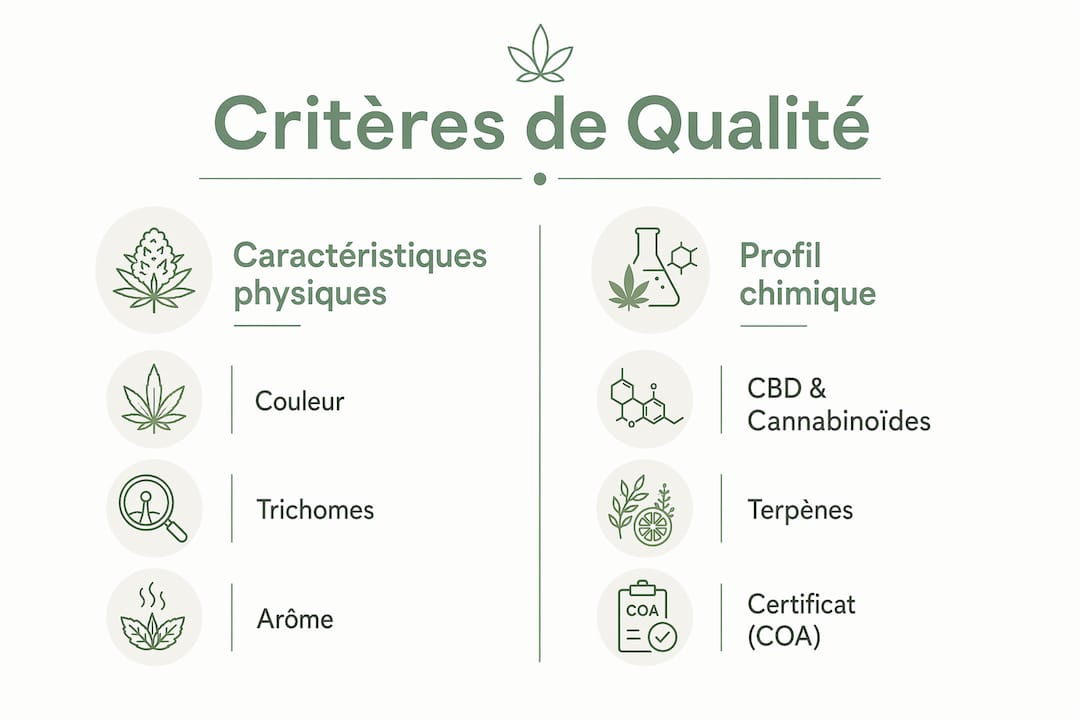
The quality of a CBD flower can first be assessed with the naked eye. A quality flower has a vibrant green color, abundant trichomes, orange pistils, intense aromas, and a slightly sticky texture. These characteristics indicate a careful harvest and proper storage. A dull, dry, or aroma-free appearance reveals a degraded or improperly stored flower.
The terpene profile plays a central role in the evaluation. Terpenes are the aromatic molecules that give each variety its distinct smell and flavor: myrcene for earthy notes, limonene for citrus notes, pinene for woody notes. These compounds are not merely olfactory. They directly contribute to the experience and effectiveness of the flower.
Regulatory compliance is non-negotiable in Europe. Legal cannabis must contain less than 0.3% THC to be sold legally in the European Union, the United Kingdom, and Switzerland. This threshold protects consumers and distinguishes CBD from recreational cannabis.
The key criteria to check before any purchase:
- Visual appearance: vibrant green color, visible trichomes, no mold or foreign matter
- Aroma: intense, fresh, characteristic of the variety, with no hay-like or musty odor
- Texture: slightly sticky to the touch, neither too dry nor too moist
- Certificate of Analysis (COA): issued by an ISO 17025-accredited laboratory, covering pesticides, heavy metals, mold, CBD, and THC
- Traceability: known geographical origin, cultivation method indicated
Pro tip: Always request the COA before buying. A reputable seller will provide it without hesitation. An in-house brand COA does not replace an analysis from an accredited third-party laboratory.
How can you compare cultivation methods and their impact on quality?
The cultivation method directly determines the aromatic profile, potency, and price of a CBD flower. Three methods dominate the European market in 2026: indoor, outdoor, and greenhouse cultivation. Each produces very different results.
| Method | Aromatic profile | Potency | Indicative price 2026 | Ideal for |
|---|---|---|---|---|
| Indoor | Intense, complex | High | 10–20 €/g | Demanding consumers |
| Greenhouse | Balanced | Moderate to high | 5–12 €/g | Value for money |
| Outdoor | Authentic, natural | Moderate | 2–6 €/g | Budget-conscious consumers, everyday use |
Indoor cultivation offers total control over light, temperature, and humidity. This control produces flowers with abundant trichomes and a very pronounced aroma. The higher price reflects the significant energy costs of this method.
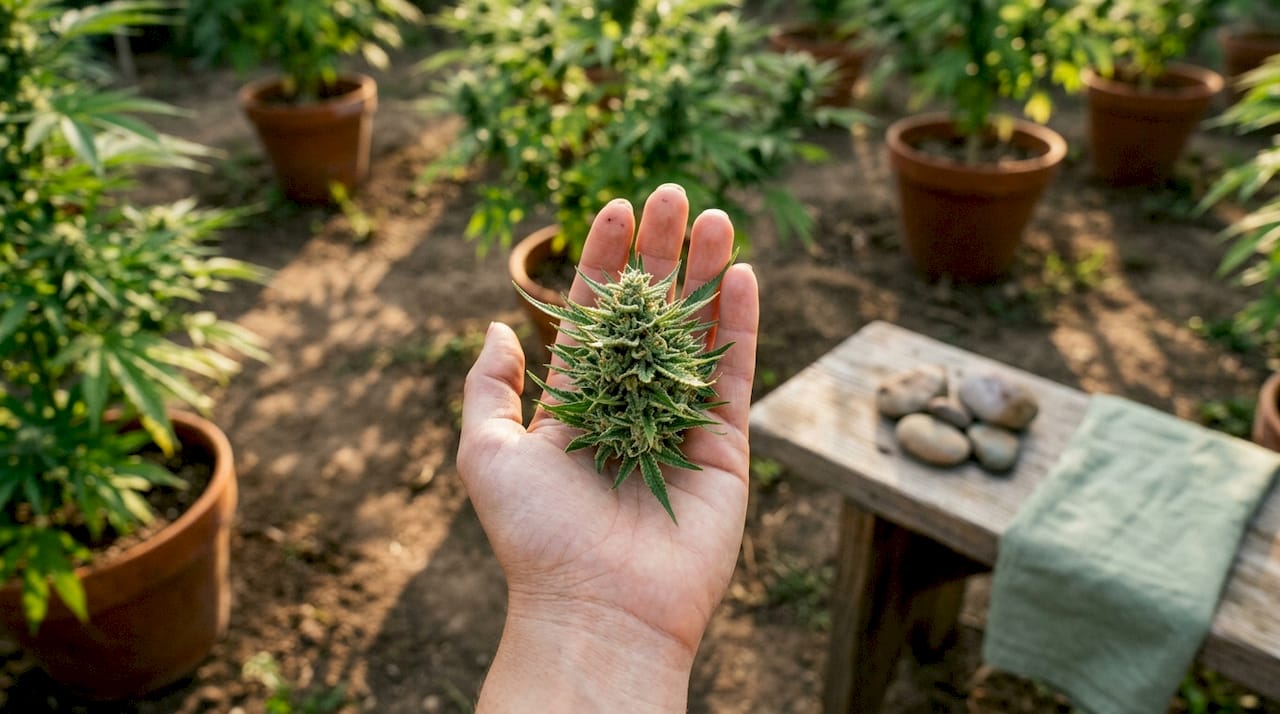
Outdoor cultivation produces more natural flowers, exposed to real solar cycles. The result is a more authentic experience at a lower cost. Climate variability can nevertheless affect consistency from one harvest to another.
Greenhouse cultivation combines the advantages of both methods. It protects plants from bad weather while using natural light. It is often the best compromise between quality and affordability.
Pro tip: For a first purchase, a greenhouse flower offers an excellent balance. Save premium indoor flowers for refining your experience once your preferences are established.
How important are the complete cannabinoid profile and freshness?
CBD content alone is not enough to evaluate a flower. The true quality indicator is the complete cannabinoid and terpene profile, together with COA transparency. A flower showing 20% CBD with a depleted terpene spectrum produces an inferior experience to a 12% flower rich in CBC, CBG, and varied terpenes.
The entourage effect explains this phenomenon. CBD, CBC, CBG, and terpenes act synergistically to amplify the beneficial effects. This interaction far exceeds what an isolated cannabinoid can produce on its own. Understanding the entourage effect radically changes how a flower is evaluated.
Freshness directly determines perceived quality. The complete aromatic bouquet degrades quickly without optimal conditions, directly affecting effectiveness and sensation. A flower stored in poor conditions loses its terpenes within a few weeks.
| Factor | Optimal condition | Consequence if not followed |
|---|---|---|
| Temperature | 15–21 °C | Accelerated terpene degradation |
| Humidity | 55–65 % | Mold or drying out |
| Light | Total darkness | Cannabinoid degradation |
| Duration | 6–12 months | Loss of potency and aroma after |
Pro tip: Store your flowers in an airtight glass jar, away from light and heat. Avoid plastic bags, which accelerate terpene degradation. To learn everything about storage, consult this practical guide.
How to choose the best CBD flowers for your profile?
Choosing a suitable CBD flower depends on the consumer’s experience, expectations, and budget. A methodical approach avoids unpleasant surprises and helps you progress toward the products best suited to your needs.
-
Determine your level of experience. Beginners should prefer flowers with 7–12% CBD. Regular consumers can explore concentrations of 15–22%. Starting strong offers no additional benefit and may make the experience unpleasant.
-
Prioritize the entourage effect over sheer potency. A full-spectrum flower with CBC, CBG, and various terpenes produces a more nuanced experience than a flower with a high content of isolated CBD. To explore this topic further, the guide on terpenes in CBD is a useful read.
-
Check the seller’s transparency. A reliable seller systematically provides an independent COA before purchase. The absence of this document is a warning sign. Laboratory analyses provide the minimum safety guarantee.
-
Distinguish organic flowers from standard flowers. Organic flowers are grown without pesticides or herbicides, using artisanal methods. They offer greater safety and superior sensory quality. For sensitive or regular consumers, choosing organic reduces exposure to chemical residues.
-
Adapt your choice to your intended use. An outdoor flower with 8% CBD is suitable for relaxed, everyday use. A premium indoor flower with 18% CBD and a rich terpene profile is intended for consumers seeking a more intense experience. For a selection tailored to your specific needs, this step-by-step guide details the criteria to prioritize.
Personalizing your choice according to your individual response is crucial, because the effect varies with each person’s endocannabinoid system. Keeping a journal of your experiences helps you quickly refine your preferences.
Key points
The quality of a CBD flower depends on its complete cannabinoid profile, growing method, and the seller’s analytical transparency, not on its CBD content alone.
| Point | Details |
|---|---|
| Read the COA first | Require an ISO 17025 analysis certificate covering pesticides, heavy metals, and mold. |
| Do not rely on CBD content alone | The terpene profile and entourage effect determine the actual experience. |
| Choose the growing method according to your budget | Outdoor for everyday use, greenhouse for value for money, indoor for high standards. |
| Follow storage conditions | Airtight jar, darkness, 15–21 °C, and 55–65% humidity to preserve terpenes. |
| Adapting CBD content to your profile | 7–12% for beginners, 15–22% for experienced consumers. |
What I learned after years of evaluating CBD flowers
Overemphasizing CBD content is the most common mistake I see among new consumers. A high figure on the label is reassuring, but it says nothing about terpene richness, freshness, or growing conditions. I tested flowers with 22% CBD that produced a flat experience, and flowers with 10% CBD and an exceptional terpene profile that remained memorable.
What struck me most was the difference between a serious COA and a superficial document. Independent laboratories accredited to ISO 17025 are the ultimate guarantee of reliability. An internal brand COA is worthless without this accreditation. Too many sellers publish partial analyses that test only CBD and THC, ignoring pesticides and heavy metals.
My most direct advice: take the time to experiment cautiously. Each person’s endocannabinoid system reacts differently. What works for a friend will not necessarily work for you. Start with moderate concentrations, note how you feel, and adjust gradually. Quality is built over time, not in haste.
— Rod
Certified CBD Flowers: The Cbd-certified Selection
Cbd-certified offers a selection of CBD flowers compliant with 2026 European standards, with independent certificates of analysis available for each product. Each product is selected according to strict criteria: identified cultivation method, complete cannabinoid profile, and guaranteed traceability.
The 25g CBD flower pack lets you discover several varieties at an attractive price, making it ideal for identifying your preferences without commitment. For convenience enthusiasts, CBD pre-rolls offer a ready-to-use alternative with the same rigorous quality standards. Cbd-certified delivers across the European Union, the United Kingdom, and Switzerland. Explore the full selection at the CBD shop in Europe.
Frequently Asked Questions
What is the classification of CBD flowers?
The classification of CBD flowers evaluates their quality based on the cultivation method, cannabinoid profile, organoleptic characteristics, and regulatory compliance. It helps distinguish reliable products from low-quality products.
How to recognize a quality CBD flower?
A quality flower has a vibrant green color, abundant trichomes, an intense aroma, and a COA issued by an ISO 17025-accredited laboratory. The absence of an independent COA is a warning sign.
What CBD content should beginners choose?
Beginners should choose flowers containing 7–12% CBD. Experienced consumers can explore levels of 15–22% according to their needs.
What is the difference between indoor and outdoor flowers?
Indoor flowers offer a more intense terpene profile and higher potency, at a price of €10–20/g. Outdoor flowers are more affordable (€2–6/g) and provide a more natural experience.
Are organic CBD flowers better?
Organic flowers are grown without pesticides or herbicides, reducing exposure to chemical residues and improving organoleptic quality. They are the best choice for regular or sensitive consumers.