
Potential contaminants in CBD resins: 2026 safety guide
In brief:
- CBD resins can contain contaminants such as heavy metals, pesticides, residual solvents and mycotoxins. The concentration of these substances increases during manufacturing, raising health risks. Checking a complete certificate of analysis and selecting solvent-free extraction ensures product safety.
Potential contaminants in CBD resins refers to toxic substances, heavy metals, pesticides, residual solvents and mycotoxins that may be found in cannabidiol resins and compromise their safety. Resin amplifies these risks compared with raw flowers: the process of concentrating the trichomes concentrates all contamination present in the original plant. European standards, particularly those of the DGCCRF and EFSA, set precise regulatory thresholds for each family of pollutants. An ISO 17025-accredited certificate of analysis, called a COA, remains the only document proving that a batch complies with these thresholds.
What are the most common potential contaminants in CBD resins?
CBD resins concentrate four major families of pollutants. Each has a distinct origin and different effects on health.
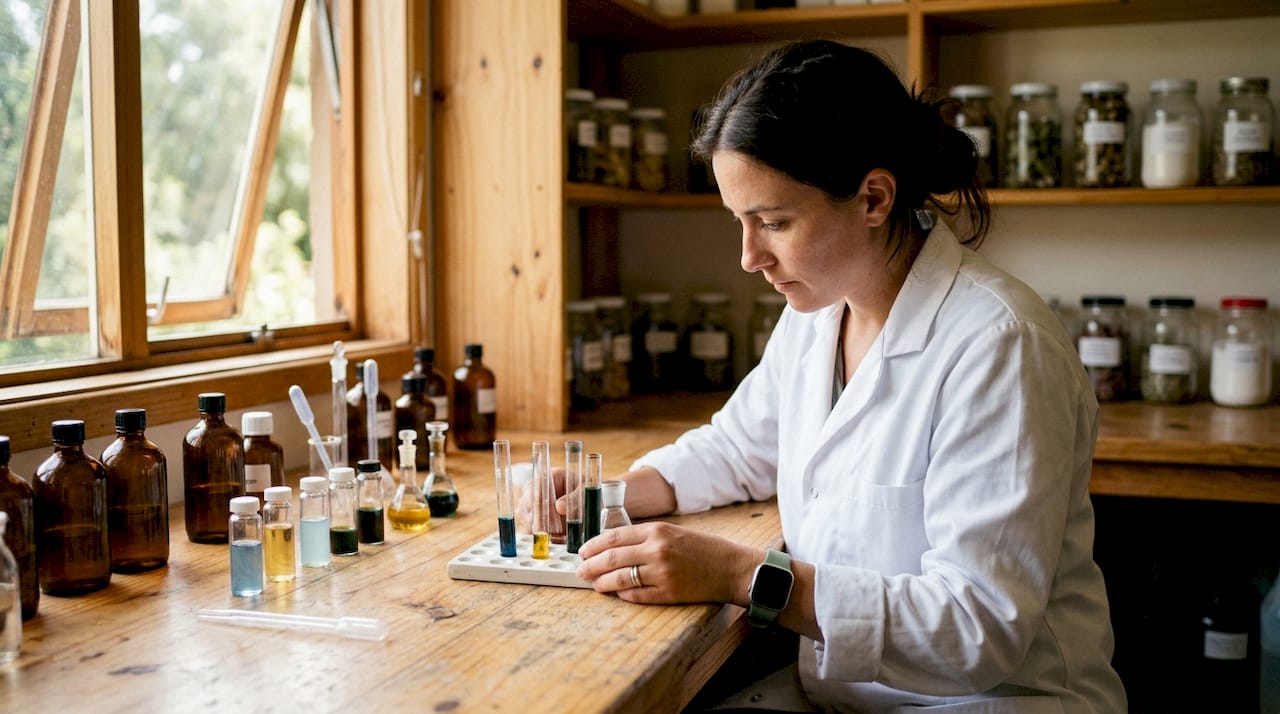
Heavy metals constitute the primary risk. Hemp is a bioaccumulator: it can concentrate up to 10 times more cadmium in contaminated soils. Lead, arsenic and mercury also accumulate in the trichomes, then end up in high quantities in the final resin. Chronic exposure to these metals causes renal, neurological and cardiovascular damage.
Organochlorine and pyrethroid pesticides come next. Approximately 8 to 12% of plant-based CBD extracts have non-compliances related to these substances according to the 2024 DGCCRF. These residues come from agricultural practices and persist in concentrated extracts even after processing.
Residual solvents represent a frequently underestimated danger. Between 15 and 30% of CBD extracts exceed the regulatory thresholds for hexane and butane according to the EFSA. These molecules pose a proven genotoxic risk, meaning they can damage cellular DNA.
Mycotoxins round out the list. Batches of CBD flowers sold without a harmonized control framework showed fungal contamination such as Aspergillus spp. and Salmonella. Damp storage or uncontrolled handling promotes the growth of these molds, whose toxins survive the extraction process.
Key takeaway: 81% of the CBD products analyzed had levels that did not comply with their labeling, according to MILDECA for the 2022–2023 period. This figure illustrates the scale of the problem in the European market.
How do extraction processes influence contamination in resins?
The choice of extraction method directly determines whether residual solvents are present in the final resin. Understanding these processes helps assess a product's safety even before reading its COA.
-
Supercritical CO2 extraction. This is the reference method. Supercritical CO2 extraction completely prevents the introduction of toxic solvents into the extract. CO2 behaves like a high-pressure solvent, then evaporates without leaving any residue. The detailed extraction steps show why this process is preferred by serious producers.
-
Extraction using organic solvents. Hexane, butane, and ethanol are used for their effectiveness and low cost. The problem: insufficient purification leaves toxic residues in the finished product. This is the main cause of the threshold exceedances observed by EFSA.
-
Cold mechanical extraction (ice or sieve). This method requires no chemical solvents. It produces resins such as hashish or kief. Quality depends on the cleanliness of the equipment and the raw material used.
-
Post-extraction purification. Whatever the method, a rigorous filtration and purification step reduces residues. Without this step, even CO2 extraction can contain impurities if the raw material was contaminated.
Pro tip: On the label or COA of a resin, look for the mention “supercritical CO2 extraction” or “no residual solvent detected.” The absence of this information is a warning sign. Consult the guide to extraction methods to compare the processes in detail.
Which tests and certificates of analysis guarantee the safety of CBD resins?
A COA, or certificate of analysis, is the key document for assessing the safety of CBD resins. However, you need to know what it should contain for it to be truly useful.
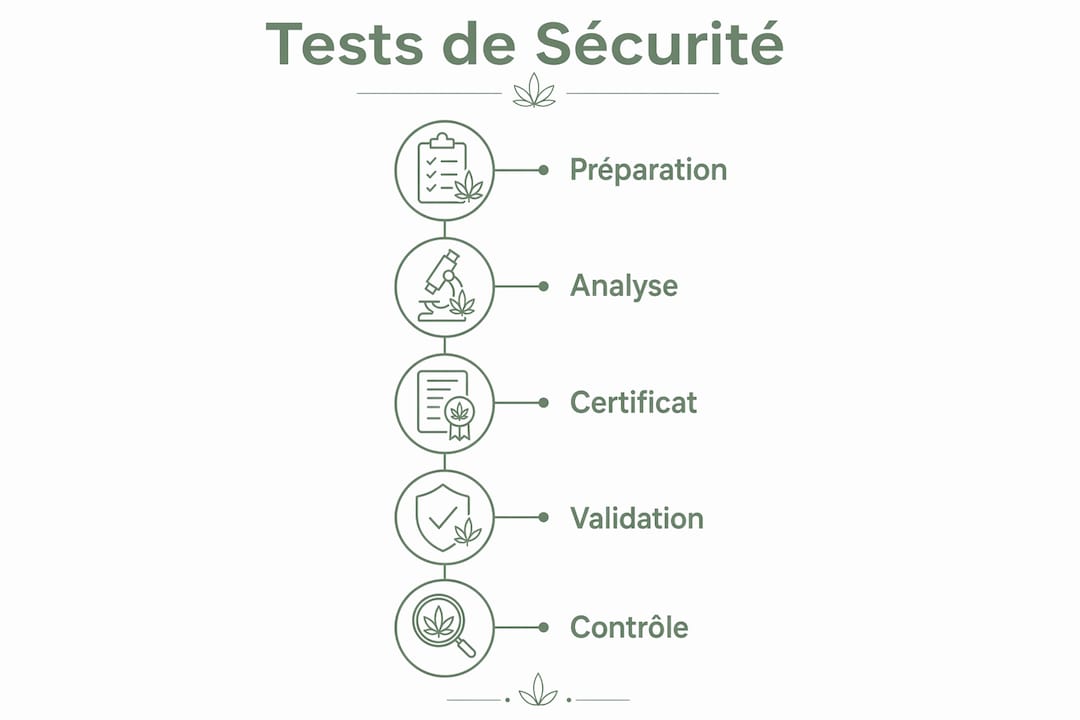
A complete and reliable COA must cover six families of contaminants: cannabinoids, pesticides, heavy metals, mycotoxins, residual solvents, and microbiology, in accordance with ISO 17025. A COA that mentions only the CBD content is insufficient to guarantee the product’s safety. This shortcoming is common among less rigorous sellers.
| Contaminant family | European reference threshold | Risk in the event of exceedance |
|---|---|---|
| Heavy metals (lead, cadmium) | EC Regulation 2023/915 | Kidney and neurological damage |
| Organochlorine pesticides | EC Regulation 396/2005 | Endocrine disruption |
| Residual solvents (hexane) | EFSA, ICH Q3C limit | Genotoxicity |
| Mycotoxins (aflatoxins) | EC Regulation 1881/2006 | Hepatotoxicity |
| Microbiology (Aspergillus) | European Pharmacopoeia | Lung infections |
| Cannabinoids (THC) | 0.3% max in France | Psychoactive effects |
Testing must be performed on a representative sample of the batch, weighing at least 5 g, and include terpenes, polycyclic aromatic hydrocarbons, and microbiology for a comprehensive analysis. An ISO 17025-accredited laboratory guarantees that its methods are validated and its results reproducible. Always check that the product batch number matches the one stated on the COA.
Pro tip: A COA dated more than 12 months ago for a batch currently being sold is a warning sign. Storage conditions can alter the composition of resin over time. The COA practical guide explains how to read every line of a certificate of analysis.
How can you identify quality CBD resin and avoid contaminated products?
Recognizing healthy resin does not require a laboratory. Several visual, olfactory and documentary indicators make it possible to rule out questionable products before purchase.
- Visual appearance. Quality resin has a soft, homogeneous texture. Hard, crumbly resin may indicate advanced oxidation or the presence of plant debris, both signs of poor quality and possible contamination.
- Odor. Good resin gives off a vegetal, terpenic and slightly earthy aroma. A chemical, acrid or musty odor indicates contamination by solvents or mold.
- Color. Shades ranging from golden brown to olive green are normal depending on the variety. A uniform black color or white spots may indicate oxidation or fungal growth.
- Synthetic resins. Illegal synthetic resins can be identified by their strong chemical odor and atypical effects unrelated to natural CBD. They are produced by spraying synthetic cannabinoids onto neutral plant materials, generating severe toxic profiles.
- Documentation. Always require a recent COA covering all six contaminant categories. A seller who refuses to provide it or offers an incomplete document does not deserve your trust.
Pro tip: Before buying, check that the COA was issued by an independent third-party laboratory, not by the manufacturer itself. The guide to using CBD safely details the selection criteria for flowers and resins.
European THC regulations, particularly the 0.3% threshold in force in France, also apply to resins. A product that does not comply on this point exposes the buyer to legal risks in addition to health risks. The CBD legal framework in France sets out the obligations in force for 2026.
Key points
The safety of CBD resin depends on rigorous detection of its contaminants, transparency of the extraction process, and the validity of an ISO 17025-accredited COA covering six families of pollutants.
| Point | Details |
|---|---|
| Bioaccumulation in hemp | Hemp concentrates heavy metals from the soil, which amplifies the risks in resins. |
| Common residual solvents | Between 15 and 30% of extracts exceed EFSA thresholds for hexane and butane. |
| Recommended supercritical CO2 | This extraction method eliminates toxic solvents without leaving residues in the final product. |
| COA covering six mandatory families | A certificate covering only CBD is insufficient to guarantee health safety. |
| Visual warning signs | A crumbly texture, a chemical smell, or an abnormal color are signs of resin posing a risk. |
What I observe in the European CBD resin market
The European CBD resin market has grown rapidly. Too rapidly for oversight to keep pace. What I have observed for several years is a glaring asymmetry between serious producers and those who rely on consumers' ignorance.
The MILDECA figure is striking: 81% non-compliance in labeling. This is not a statistical anomaly. It reflects a sector where traceability remains the exception, not the rule. Many resins circulate without a complete COA, and consumers have no way of knowing.
What concerns me more for 2026 is the rise of synthetic resins on parallel markets. These products contain no natural CBD. They imitate the appearance of conventional resin but have completely different toxicological profiles. The reported side effects are severe, and consumers who buy them often believe they are purchasing legal CBD.
My advice is simple: never trust a seller who does not make their COA readily accessible. Analytical transparency is not a marketing argument. It is a moral obligation to the people who consume these products. The regulatory changes expected in 2026 should strengthen oversight, but in the meantime, individual vigilance remains the best protection.
— Rod
CBD resins analyzed and certified by Cbd-certified
Cbd-certified selects each CBD resin according to strict purity and traceability criteria. Every batch available in the shop comes with an ISO 17025-accredited certificate of analysis covering all six contaminant categories: cannabinoids, heavy metals, pesticides, mycotoxins, residual solvents, and microbiology.
The analyses are carried out by independent third-party laboratories and are directly accessible on the product pages. Cbd-certified delivers throughout the European Union, the United Kingdom, and Switzerland. To access the full selection of certified resins and extracts, see the certified CBD catalogue and choose products whose safety is documented, batch by batch.
Frequently asked questions
What is a contaminant in CBD resin?
A contaminant is any unwanted substance present in the resin, such as heavy metals, pesticides, residual solvents, or mycotoxins. These pollutants come from the soil, farming practices, or the extraction process.
Why do CBD resins concentrate more contaminants than flowers?
The resin is produced by concentrating the plant's trichomes. This process amplifies all pollutants present in the raw material, including heavy metals and pesticides.
How do you read a COA certificate of analysis for CBD resin?
Check that the COA covers all six contaminant categories, was issued by an ISO 17025-accredited laboratory, and that the batch number matches the product purchased. A COA dated more than 12 months ago should be questioned.
Does supercritical CO2 extraction guarantee a solvent-free resin?
Yes. Supercritical CO2 extraction does not introduce any chemical solvents into the extract. It is the recommended method for producing CBD resins without toxic residues.
How can you recognize a dangerous synthetic resin?
A synthetic resin gives off a strong chemical odor and produces atypical effects unrelated to natural CBD. These products are illegal and pose severe toxicological risks.